



European Union officials have used a high-level meeting in Ireland to move on from Iceland’s referendum on restarting EU accession talks as Brussels tries to sustain the momentum behind the bloc’s enlargement efforts.
European affairs ministers from EU member states and candidate countries are meeting in Dublin for an informal gathering hosted by Ireland’s EU Council presidency and will be discussing the enlargement process.
On Saturday, Icelandic voters rejected reopening accession talks with Brussels, frozen since 2013, by a narrow margin, 52.8% to 47.2%, dealing a significant blow to the EU’s enlargement ambitions, particularly towards its wealthier neighbours.
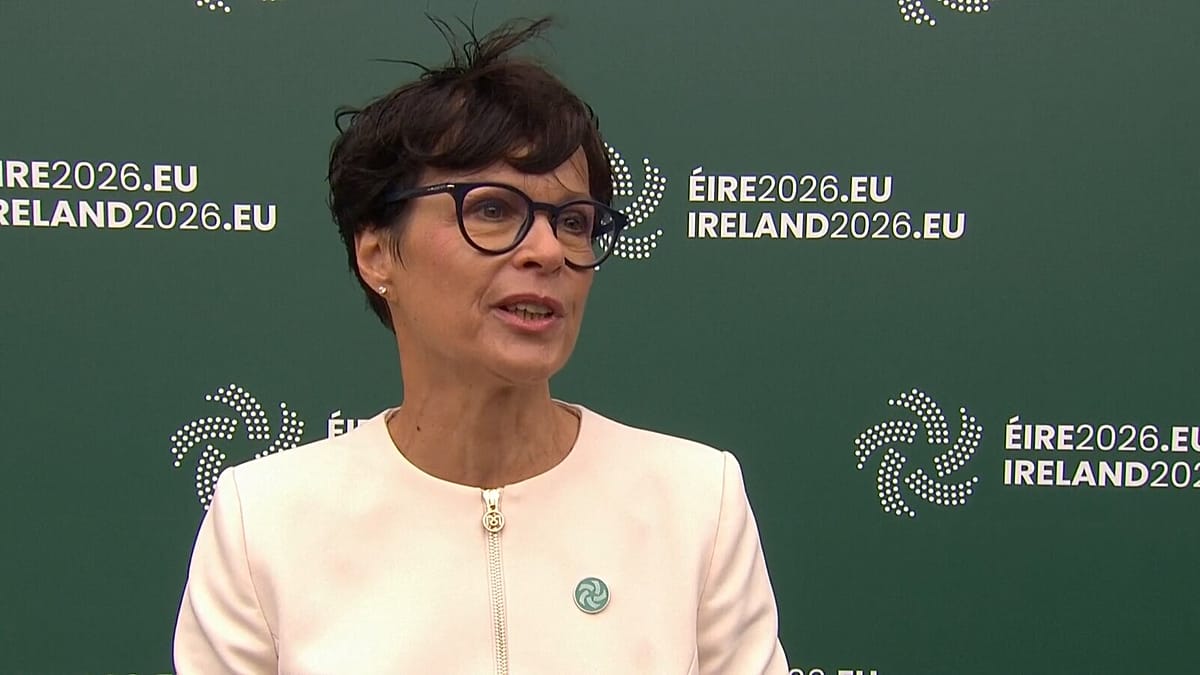
Asked whether the result meant the EU had become less attractive, Enlargement Commissioner Marta Kos insisted that was not the case, pointing out that more progress had been made on bringing in new members in the past eight months than in the previous 25 years.
“This dynamic will continue into the autumn,” Kos said. “I regret the decision of Icelanders not to come back to the accession process. They are part of the common market. They are part of Schengen. But our European Union is much more than just those two things.”
“I see now the tendency of reducing the European Union to an economic community. This is by far not the essence of our Union,” she added, pointing to Europe’s need to stand together against the growing security threats coming from Russia.
Kos added that it was up to Icelanders to decide whether they wanted to join the EU at a later date, but pointed out that when Iceland was negotiating membership in 2010, only 19% supported joining the EU, as opposed to the 47% who voted “yes” in the latest referendum.
“Icelandic people voted the way they did. What can we do? They made the decision,” said Ireland’s Minister of State for European Affairs and Defence, Thomas Byrne.
“That has no impact on what we’re doing today, and the candidate countries are working hard to continue the accession process.”
Keeping up momentum
Speaking to reporters on the margins of the ministerial meeting, Byrne downplayed the effect of Iceland’s vote on the prospects of other candidate countries, pointing to progress made by Montenegro, Albania, Moldova and Ukraine.
The Irish minister said Iceland’s case is defined by a very specific issue, namely its maritime fishing industry, and pointed out that the country will remain part of the European Economic Area.
Meanwhile, the EU is trying to keep the enlargement momentum going. Montenegro is on track to become the bloc’s 28th member by 2028, Albania is following closely behind, and Ukraine and Moldova have already opened two accession clusters this year.
Asked whether he feared that the upcoming 2027 elections in a number of member states – including France, Italy, Spain and Poland – risked jeopardising the process, Byrne denied that was the case.
France’s far-right National Rally candidate, Marine Le Pen, is currently projected to win in all second-round scenarios, according to opinion polls. Le Pen is a Eurosceptic, historically opposed to EU enlargement.
“Elections are unpredictable,” Byrne said. “I don’t think we should read too much into opinion polls at the moment.”
Democratic safeguards
The European Commission is also working on a proposal for how to reform an expanded Union and better integrate candidate countries, due to be published at the end of the month and discussed at the next EU leaders’ summit on 15-16 October.
During Friday’s meeting, there will also be a discussion on potential safeguards to prevent democratic and rule-of-law backsliding among new member states, an idea put forward by five founding members drawing lessons from Viktor Orbán’s tenure as prime minister of Hungary.
“Since the enlargement in 2004, we cannot always be sure that once we have new members, they will respect the rule of law and the sincere cooperation principle,” Commissioner Kos said.
The EU’s enlargement chief denied that the safeguards would create a second-tier membership, stressing that they would have to be temporary.
Petar Marković, Montenegro’s head of mission to the EU, told Euronews his country supports tougher safeguards, as long as they are based on objective criteria for assessing systematic breaches of democratic and rule-of-law standards.
Read the full article here


