



Published on •Updated
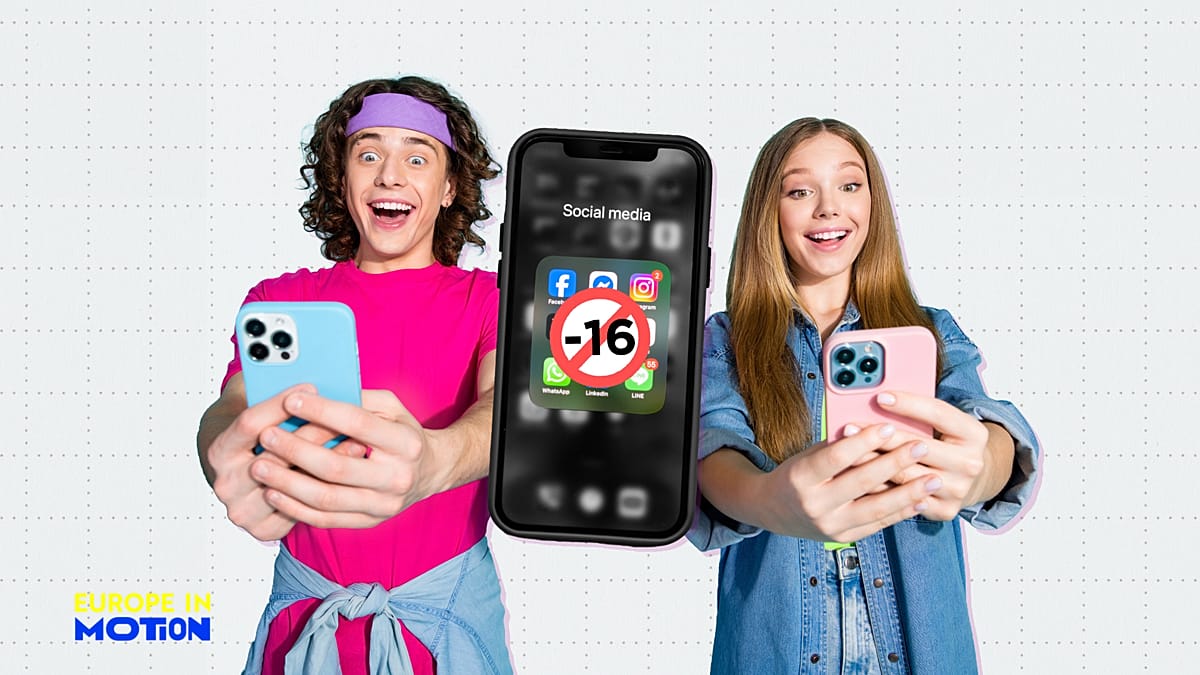
The UK’s plans to ban social media access for teenagers has reignited a debate playing out across Europe, as governments face growing calls from parents to teachers to protect children online.
Countries including France, Spain, Austria and Denmark are all discussing measures to restrict access for children, with concerns ranging from cyberbullying and addictive platform design, to tragedies including suicide and self-harm.
According to a study by WHO-backed Health Behaviour in School-aged Children (HBSC) study, problematic social media use among adolescents increased from 7% in 2018 to 11% in 2022.
It defined problematic social media use using a behavioural scale that measures symptoms such as an inability to cut back, neglecting other activities and experiencing conflicts or negative consequences as a result of spending time online.
According to 15-year-olds surveyed, some of the highest rates of problematic social media use were recorded in Romania, Ireland and Malta.
On the other end of the scale, the Netherlands, Denmark and Estonia recorded some of the lowest levels.
Teenage girls lead the way
Across the countries surveyed, girls reported significantly higher levels of problematic use than boys.
This gap is particularly pronounced in Romania, where 28% of 15-year-old girls reported problematic use, compared with 18% of boys. In Ireland, the figures were 25% and 13% respectively.
Girls were also more likely to report they were in contact with friends online around the clock, with 44% of 15-year-old girls compared to 29% of boys.
According to the report, girls tend to be more socially connected online and may face a different virtual experience than boys.
Various research has found that adolescent girls were found to experience greater pressure over their appearance and body-dissatisfaction on social media than boys, a well as report slightly higher levels of cyberbullying-related experiences.
Support for bans is high, but evidence they work is limited
As governments debate curbing access, political support for restrictions on children’s access to apps is at a high.
A YouGov survey published in April found that 79% of people in France supported banning social media for under-16s, alongside 76% in the UK, 74% in Germany and 70% in Italy. Majorities also backed restrictions in Spain (68%) and Poland (53%).
Parents particularly backed bans and restrictions, with 79% of those with children supporting a ban in Britain, Italy and Spain.
Government’s are listening to this political push: France’s National Assembly has approved legislation restricting access to social media for under-15s, while Spain has proposed raising the minimum age for social media access to 16.
Greece has gone a step further, with Prime Minister Kyriakos Mitsotakis announcing a ban on social media for under-15s in April, with parliament set to vote on the legislation this summer.
Many of the proposals being discussed across Europe require effective age-verification systems and may face legal and practical challenges under EU-wide rules, under which national governments cannot simply force apps such as TikTok, Instagram and Snapchat to block those under-16 overnight.
Yet while support for bans is at a high, evidence that they are effective is very limited —primarily because there are very few long-term case studies that have allowed researchers to effectively assess the impact of bans on children’s wellbeing.
Read the full article here


