



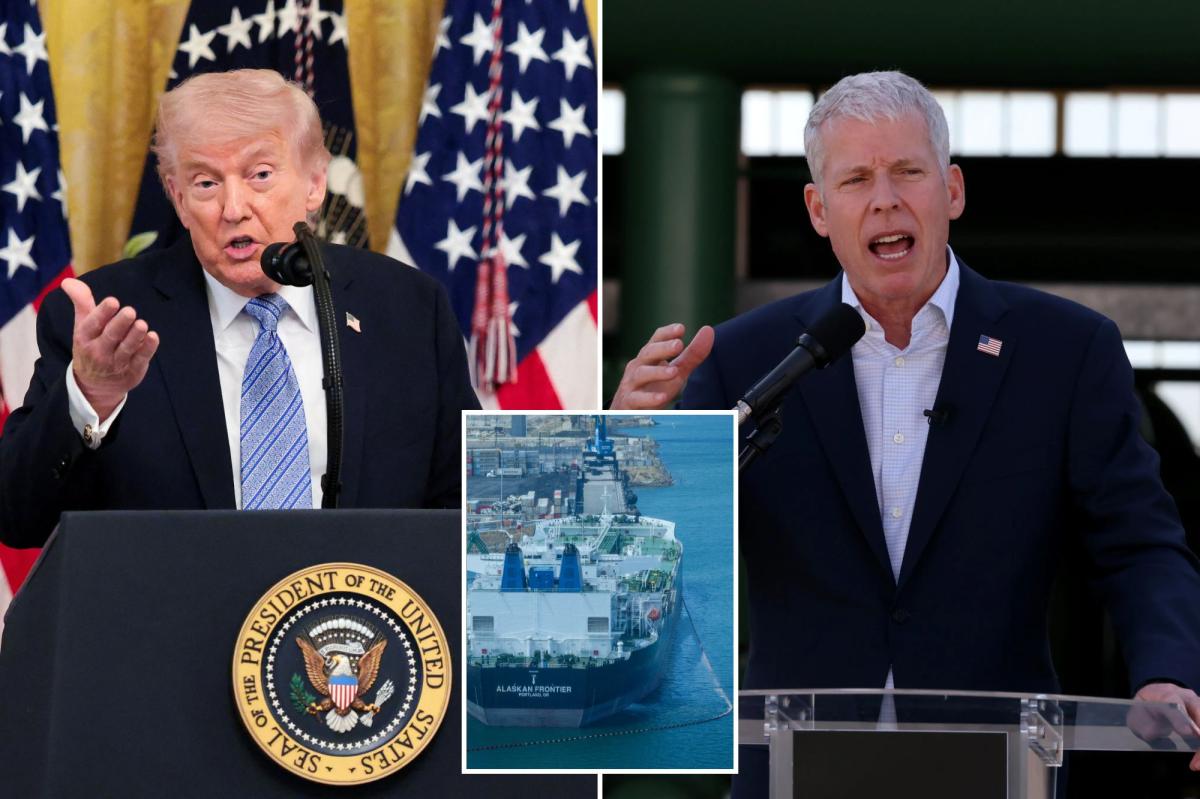
President Donald Trump’s energy czar tore into California as the state saw an oil tanker from the Middle East dock at its shores amid an oil crisis hitting the state the hardest, as gas prices continue to surge.
“This is an untenable threat to our national security, especially in a time of military conflict,” a spokesperson for the Office of the Department of Energy told the California Post Tuesday.
“Despite being home to more than 30 military installations, California has adopted policies that have left our forces — and $4.1 trillion of our nation’s GDP — dependent on imported oil,” the spokesperson added.
The final oil tanker from the Middle East docked in Long Beach on Monday, marking what could be the last shipment from the Strait of Hormuz to reach California for now.
Once it departs, the region’s fuel supply chain could face growing pressure, with no certain timeline for when the next one might arrive.
“Instead of correcting these self-inflicted vulnerabilities, California leaders are attempting to block the Secretary’s efforts to restart critical infrastructure and strengthen domestic energy production,” the office of Chris Wright wrote to The Post.
California has been at odds with the federal government for a number of reasons, and one of the more contentious issues has been oil.
The Trump administration signed an executive order to grant Sable Offshore permission to resume operations on a pipeline in Santa Barbara that was shut down after a massive oil spill.
California, in response, sued, and a judge ordered an injunction against continuing operations, along with an $18 million fine for the company. Sable Offshore is actively challenging state-level legal restrictions by leveraging federal intervention.
“California leaders should stop prioritizing political agendas over America’s energy security,” a spokesperson with Wright’s office told The Post.
California has also moved away from in-state oil production. The state’s oil output has fallen by about 75% since its peak in the 1980s.
The state imports more than 60% of its crude oil from foreign countries and Alaska to meet energy demand, often described as an “oil island” due to the lack of pipelines from other US regions.
The Phillips 66 Carson/Wilmington facility and the Valero Benicia refinery were closed, reducing California’s refining capacity by roughly 17–18% and raising concerns about potential fuel price increases and supply shortages.
The Phillips 66 plant shut down in late 2025, while the Valero facility followed in April 2026, marking a major and rapid shift in the state’s energy infrastructure.
The Santa Ynez pipeline restart “marks a 15% increase in California’s in-state oil production, which will replace almost 1.5 million barrels of foreign crude oil each month,” according to the Department of Energy.
California has the highest gas tax in the US, at 61.2 cents per gallon for the state excise tax. As of Tuesday, gas prices stand at over $6 per gallon on average — about $2 more than the national average, according to AAA.
Download The California Post App, follow us on social, and subscribe to our newsletters
California Post News: Facebook, Instagram, TikTok, X, YouTube, WhatsApp, LinkedIn
California Post Sports Facebook, Instagram, TikTok, YouTube, X
California Post Opinion
California Post Newsletters: Sign up here!
California Post App: Download here!
Home delivery: Sign up here!
Page Six Hollywood: Sign up here!
Read the full article here


