



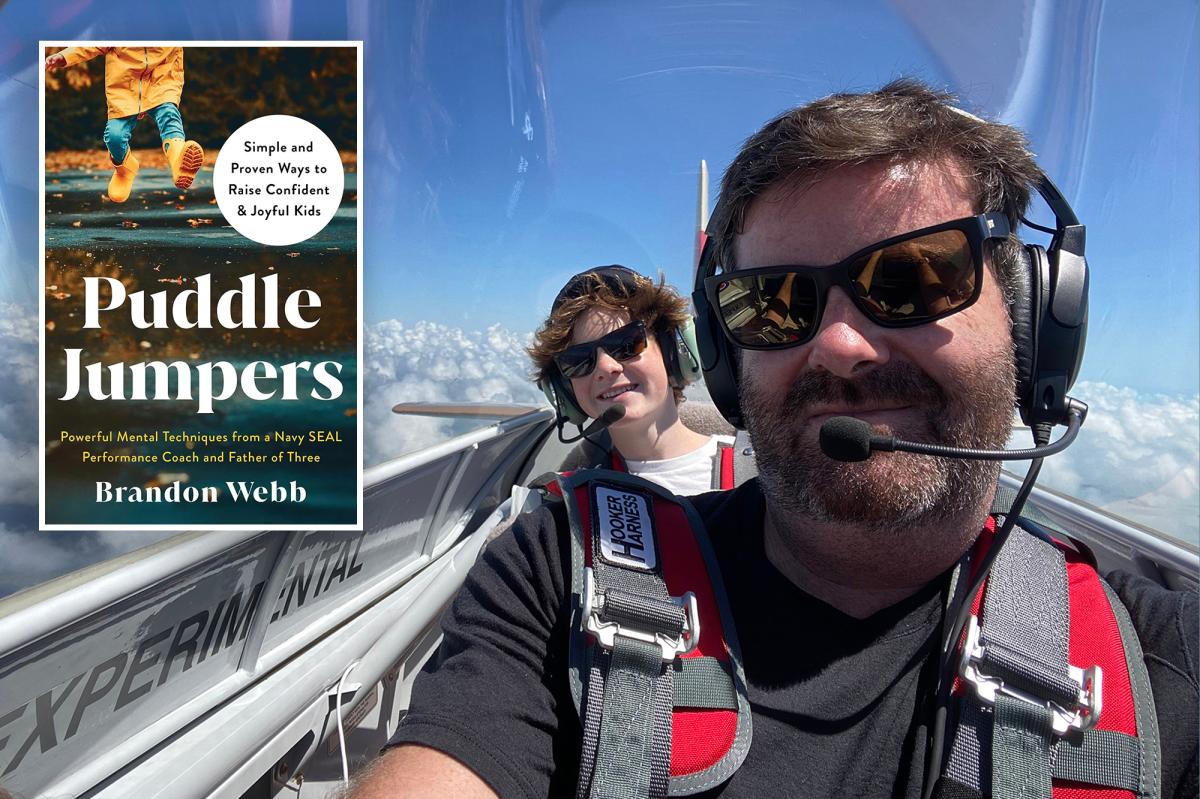
A former Navy SEAL and elite sniper instructor, Brandon Webb has jumped out of planes, raced cars, seen combat in Afghanistan and the Middle East, and trained people to shoot to kill.
A bestselling author, he’s written about his exploits in books such as “Mastering Fear: A Navy SEAL’s Guide” and “The Killing School: Inside the World’s Deadliest Sniper Program.”
With his new book, “Puddle Jumpers: Powerful Mental Techniques from a Navy SEAL Performance Coach and Father of Three” (Author’s Equity), he offers tips for a different kind of battlefield: modern parenting.
He thinks many moms and dads aren’t doing well by their troops. Despite their best intentions, they’re raising kids who are emotionally fragile, overprotected and unprepared for adulthood.
“I see so many successful, career-driven parents, and they love their kids, but they’re just f–king them up,” he told The Post in an exclusive interview.
Drawing on lessons from his military training, his own turbulent childhood, a difficult divorce and years raising three children, now ages 24, 22 and 19, Webb says the answer isn’t harsher discipline or helicopter parenting. Rather, it’s teaching resilience, trust and accountability before life does it for them.
“My father kicked me out at 16, and the relationship I have with my dad is very complicated still,” he said. “I didn’t want that with my kids. I wanted them to be able to trust me and open up to me, so we all had a very different experience.”
Toughness, he insists, doesn’t mean becoming emotionally distant. “How you talk to your kids is so important because your voice becomes their inner voice.”
It all starts with a solid foundation.
“You can’t build resilience on junk food and four hours of sleep,” he writes. “Nutrition, rest, and movement aren’t side notes, they’re the engine.”
He adds, “If your kid is marinating in garbage — bad friends, toxic coaches, half-ass teachers and emotionally bankrupt adults — you’re fighting a losing battle.”
Raising his kids, Webb made a point of surrounding them with people who could truly inspire them. “I treated it like I was building a SEAL platoon for a mission,” he said. “No weak links. No energy vampires.”
Encouragement, empowerment and motivation are key, too. “In a world of screens and devices, they have to find real purpose,” he noted. “Because a kid without purpose is like a Formula 1 car with no gas — powerful but going nowhere.”
But it’s more than just the tone you adopt.
“Parents immediately need to get better at asking questions,” Webb asserted. “Asking your kid how his or her day was is a bulls–t question and you’re going to get a bulls–t answer.”
Instead ask more interesting questions. “Try something fun but deeper, like, ‘If today was a movie, what would it be and why?’ It’s much a better way of getting more from your kids.”
Growing up, he said his dad “whooped my ass with a leather belt” to discipline him without ever asking him why he’d done something wrong.
With his own kids, he’s strived to understand their motivations.
Years ago, his youngest son, Tyler, was suspended in seventh grade after ordering pizza for his entire class — and sending some to the principal’s office, too.
“At first I wanted to know where he was getting the money from,” Webb laughed. “Turns out he’d been selling pot dummies to high school kids. It wasn’t exactly ‘Fast Times at Ridgemont High,’ but still…”
Webb and his then-wife initially discussed typical punishments like grounding him for a month, but quickly realized something deeper was going on.
“He was entering his teenage years and was super vulnerable,” Webb says. “If he didn’t feel supported by us, we risked pushing him away.”
As Tyler’s grades continued slipping, they discovered the behavior stemmed from an ongoing conflict with a teacher. Instead of escalating the punishment, Webb and his wife pulled him out of school temporarily, placed him in independent study and allowed him to reset with a clean slate.
“The look of relief on his face when he realized we had his back was crazy,” Webb said. “And trust just builds more trust.”
The gamble paid off. Tyler is now thriving at the University of Oregon. “The lesson is teach, don’t punish,” writes Webb. “Correct the behavior, keep the relationship.”
Sometimes, however, he has had to take a stricter approach — even if he didn’t want to.
When his oldest child, Jackson, decided to get a credit card while in college, Webb warned him to pay it off in full each month. A year later, though, Webb received a call. Jackson now had $17,000 of debt on the card “and the interest payments were killing him.”
Webb, however, would have none of it. “It’s yours to deal with,” he told him. “Welcome to adulthood.”
It took Jackson three years to clear the debt but it taught him a valuable lesson. “As a parent, you don’t want your child to suffer, but you have to understand that in some cases, suffering builds strength,” he writes.
“It pained me to see him struggling, but I knew he needed to learn this one the hard way.”
Read the full article here


