PREVENTING FUTURE FLASHPOINTS
Foreign policy and security analyst Lucio Blanco Pitlo III said the Philippines, this year’s ASEAN chair, is seeking broader regional support to expedite negotiations on the code of conduct.
He added that other coastal states also share an interest in upholding a rules-based order at sea and preventing future incidents.
“We have seen in recent times a surge in close calls, run-ins and posturing, and this kind of dynamic is very risky,” Pitlo, president of the Philippine Association for Chinese Studies, told CNA’s Asia Tonight.
“The stakes are high should an accident occur, and so I think this is one impetus driving the negotiations to conclude the code of conduct.”
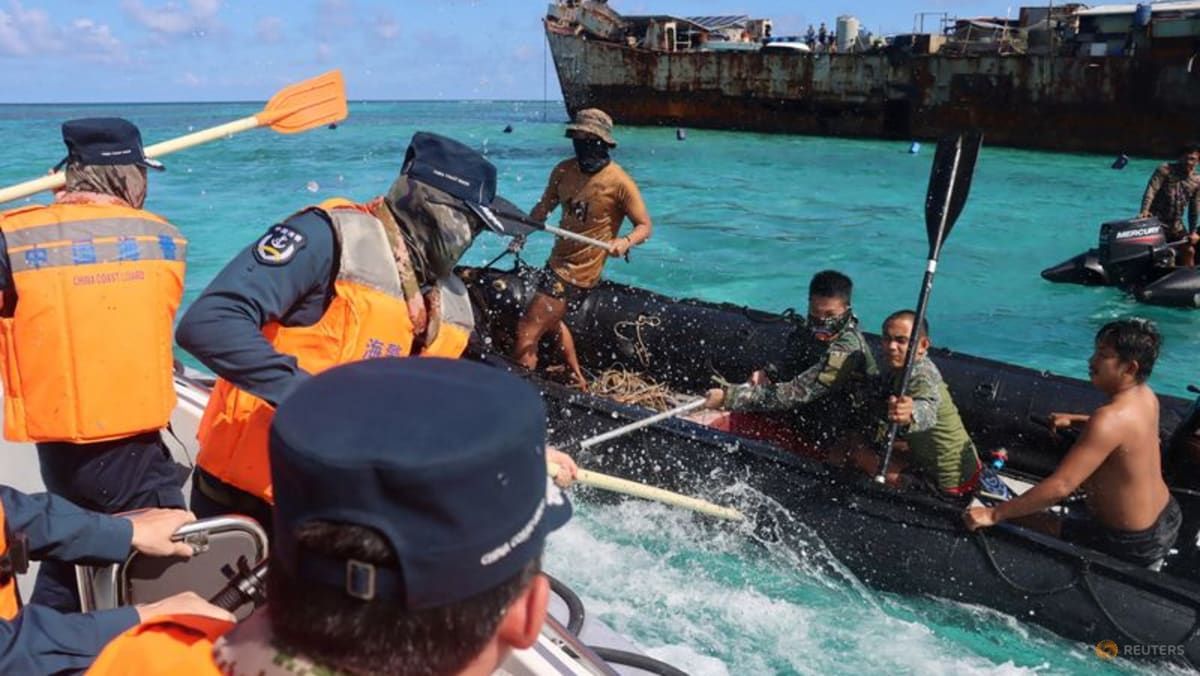
The latest confrontation came just a week after the Philippines marked the 10th anniversary of the landmark South China Sea arbitral ruling in its favour.
Manila has long viewed the ruling as a peaceful and legal avenue for resolving – or at least narrowing – disputes in the South China Sea, said Pitlo, who is also a research fellow at Manila-based think-tank Asia-Pacific Pathways to Progress Foundation.
But he stressed that the proposed code of conduct – which aims to establish rules between ASEAN and China to prevent maritime incidents from escalating into crises – would serve “a general shared interest of all”.
“It’s very important that (Manila and Beijing) continue to talk,” he said. “Because their volatile relations affect not only the security aspect, but also, regrettably, parts of people-to-people exchanges and economics between the two sides.”
Pitlo said sustained engagement provides an opportunity “to arrest a downward spiral in the relations, stabilise the volatile South China Sea issue, and at least prevent untoward encounters from reaching a diplomatic crisis”.
Read the full article here