KATHMANDU: The scars of disaster stretch from one valley to the next.
More than one week on from the devastating Aug 26 floods in north and central Nepal, there is still no road to reach the high-altitude villages decimated by the deluge. Right now, only helicopters can do the job.
To head north up the Trishuli River, the main route of the floodwaters, it means taking flight along a busy air route.
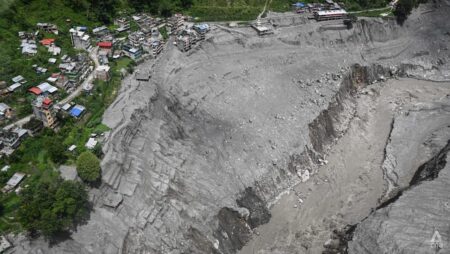
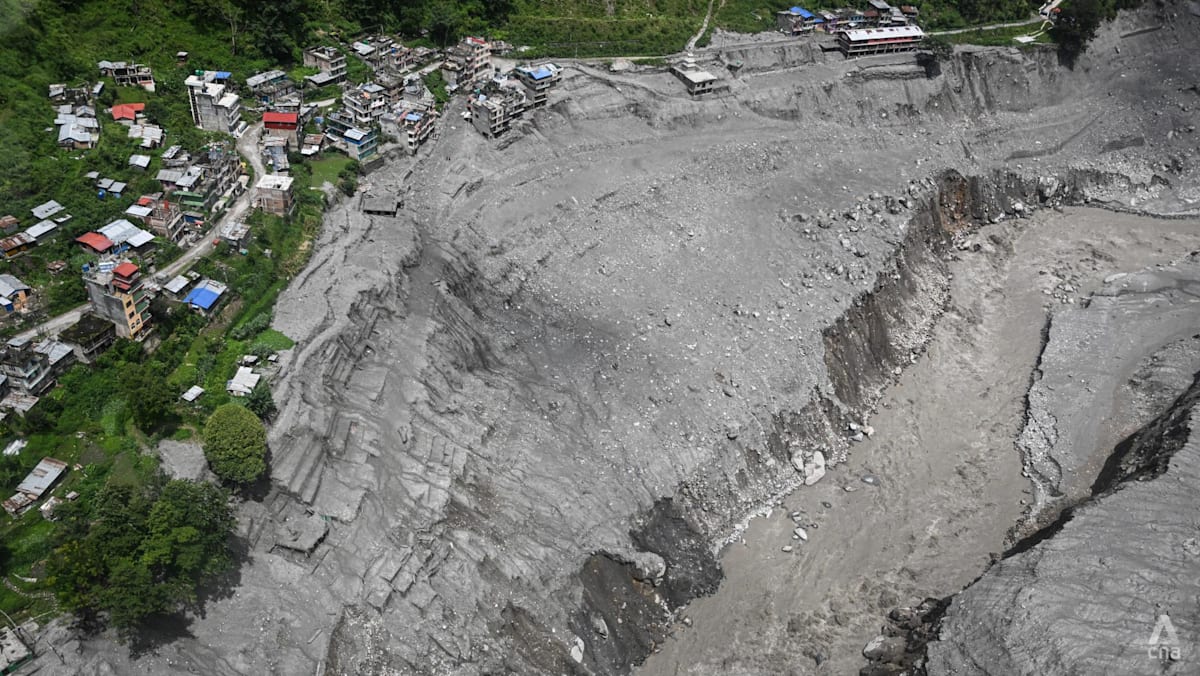
From above, the scale of the damage is shocking: kilometre after kilometre where almost everything has been wiped away.
With each bend of the river comes the next town in pieces. And the next.
The latest official figures on Thursday (Sep 3) put the death toll at 1,252, with 4,216 people still unaccounted for. Those numbers continue to rise.
This is one of Nepal’s major hydropower corridors, but it has been ripped apart.
The steep gradients and powerful Himalayan rivers have attracted billions of dollars of investment. Projects, access roads and workers’ camps hug the riverbanks, putting much of that infrastructure directly in the path of the flood.
From above, what appear to be strips of crumpled concrete are the epicentre of ongoing efforts underway at tunnel projects along the Trishuli to save potentially hundreds of workers who may still be alive underground.
Read the full article here