



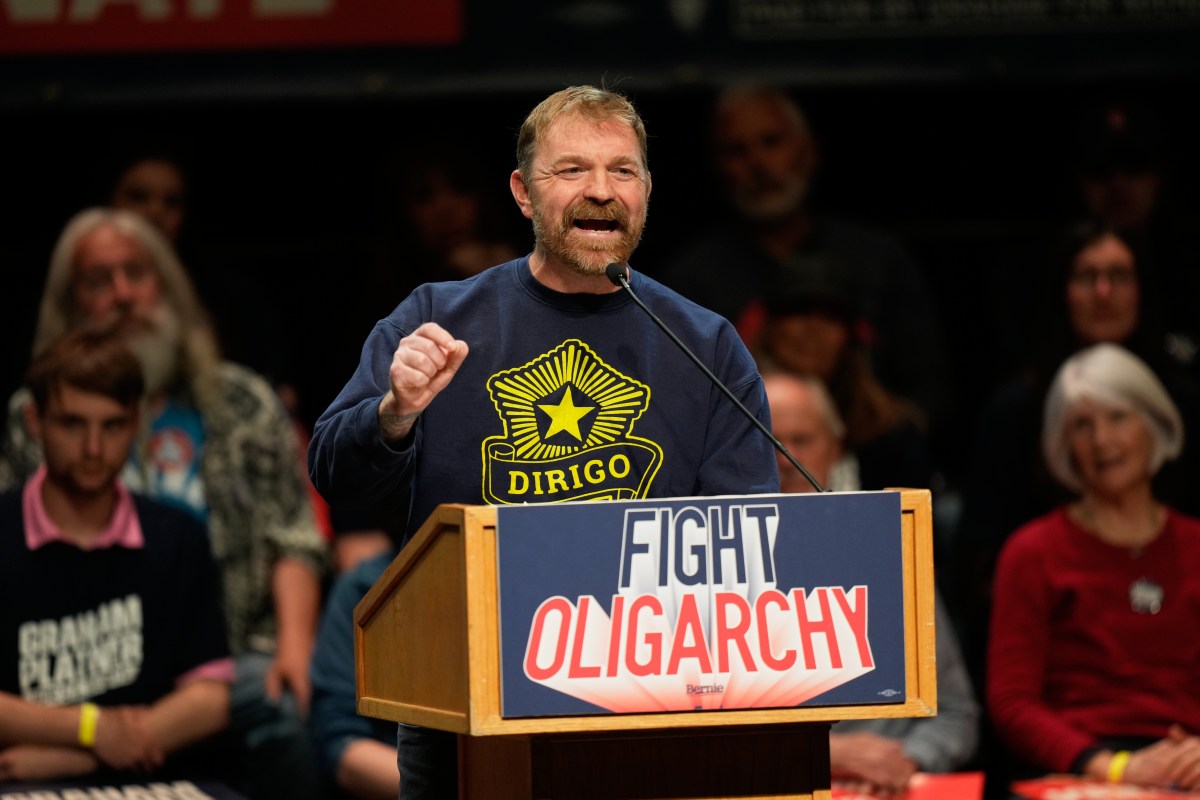
Democratic Maine Senate candidate Graham Platner faced renewed scrutiny Saturday after the Wall Street Journal reported his wife, Amy Gertner, informed campaign officials early last year that he had sent sexually explicit text messages to multiple women just months after their November 2023 marriage.
The disclosure comes just over a week before the June 9 primary, as Platner, a Marine Corps veteran and coastal Maine oyster farmer, has gained momentum in recent polls against Republican incumbent Senator Susan Collins in a race that could help determine control of the Senate.
“I know who Graham is. I know the man I married and the husband he has been to me on the best and the worst days of my life. That hasn’t changed, and it won’t,” Gertner told the Journal. She added that she was “deeply hurt” by the betrayal and “the invasion of our privacy” by a former staff member she had trusted with the information.
Newsweek has reached out to Platner’s campaign for comment via email on Saturday evening.
Why It Matters
Maine is a politically competitive state that has leaned Democratic in recent presidential elections, with former Vice President Kamala Harris carrying it by about 7 points in November 2024 against President Donald Trump. But the state has also shown a history of backing moderate Republicans, including Collins, who has repeatedly won reelection despite Democratic gains at the presidential level, as well as independents like Senator Angus King. The race has been labeled as a “toss-up” by the Cook Political Report.
National Democrats view flipping Collins’ seat—which she has held since 1997—as one of their absolute best pickup opportunities on the map and a critical pillar in their strategy to win back the Senate majority in this year’s midterm election.
After Governor Janet Mills, a Democrat, dropped out of the race, Platner is believed to be the frontrunner for the party’s nomination to match up against Collins, though David Costello remains on the Democratic primary ballot. Crucially for voters, because Mills withdrew late in the cycle, her name will still appear on the June 9 primary ballot. Backed by Senators Bernie Sanders and Elizabeth Warren, Platner is emerging as a leading Democratic contender in a race Democrats see as critical to their hopes of winning back the Senate.
Platner, however, has faced a steady stream of controversies on the campaign trail due to uncovered Reddit posts that included offensive language, racial remarks, and comments about sexual assault, as well as the revelation that he had a tattoo resembling the Totenkopf, or “death’s head,” a symbol adopted by the Nazi SS. Platner has apologized for his past online remarks and the tattoo, stating he was unaware of the tattoo’s meaning when he got it as a Marine in Croatia, and attributing his past internet rants to struggles with PTSD after his military discharge.
What to Know
According to the report, Gertner informed Platner campaign aides during an internal vetting exercise last August that he had sent sexually explicit text messages to several women. The disclosure was intended to ensure the information did not catch the campaign off guard. A campaign official told the Journal that aides believed the matter should be handled between Gertner and Platner who were in marriage counseling at the time.
“It is no secret that Graham and I have struggled on our fertility journey. We did the hard work that marriage requires. We went to counseling. We were honest with each other in ways that weren’t easy,” Gertner said in a statement provided to the newspaper by Platner’s campaign. The couple previously shared publicly that they sought IVF treatment in Norway and suffered a miscarriage earlier this year.
She noted that the couple’s “marriage today is stronger than ever before.”
Genevieve McDonald, a former state legislator and Platner campaign political director until October, told The New York Times that Gertner alerted campaign officials that Platner had sent sexually explicit messages to as many as a dozen women.
A current Platner campaign official told the Times that Platner had been communicating with up to six women and that it stopped before the campaign launched.
McDonald, who resigned from Platner’s campaign over revelations about his tattoo and Reddit posts, told the Times, “The United States Senate is not a training ground for redemption. It is a place for proven leaders with moral clarity and integrity.” In Gertner’s statement, she said had “confided deeply personal details” about her marriage “to someone I considered a friend.”
Neither report specified the details of the messages.

What Do Polls Show?
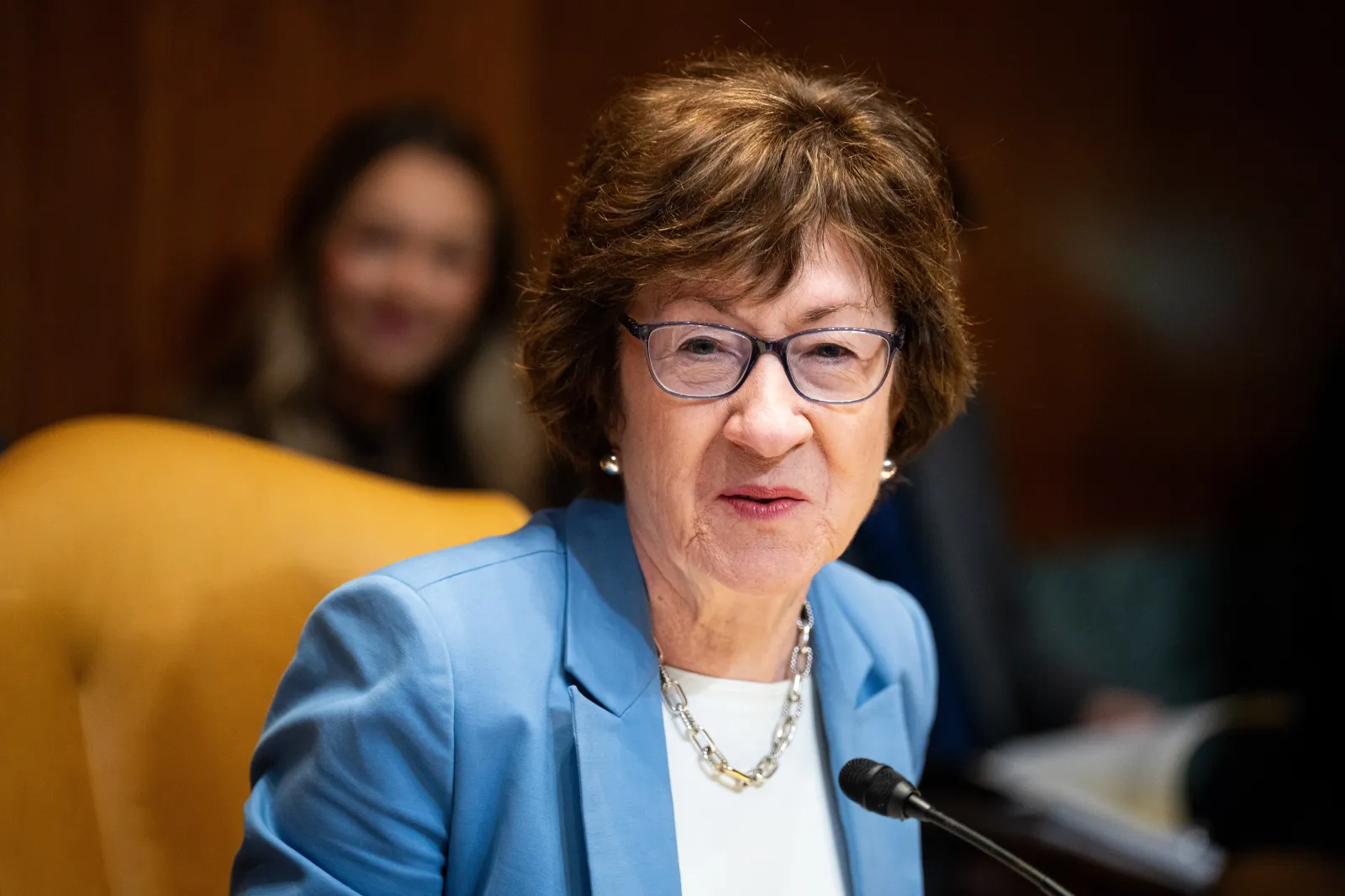
A new Pine Tree State Poll conducted by the University of New Hampshire Survey Center from May 21-25 found Platner leading the race, with 51 percent of the vote compared to Collins’ 42 percent. About 6 percent of voters were undecided and 2 percent said they would back a different candidate.
The polling shows a similar landscape to February, though the share of undecided voters has narrowed. A similar February poll found Platner leading Susan Collins 49 percent to 38 percent, with 9 percent undecided and 4 percent backing another candidate.
Independents are split in the new poll, with 47 percent backing Collins and 44 percent supporting Platner.
The poll is one of the few since Mills dropped out of the race, narrowing the Democratic field. The poll of 1,397 Maine residents has a margin of error of plus or minus 2.6 percentage points.
A recent poll from Pan Atlantic Research—the first since Mills ended her campaign—showed Platner with an advantage. He led Collins by 7 points, with support from 48 percent of respondents compared to the Republican senator’s 41 percent. Eleven percent said they were still undecided. It surveyed 827 likely voters from May 8-18 and had a margin of error of plus or minus 3.7 percentage points.
A Maine People’s Resource Center poll, which surveyed 1,167 likely voters from March 20-31, also showed Platner leading Collins by 9 points, 48 percent to 39 percent.
A March Emerson College poll showed Platner up 7 points over Collins in a general election, 48 percent to 41 percent. It surveyed 1,075 likely voters from March 21-23 and had a margin of error of plus or minus 2.9 percentage points.
Read the full article here


