



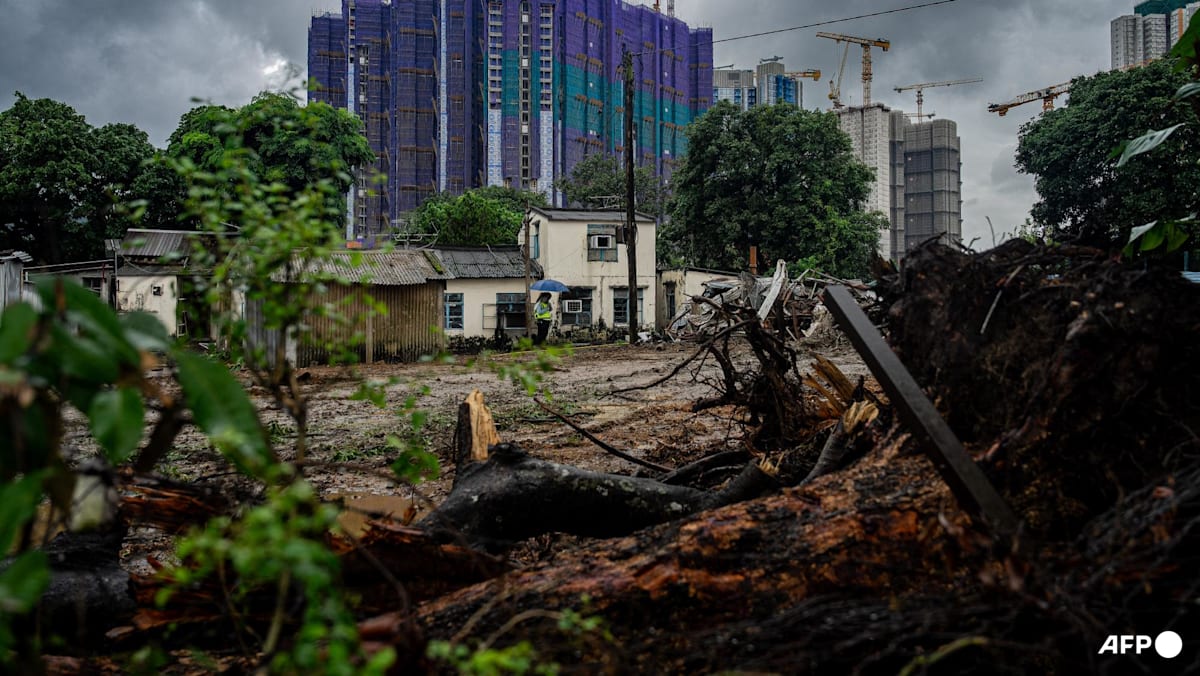
“If you build a new city in a place that was well preserved before, it would inevitably be very destructive, no matter how you mitigate it,” said Brian Wong of Liber Research Community, an NGO focused on land issues.
“Do we need to build it so big? Is it too ambitious?” he added.
RETURN ON INVESTMENT
The Northern Metropolis project, announced five years ago, will eventually cover 30,000ha.
Liber said at least 25 villages will be demolished to make way for it.
Government departments told AFP they aim to integrate rural areas into the development project, but that Chan’s ancestral houses were not culturally significant enough to preserve.
Plans to integrate Hong Kong with mainland China have long faced opposition in the former British colony, where critics warn such moves would erode the city’s autonomy.
But a sweeping national security law imposed by Beijing on Hong Kong in 2020 after huge protests has stymied dissent in the financial hub.
It “effectively put an end to the ‘one country, two systems’ framework that allowed Hong Kong a ‘high degree of autonomy’, so greater integration with the Greater Bay Area would logically follow,” Steve Tsang, director of the SOAS China Institute, told AFP.
The government says the Northern Metropolis will cost at least HK$224 billion (US$28.6 billion), while global ratings agency S&P estimates it could top HK$360 billion.
Authorities have promised a return on investment, citing bank estimates – and a rough 20-year timeline – that the project will account for 13 per cent of Hong Kong’s gross domestic product.
Read the full article here


