



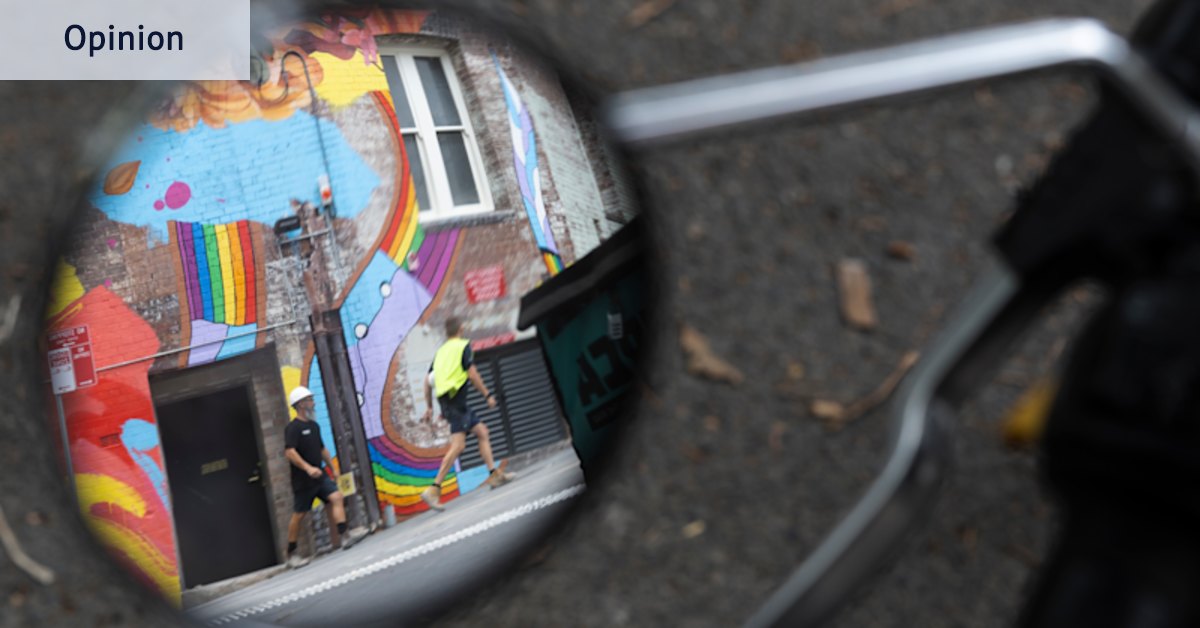
Kenneth Slessor poetised about it, Paul Kelly sang about it. Darlinghurst, where the sunlit open space and tranquillity of Australia meets its antithesis. One of the oldest suburbs we have has, for most of its history, symbolised an inner-city chic. The poems of Slessor and drawings of Virgil Reilly depicted it as a sexy place – the Manhattan of Sydney – with apartments, glamour, crime and urbanity.
The name Darlinghurst was given to the ridge, previously referred to as Woolloomooloo Hill, or sometimes Eastern Hill, in the late 1820s by NSW governor Ralph Darling, thought to be in honour of his wife, Eliza. The area had a colourful history long before Slessor’s odes. Its gaol, Sydney’s oldest and now repurposed as the National Art School, housed many interesting inmates, including writer Henry Lawson (for drunkenness and non-payment of alimony) and bushranger Captain Moonlite.
Like moths to a flame, Sydneysiders have for generations since been drawn to its charismatic charms. The sleaze, the darkness, the fun and the excitement. I spent nearly two decades of my life in this wonderful place. As a child, I lived in Punchbowl, which was semi-rural by comparison. I watched our locale evolve from a horse paddock into a textured brick veneer cul-de-sac as hilariously depicted in They’re a Weird Mob. Darlo was New York by contrast. On any given day, there were more people on Oxford Street at 2am than 2pm. Not a Victa mower to be heard.
Darlinghurst life was, and I feel still is, a rite of passage for Sydneysiders. These days I reside in a “leafy” suburb where the joy of existence is punctuated by new releases on Netflix. I occasionally walk the streets of my past love to ogle at her young faces and breathe her musky night air.
Australia grew up during my time in Darlo. Here is where I first smelt garlic wafting from a restaurant kitchen. Has caffeine ever had so much impact on urban design? Eating and drinking coffee outside used to be illegal. An al fresco revolution began on the streets of Darlinghurst, where plastic stools started appearing on footpaths, forcing the hand of council regulation. Tropfest, the world’s biggest short film festival began at the Tropicana Caffe, now on Victoria Road. Oxford Street championed diversity with the Mardi Gras parade, and Darlinghurst quite possibly had the best nightlife in the world.
Iconic British culture magazine The Face once heralded that in the ’60s it was London, in the ‘70s New York, but the ’80s belonged to Sydney. Those of us who remember Arthur’s, the Cauldron, Rogues, Kinselas, Site, Hip Hop Club, the Albury Hotel, Midnight Shift, DCM, The Manzil Room, Q Bar and so many others must share my grief at the sad state of Sydney nightlife today. When my adult kids go out to party, I genuinely feel sorry for them. The lockout laws, now abandoned, have had a profound effect on the area. As Spock would say, “there’s life, Jim, but not as we know it.”
Are we having fun yet?
There was a countdown calendar on the wall of the City Gym on Crown Street: “17 Days until Mardi Gras! How’s your body fat?” One can’t overstate the impact of LGBTQ folk on Darlinghurst. The rainbow community brought energy, life and culture to the suburb, established safe party spaces that welcomed gays and non-gays alike.
Newtown has stolen much of what Darlinghurst had, and Oxford Street is poorer for it.
Young people are still here, thank God. The streets, pubs and restaurants still buzz, but the serious “clubbing” is long gone. Gentrification, visible in pricey apartments on Macleay Street, has mostly avoided Darlinghurst. In fact, apart from The Horizon (don’t get me started) and the eateries of Stanley Street, Darlinghurst would probably still look familiar to Slessor, who lived in the area a century ago.
Darlo never became Paddington or Balmain. The small working-class terraces are largely unrenovated, and there are no high-end restaurants or colourful markets, which is probably why students, artists and refugees from suburbia are still drawn to it. There is an alluring grit and enduring, affordable charm in these streets.
Pasta was $2 a bowl at No Names when one of my uni lecturers first took us there in 1979. It was 40¢ a bowl when he started eating there! I still eat around the corner at Bar Reggio every few weeks. Many of the diners are my vintage and probably had their first Italian meal here generations ago. Some of Australia’s glitterati enjoy the cheap eats regularly. They will hate me for revealing this gem, but it proves that you cannot buy charm and kitsch!
I’m so grateful for the time I spent in Darlo, and so sorry for those that didn’t.
Sydney needs Darlinghurst. It was and is a remedy for everything I find boring about this city. As I continue to inflict affluence and mundanity on my kids, I pray for the penny to drop for them. Go to the dark side! Love you, Darlo.
Vince Sorrenti is a comic and passionate Sydneysider.
From our partners
Read the full article here


