



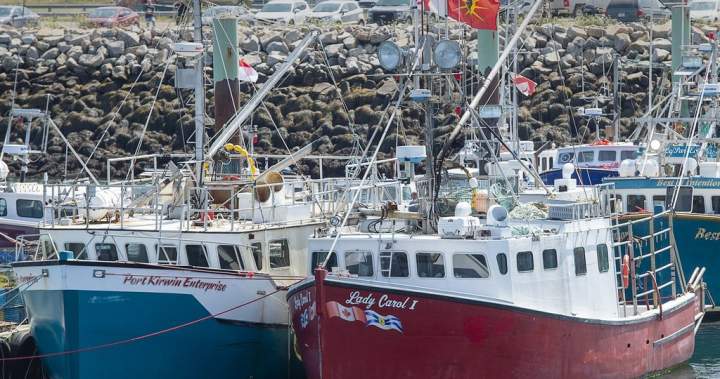
A lobster fishing group in Nova Scotia has failed in its bid to persuade a judge that a First Nation does not have the treaty right to commercially fish for lobster out of season and without a licence.
In a decision released Wednesday, Nova Scotia Supreme Court Justice Ann Smith says the Unified Fisheries Conservation Alliance could not proceed with its claim against the Sipekne’katik First Nation because the court lacked jurisdiction.
The non-profit alliance argued that the First Nation has engaged in unlawful commercial lobster fishing in St. Mary’s Bay since 2010 by ignoring federal rules, which they say has had a detrimental impact on lobster stocks.
The First Nation has long argued that it has a treaty right to commercially fish for lobster without federal permits based on the Peace and Friendship Treaties of 1760-61.
Smith concluded the alliance’s claim was “fatally flawed” because it did not challenge any government action or law, and she found the court could not make a ruling about a treaty that makes no reference to the alliance.


Get daily National news
Get daily Canada news delivered to your inbox so you’ll never miss the day’s top stories.
As well, Smith’s decision says the Supreme Court of Canada has made it clear that issues dealing with treaty rights must be dealt with through negotiations between First Nations and the federal government, not adversarial litigation.
The decision points to the “special relationship” between the Crown and First Nations when it comes to Aboriginal and treaty rights.
“It is for Sipekne’katik to determine how and when, if at all, it wishes to engage with Canada over its asserted treaty right to engage in a commercial fishery in St. Mary’s Bay,” Smith’s ruling says, adding that those negotiations are ongoing.
Smith cited a Supreme Court of Canada decision from 2024 stating that the litigation process is often at odds with reconciliation.
“Avoiding expensive, lengthy and adversarial litigation is an important step for reaching reconciliation-oriented results where Aboriginal and treaty rights are at issue,” the 2024 decision says.
Read the full article here


