



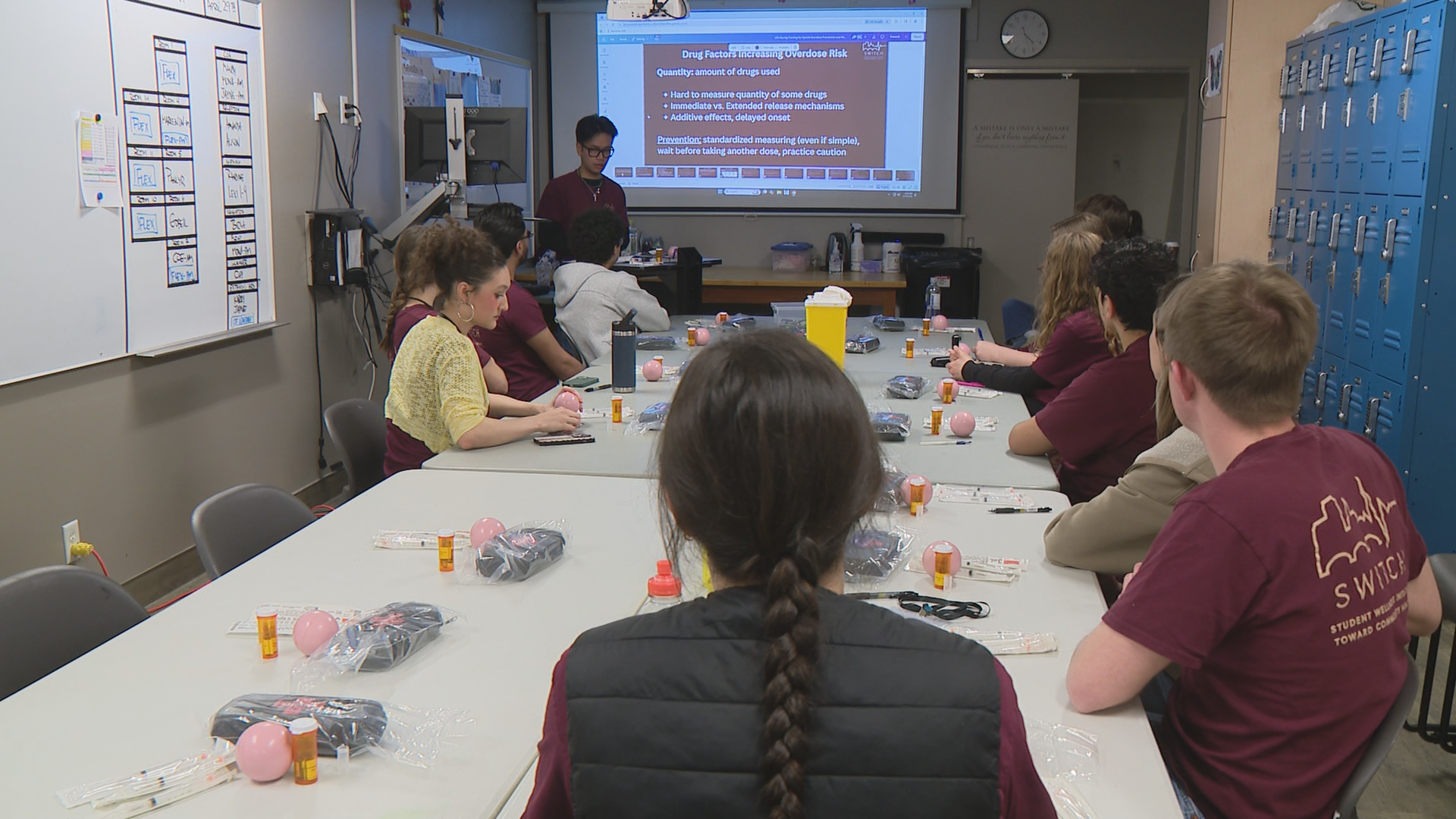
While Ava Lessard has never administered naloxone, she thinks she will be ready in case she has to.
The nursing student is among dozens of other aspiring health-care workers at The Student Wellness Initiative Towards Community Health (SWITCH), a student-run health clinic operating in Saskatoon’s Pleasant Hill neighbourhood, who are learning how to reverse the effects of an overdose.
Naloxone is a fast-acting medication that is used to temporarily reverse the effects of opioid overdoses, according to Health Canada.
“I do think that the repetition we’ll get here will definitely help us be even more prepared when we do get into the field,” said Lessard.
Student volunteers who make up SWITCH are being mandated by its board of directors to receive training on administering naloxone from the non-profit organization to continue participating in its operations.
This is in response to the closure of Saskatoon’s only supervised consumption site earlier this month, which has left a major gap in making sure those using substances are receiving the services they require, said Patrick Sarmiento, chair of SWITCH’s board of directors.
“It isn’t going to completely solve the problem of the loss of Prairie Harm Reduction, but the fact that volunteers who come through SWITCH’s doors are able to adequately respond to an overdose, I think is a very welcome change in the community,” he said.


Get daily National news
Get daily Canada news delivered to your inbox so you’ll never miss the day’s top stories.
Prairie Harm Reduction closed its doors on April 9 after discovering a financial shortfall of hundreds of thousands of dollars.
The organization’s supervised consumption services were halted in March, followed by its family support services and youth houses earlier this month.
In the weeks since, emergency services have reported an uptick in the number of overdoses around Saskatoon. Earlier this week, the Saskatoon Fire Department said it was noticing a significant spike in overdose calls, receiving at least 500 in the month of April.
Community-based organizations have also raised concerns that the loss of Prairie Harm Reduction will mean an increased strain on their already stretched-thin resources.
Given that SWITCH is directly next door to Prairie Harm Reduction, Sarmiento says it only makes sense that SWITCH teach its volunteers how to address the crisis through hands-on learning to help fill some of the gaps, adding that many community members do not feel comfortable going elsewhere.
“Many of the patients and community members who are accessing our medical and social services have stated that they have previously or are currently feeling discriminated against at other health care institutions or organizations,” he said.
For health studies student Elliott Klassen, naloxone training is more than just learning a new skill. It’s about helping the community.
“In health and addictions, it’s really important that we meet people where they’re at rather than forcing them into sobriety, and that’s what Prairie Harm Reduction offered,” said Klassen.
“In order for someone to get sober and heal from drug addiction, they need to be alive, and so that’s why we have everyone doing this.”
SWITCH plans to run training sessions for its hundreds of student volunteers throughout the summer.
“It’s one thing to be an individual who wants to make an effort, but getting together with other individuals who also have that same drive, the motivation to better our communities and meet people where they’re at,” said Lessard.
“I think that’s the biggest thing.”
Read the full article here


