



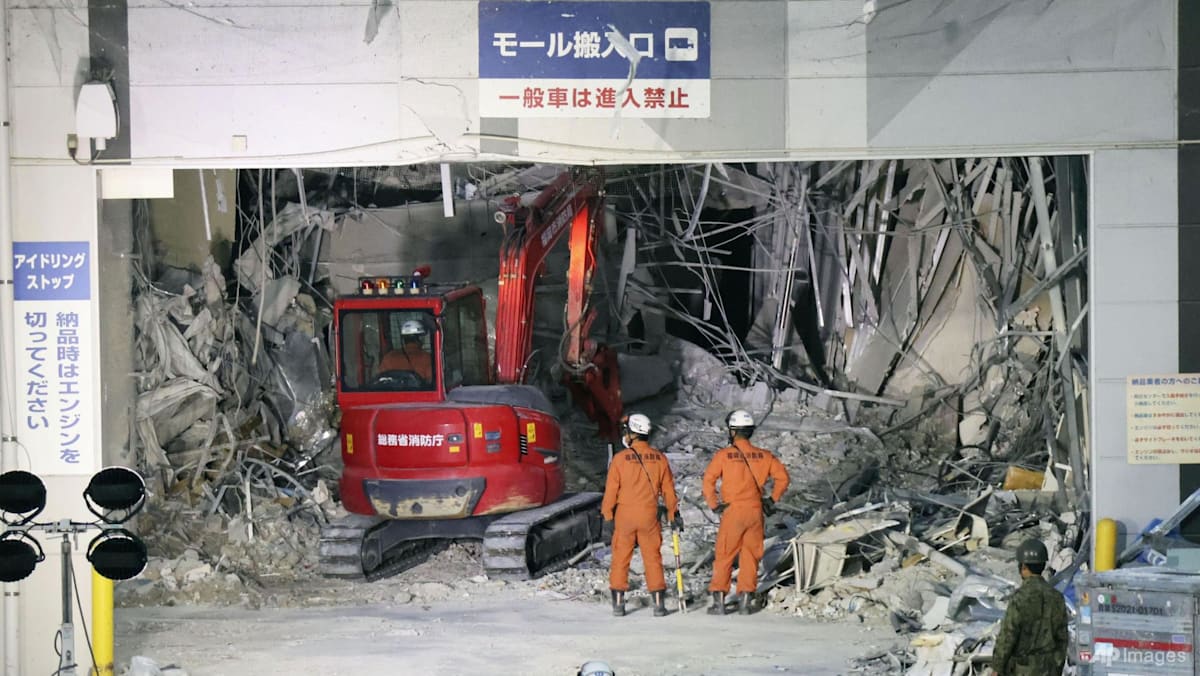
FACTORIES GRIND TO A HALT
The earthquake has also brought auto and chip factories to a halt, exposing the vulnerability of Japan’s manufacturing supply chains, a decade after a devastating quake in the same region triggered widespread industry disruption.
Kumamoto is critical to Japan’s auto industry and known as well as the country’s “Silicon Valley” due to its concentration of semiconductor firms.
While economists don’t expect disruption on the scale seen after the 2016 quake, problems could persist for the likes of automakers, where parts shortages can snarl production far and wide.
Toyota, for example, has suspended production at three plants in Fukuoka, north of Kumamoto, through to Aug 5, while even one of its plants in Aichi – more than 600km from the disaster site – will be idled next week.
A Toyota spokesperson said the decision for the suspensions was made in consideration of safety and the situation at distribution companies and suppliers.
Some second- and third-tier suppliers that make parts for the biggest “Tier 1” suppliers appeared to have been affected by the quake as well, one industry executive told Reuters.
Denso, the world’s second-biggest auto parts maker, said one of its suppliers in the area had reported impact from the quake and 13 others were assessing the situation.
Given Japan’s proneness to disasters, manufacturers have for decades sought to strengthen the resilience of parts supply. The latest quake will be a test for how robust their efforts have been.
The world’s largest contract chipmaker, Taiwan Semiconductor Manufacturing Co, evacuated personnel from its Kumamoto plant immediately after the quake on Tuesday afternoon but a few hours later said it had begun resuming operations.
Others have been slower.
Chipmaker Renesas said it would only be able to resume operations at one of its Kumamoto plants – which had fallen ceiling panels, cracks in walls and some water leaks – in phases from Aug 5.
Read the full article here


