



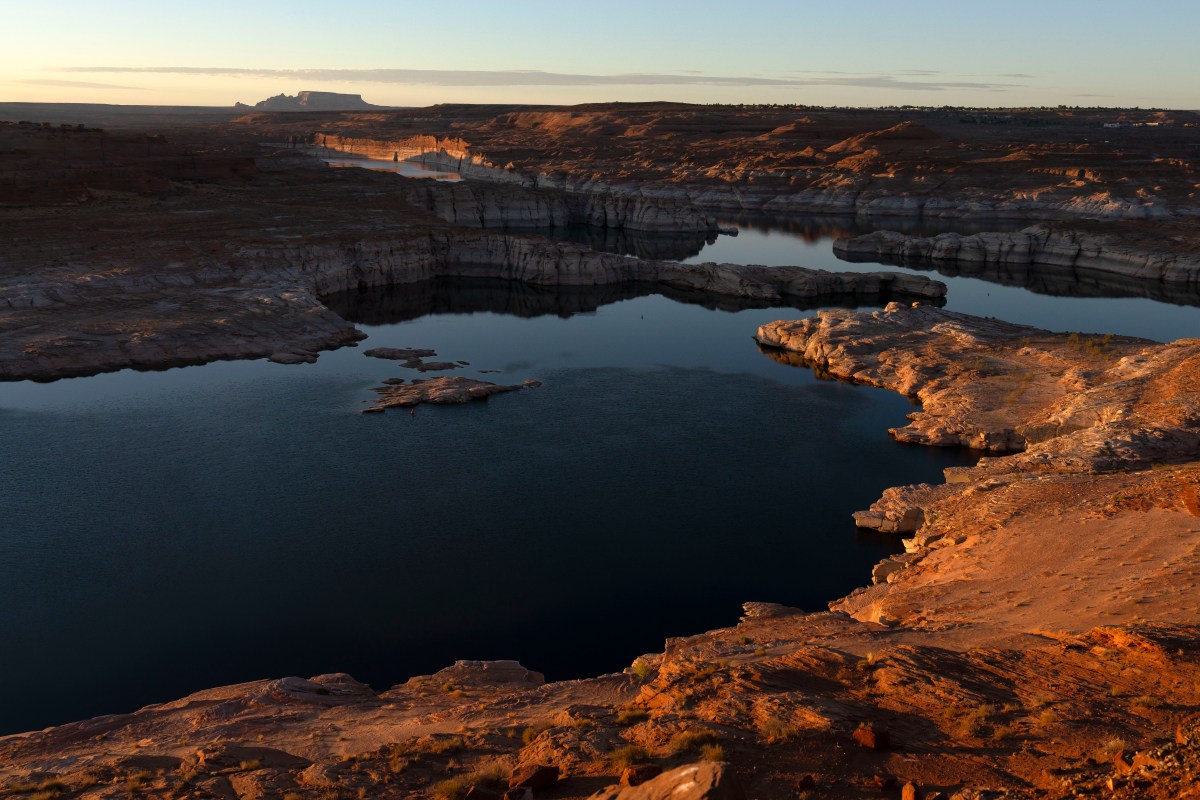
Lake Powell could match or exceed its 2002 record-low spring runoff after a warm, dry March helped slash projected inflows to 1.4 million acre-feet, or 22 percent of normal, according to reports.
Why It Matters
The Colorado River system, which encompasses major reservoirs such as Lake Mead and Lake Powell, provides irrigation for more than 5 million acres of farmland and delivers water to about 40 million people throughout the western U.S., according to the National Agricultural Law Center.
Located on the border of Utah and Arizona, Lake Powell—the second-largest manmade lake in North America—is impounded by the Glen Canyon Dam, which produces power distributed across Wyoming, Utah, Colorado, New Mexico, Arizona, Nevada, and Nebraska, according to the Bureau of Reclamation (USBR).
What To Know
The Colorado Basin River Forecast Center (CBRFC) reduced Lake Powell’s expected seasonal inflow by nearly 1 million acre-feet from its March outlook after record warmth and dryness accelerated snowmelt and diminished snowpack across the Upper Colorado River Basin, KSL reported.
The downgraded forecast raises the probability to about 30 percent that Lake Powell’s inflows will tie or fall below the 2002 record of roughly 964,000 acre-feet, KSL said, reporting remarks from CBRFC hydrologist Cody Moser that the probability would rise further if warm, dry conditions persist.
“If we were to see the normal [precipitation] and temperature now through the end of July, we would expect this to stay relatively [close to the projection].…If we were to see 2002 precipitation and temperature now through the end of July, that would result in a new record low.”
The states that depend on the Colorado River system—California, Arizona, Nevada, Colorado, Utah, Wyoming and New Mexico—have also missed recent deadlines to reach water management agreements.
“It’s just a really tough situation,” director of the Utah Department of Natural Resources Joel Ferry told KSL.
“You’re talking about the lowest snowpack, the hottest temperatures that we’ve ever seen [during the snowpack season], and Lake Powell didn’t start off in good shape to where we had kind of a bank account to draw from.…We’re in a really tough shape.”
What People Are Saying
Peter Soeth, the Bureau of Reclamation’s deputy chief of public affairs, told Newsweek previously: “Reclamation continues to monitor hydrologic conditions and apply the best available information to guide operational decisions that support the long-term stability of the Colorado River system.”
What Happens Next
The downgrade comes after projections earlier this year already indicated that Lake Powell may drop to minimum hydropower level in December, potentially jeopardizing Glen Canyon Dam’s ability to generate power.
Read the full article here


