



Tracy was at the front of a room inside London’s majestic Royal Albert Hall, a stand-up star in the making. As a homeless woman trying to survive on the city’s unrelenting streets, she was used to being invisible. But for one afternoon in March, all eyes were on her – and she was bringing this house down, so to speak.
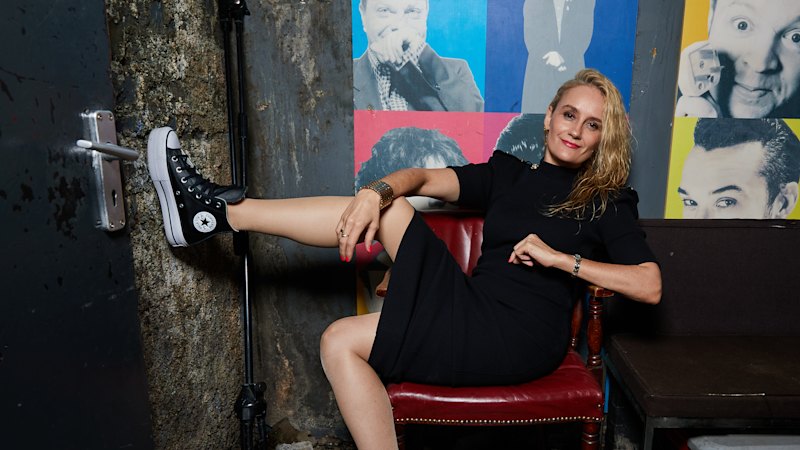
“I looked over and I saw the most beaming human being,” says Louisa Jackson (or “Lu”, as she’s better known), a London-based Australian tech entrepreneur. “To me, it was a lightbulb moment; I want to cry thinking about it. She wasn’t just happy to perform, she was a part of something. I’ll never forget the look on her face, and I was going, ‘Yeah, what we’re doing is making a massive difference to people’s lives.’ ”
Tracy came to comedy via an unusual path, thanks to a workshop that Jackson produced as part of a trial being conducted in the UK that she hopes will lead to her stand-up lessons being prescribed on the country’s National Health Service (NHS) for rough sleepers, those experiencing bereavement, dementia patients and other trauma-affected people.
‘I say to people we’ve never been more connected with technology, but we’ve never been more disconnected from one another.’
Craic Health’s Louisa Jackson
Jackson, originally from Brisbane, is the founder of creative technology platform Craic and now she is having a crack – with Craic Health, helping people who are struggling and easing the pressure on the NHS with what she calls “comedy on prescription”. She wants to bring it to Australia, too.
“I say to people we’ve never been more connected with technology, but we’ve never been more disconnected from one another,” says the 44-year-old expat. Jackson tells me about a photo she’s just seen of a man playing chess on his computer at a communal table in a park, alone, which has gone viral on X. “It is such a good meme for the times.”
Although not a comedian herself, Jackson is a lover of stand-up and in 2002 co-founded VidZone, one of the world’s first online music video streaming services. Having now established Craic, described by the UK’s Women in Tech Policy network as “the global operating system for comedy” and a leader in comedy industry technologies, she’s planning to use Craic Health as a “comedy-on-prescription hub”, listing certified providers, comedy events (including for seniors, veterans and new parents), bookable services, such as corporate wellbeing sessions, plus online courses and other useful information.
Some people may consider comedy a frivolous and lowbrow art, but there may also be something to the saying that laughter is the best medicine. According to one 2018 study in which 17 elderly people performed stand-up once a week over a month in a day care centre they attended, the intervention led to a significant decrease in systolic blood pressure and heart rate, and other benefits. Although cognitive function was not impacted, the study concluded that “laughter therapy could be expected to be a low-cost, safe, and practical treatment that nurses can use”.
Matilda Knowles, a Monash University PhD candidate looking at the nexus of comedy and mental health, says there has “always been research that looks at the positive impact of watching and performing” although not in the same studies. “In short, the small amount of existing research says it’s helpful, but we need more research,” she says.
In the UK, an award-winning program called Comedy on Referral was funded and prescribed by the NHS in 2022. But Jackson has registered the trademark for the term “Comedy-on-Prescription” in Australia, the UK and the US, and hopes that it will become available within the NHS under the wider umbrella of social prescription: the practice of connecting patients to non-clinical activities and community support to improve health and wellbeing.
Social prescription has a range of advantages, from decreasing isolation to reducing the pressure on GPs and hospitals, and is offered as an adjunct to traditional medicine. Today, everything from befriending programs to museum visits to community gardening is on offer, depending on location.
‘Humour and laughter are social experiences. They can reduce isolation, create a sense of belonging and help people feel more connected to others.’
Dr J.R. Baker, chair of Australian Social Prescribing Institute of Research and Education
In Australia, social prescription consists of stand-alone short-term projects or pilot studies funded via primary health networks or charities. Examples include trips to Queensland’s Art Gallery for dementia patients, trekking in Western Australia and ocean swimming in Tasmania. It’s to this mix that performing – and watching – stand-up could be added.
“Humour and laughter are social experiences,” says Dr J.R. Baker, chair of Australian Social Prescribing Institute of Research and Education. “They can reduce isolation, create a sense of belonging and help people feel more connected to others. There is a lot of research to suggest the benefits of laughter.”
Dr Kuljit Singh is national chair of the social prescribing specific interest group for the Royal Australian College of General Practitioners and a Gold Coast-based GP of over two decades. She uses social prescription in her practice. “It is an additional tool in the toolbox for managing all of our diseases,” Singh says. “So comedy, whatever artform we’ve got, I would highly recommend.”
In the UK, Jackson hopes that Comedy-on-Prescription will be available on the NHS within the next 12 months. She has run two London trials that have shown promising results, with 20 in progress and more than double that number expected by the end of the year. Using a standardised clinical mental wellbeing scale, participants in the second trial measured a statistically significant increase in wellbeing.
Last year, MP Dr Simon Opher, a GP and social prescribing pioneer who has been working closely with her, asked the then UK prime minister, Keir Starmer, to back the initiative. Opher tells Good Weekend that getting it on to the NHS “won’t be instant, but it’s certainly achievable”. The key, he says, will be working with local providers, community groups, and clinicians to make sure it’s delivered safely and effectively. “It’s about starting small, proving what works and scaling up,” Opher says.

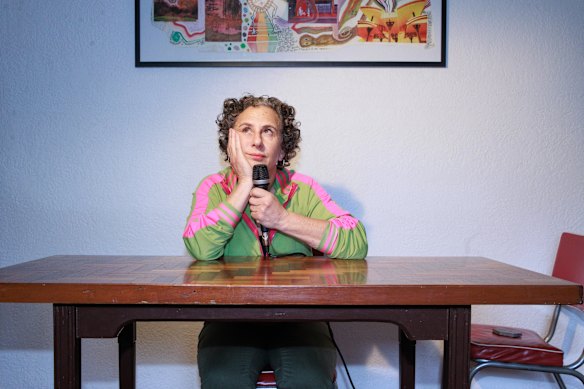
Melbourne-based comedian Justine Sless is being lined up to become an Australian Comedy-on-Prescription facilitator. She’s already been providing what you could call a loose form of the concept for more than 20 years at the stand-up workshops she runs for people experiencing or at risk of homelessness, or grappling with acute mental health and substance addiction.
Sless recalls a workshop she once attended in a rooming house for a motley crew. “It was beautiful,” she says. “One of the performers got on stage, and I could see what was happening with them. Fear was taking over. They were trembling and about to cry. I said really quietly to them, ‘I’ll stand next to you.’ Every time I see them now they say, ‘You stood next to me.’ ”
The sessions, she says, have been a “gamechanger” for people in distress. In May, Sless ran a trial workshop in Sydney for Clean Slate Clinic, a social enterprise providing medicated withdrawal and recovery services for people dependent on alcohol, stimulants or cannabis. If Comedy-on-Prescription gets the go-ahead in Australia, Sless may run more workshops for the clinic – or have clients directly referred.
Jackson, meanwhile, is looking at how the initiative might be funded here. Options include using a mix of private donors and working with charities and the government to secure grants for it. She’s already caught the attention of Mark McConville, a Gold Coast-based comedian of nearly three decades and now a suicidologist, a rare combination. He founded The Laughter Clinic, which uses humour and laughter to treat stress, anxiety and depression with presentations, workshops and programs.

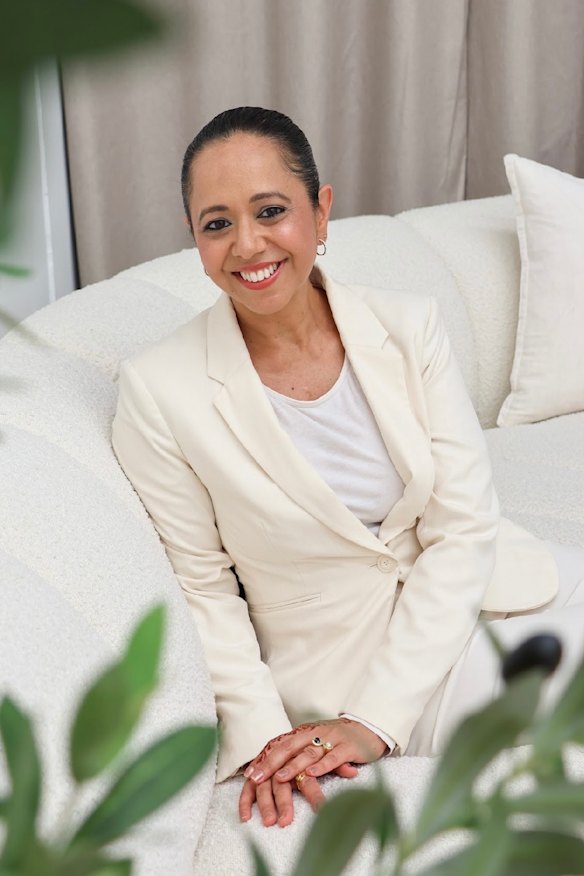
McConville wants Comedy-on-Prescription to be covered by Medicare. One of the commonalities in “Blue Zones” – regions where people report exceptional longevity – is community. But one in five people put off or did not visit a mental health professional because of cost, the National Mental Health Commission’s National Report Card 2024 found – a steady increase over the prior three years. There is “no money in being well”, says McConville. “We have a reactive health system.” And yet poor mental health directly costs the Australian economy an estimated $40-70 billion annually.
Then there’s the ultimate price. Suicide is the third-leading cause of premature death from injury or disease and the main cause of it among people aged 15 to 44, according to the federal department of health. About 3000 people end their life each year. “They’re not just numbers, these are actual people – fathers, mothers, sons, daughters, who have taken their own life and will be missed,” McConville says. “For every one person who dies by suicide, we know that around 25 people have attempted it.” Each death has a “ripple effect”, too, impacting an estimated 135 more people. This makes Comedy-on-Prescription a “no-brainer”, he says.
The World Health Organisation reported last year that more than 1 billion people globally have mental health disorders – and that more investment and action is needed to scale up services to support them. To address this, at least partly, we might need to look for answers in unexpected places.
Jackson has never performed a stand-up set, but might now be one of the most determined and passionate people working in comedy. “What I do is all about reducing barriers and improving systems,” she says. “I think that we could be a lot happier.”
Read the full article here


