



RESILIENCE AMID CHALLENGES
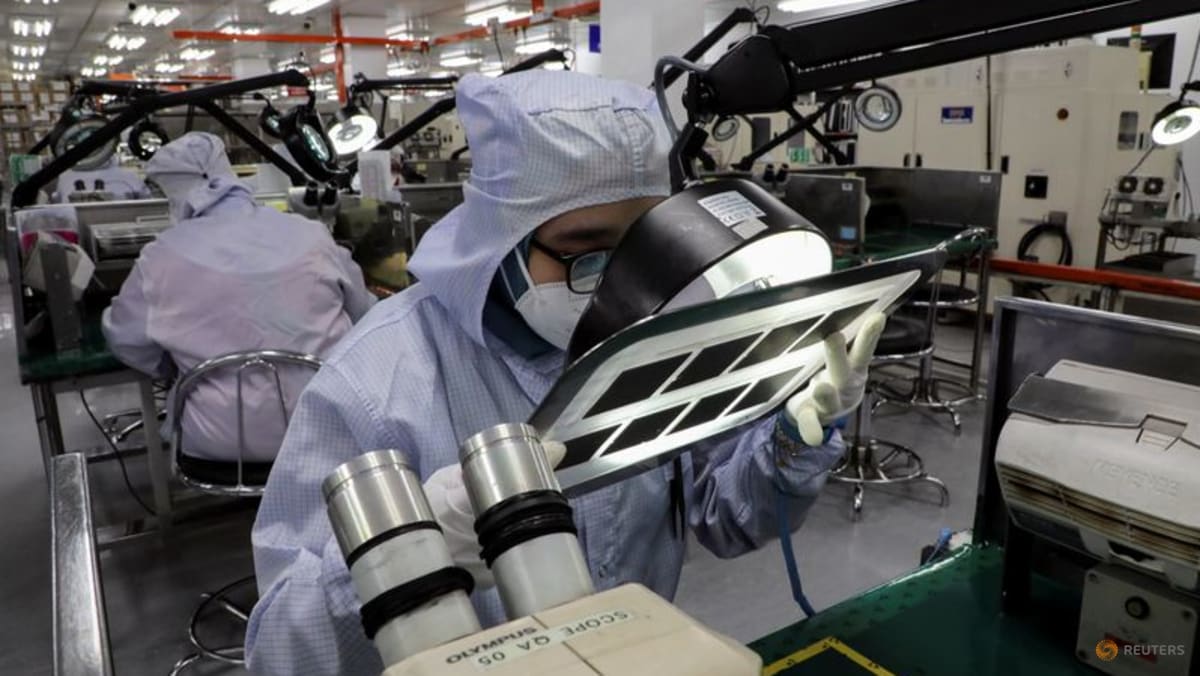
Despite these pressures, the industry’s resilience is underpinned by a mature ecosystem built over five decades.
Still, companies face a complex set of external challenges, including the Iran conflict, rising oil prices, geopolitical tensions disrupting supply chains and tariff concerns, Wong said.
To stay competitive, Malaysia needs to boost productivity.
The country is pushing to move up the value chain, with plans to expand into higher-value segments such as integrated circuit design.
It aims to train 60,000 engineers and attract US$125 billion in investments to support this shift.
Deputy Investment, Trade and Industry Minister Sim Tze Tzin said demand for semiconductors remains strong, with companies looking to expand operations despite global uncertainties.
“The semiconductor industry in Malaysia is still booming,” he added. “Semiconductor companies are looking beyond the war and doing what is necessary because of the demand globally.”
He added that Malaysia and the larger Southeast Asia region stand to benefit as firms diversify supply chains away from conflict zones.
Observers say Malaysia’s established infrastructure, skilled workforce and government incentives make it a preferred destination for long-term semiconductor investments.
Its neutral stance amid United States-China tensions has also strengthened its appeal to investors, said Sim.
“Of all the unfortunate things that’s happening in the whole world, Malaysia is fortunate enough to become the bright spot for the world, in terms of investment,” he said.
“I think we are ready to take up, to build back better.”
Read the full article here


