



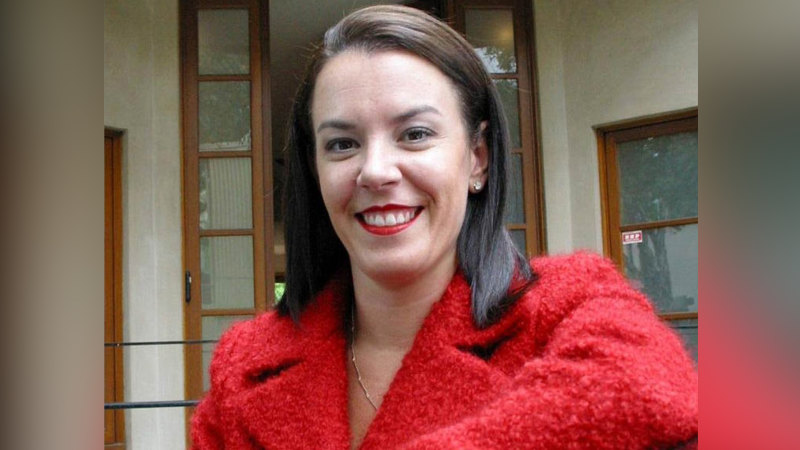
Almost six years since her mysterious disappearance and 56 court mentions later, the estate of fraudster Melissa Caddick has finally been wound up, with creditors receiving a return of 40¢ for every dollar they invested.
“We, the investors, now have closure of the challenging, traumatic and emotional chapter,” said one investor who was ripped off by the woman she had regarded as a friend.
Caddick, 49, disappeared before dawn on November 12, 2020. The previous day her house had been swarming with Australian Federal Police officers executing search warrants on behalf of the corporate regulator, ASIC, relating to a $23 million Ponzi scheme she’d been running since 2012.
Her husband, Anthony Koletti, took more than 30 hours to report that his wife had gone missing.
Her partial remains washed up in her running shoe at a remote beach 400 kilometres south of Sydney in February 2021.
When Caddick vanished, 55 family and friends discovered she had stolen more than $23 million from them, pretending she was investing in shares on their behalf.
“She is the con artist of the century,” said one victim whose extended family had invested with Caddick. “I was dry retching when I found out.”
The conwoman used the money stolen from her friends and family to fund a lavish lifestyle, including spending almost $1 million on luxury shoes, clothes, accessories and jewellery.
There were private jets, ski holidays in Aspen, fancy cars and her Dover Heights home, bought for $6.2 million in 2014.
Two years later, she bought her parents a $2.55 million penthouse and, only months before her disappearance, she inspected a Rose Bay waterfront property but told the agent she wanted to pay $32 million. It sold for $35 million.
Court-appointed receiver Bruce Gleeson, from insolvency firm Jones Partners, said unravelling Caddick’s financial dealings turned out to be one of the longest-running and “most challenging” of his career.
Among the assets Gleeson identified and sold was Caddick’s teenage son’s $17,000 sneaker collection, $867,000 from the auction of Caddick’s jewellery and designer goods and $361,000 realised from the sale of cars.
Caddick’s Dover Heights house was sold for $9.8 million and her parents’ Edgecliff penthouse for $4 million.
More than $260,000 was recovered from Christian Dior after an anonymous call – two years after Caddick’s disappearance – revealed that the famed fashion house was holding a ring and a substantial amount of funds on Caddick’s behalf.
Even the Tax Office returned more than $1.7 million in taxes Caddick had paid to create the appearance she was operating a legitimate business.
Gleeson said that, while his firm was pleased to have recovered almost 40¢ in the dollar from Caddick’s $23 million fraud, “the emotional and financial toll on those investors, when they realised their savings were anything but safe, was never lost on us throughout this process”.
Before handing over any money, Gleeson urged investors to check whether the individual or business holds an Australian Financial Services Licence (AFSL).
A number of Caddick’s clients received slightly more than 40¢ in the dollar following successful legal action against several auditors of her clients’ Self-Managed Super Funds who failed to do an annual audit to check the validity and accuracy of financial statements.
Gleeson also urged investors to look closely at documents. Caddick had created a bogus CommSec trading account for each new client. CommSec clients have an eight-digit account number. Caddick’s forged document had only six digits. Using a cut-and-pasted CommSec logo, at the end of each month she emailed her clients a report.
The shares in which she “invested” her clients’ funds never made a loss, but showed a dazzling return, sometimes up to 30 per cent.
In May 2023, Deputy State Coroner Elizabeth Ryan found that, while the notorious fraudster was dead, the cause and manner of her death were set to remain a mystery because her husband failed to provide a “frank account” of what took place during the 30 hours before he reported his wife missing.
The coroner said she accepted the evidence of a forensic psychiatrist who suggested that “when faced with the shame of exposure and the potential loss of her family, her friends, her career and her reputation”, Caddick’s narcissistic personality may have prompted her to take her own life.
If you or anyone you know needs support, you can contact Lifeline 131 114 or Beyond Blue 1300 224 636.
Get the day’s breaking news, entertainment ideas and a long read to enjoy. Sign up to receive our Evening Edition newsletter.
From our partners
Read the full article here


