



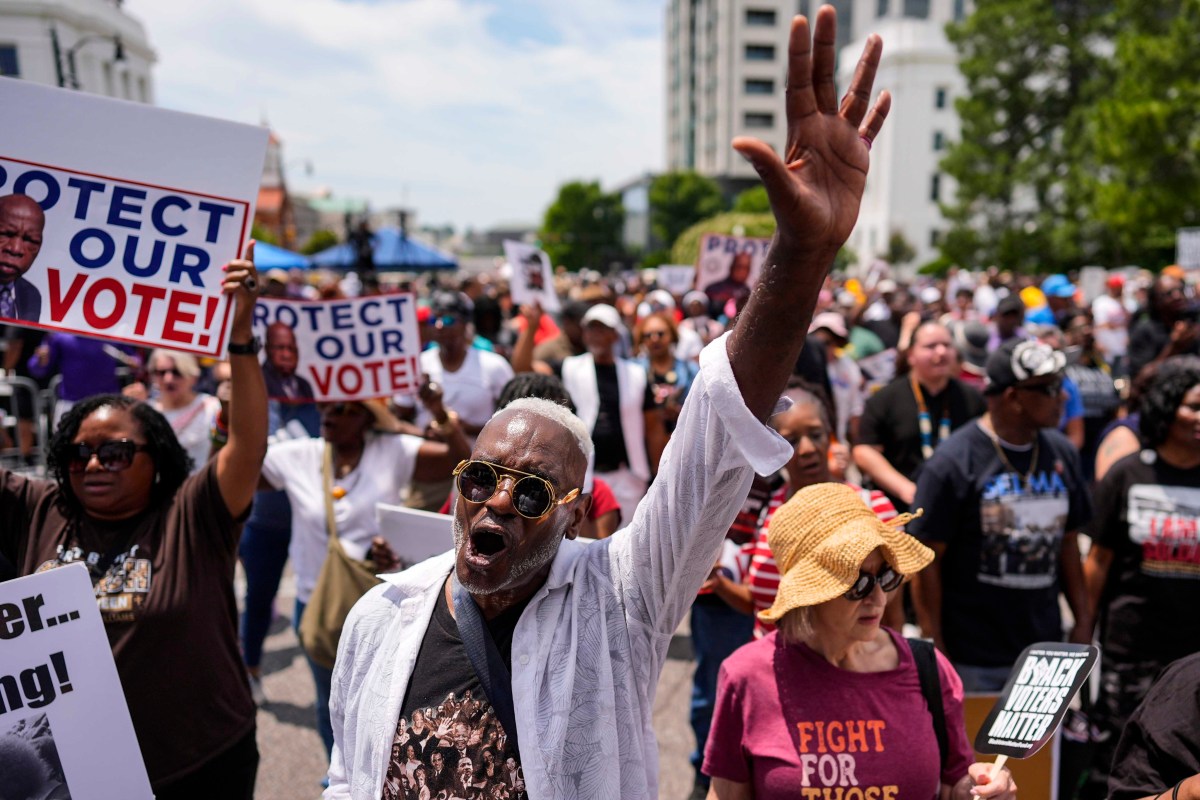
Dozens of politicians, clergy members, community leaders, and voting rights activists—including Martin Luther King Jr.’s daughter, Bernice King—gathered in Alabama on Saturday in a show of support for voting rights protections and Black political representation.
The demonstration highlights growing concerns over voting representation following redistricting disputes and a recent Supreme Court ruling that weakened parts of the Voting Rights Act.
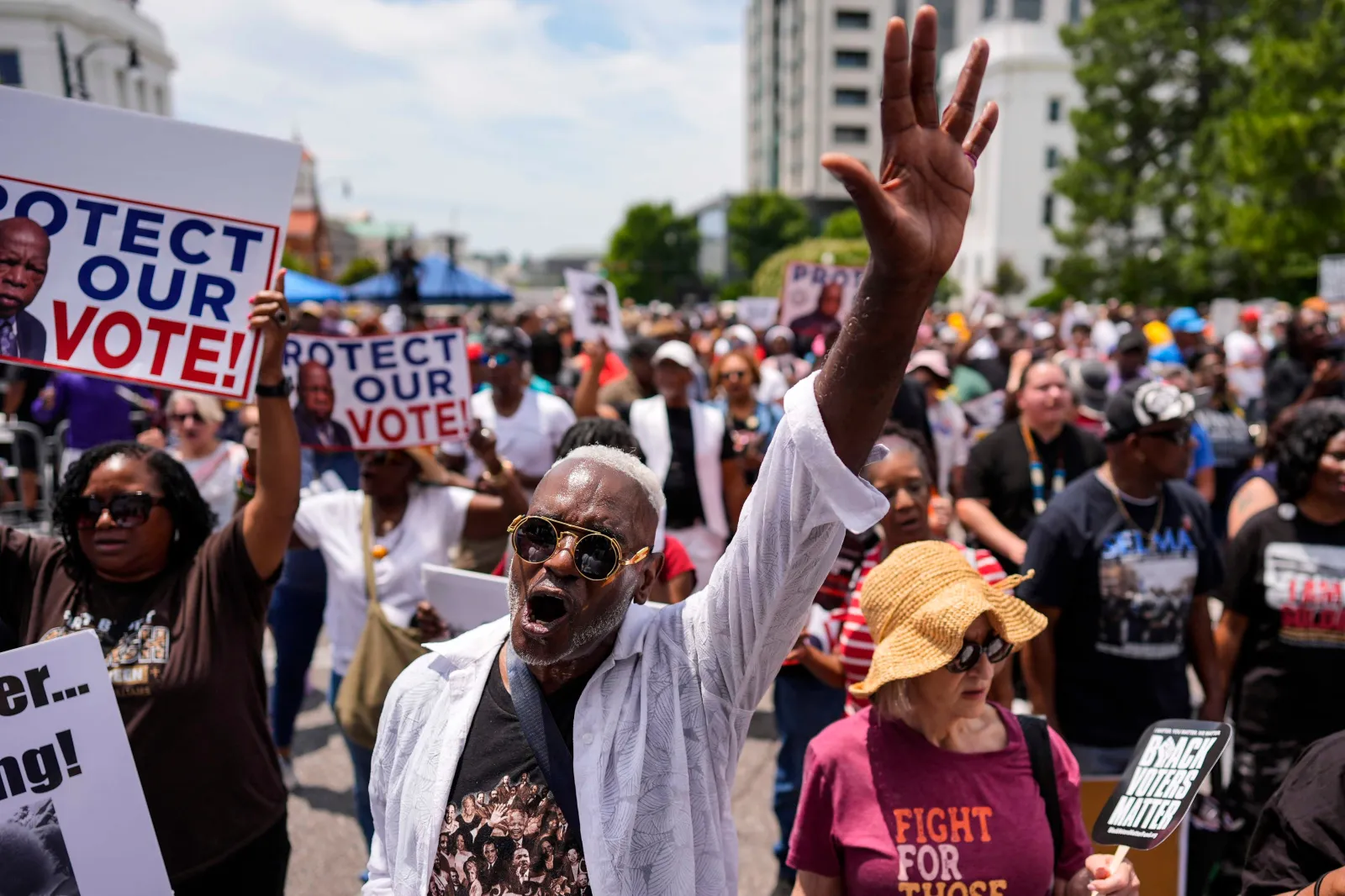
Thousands of protesters filled the streets, beginning the day with a faith gathering in Selma before traveling by bus to Montgomery. The two cities remain central to the legacy of the Civil Rights Movement and the push for the 1965 Voting Rights Act. Saturday’s rally comes just six months ahead of the midterm elections, when several new congressional maps will take effect.
“This is a time to protect our power, defend democracy, and keep moving forward together,” King wrote in a post on X ahead of the protest.
What Was the Rally For?
Organized by several advocacy groups, including the Black Power War Room and Black Voters Matter, the event was designated as a National Day of Action.
“We are seeing a full-fledged concentrated attack on Black political power,” LaTosha Brown, co-founder of Black Voters Matter, said on Saturday, per the Associated Press.
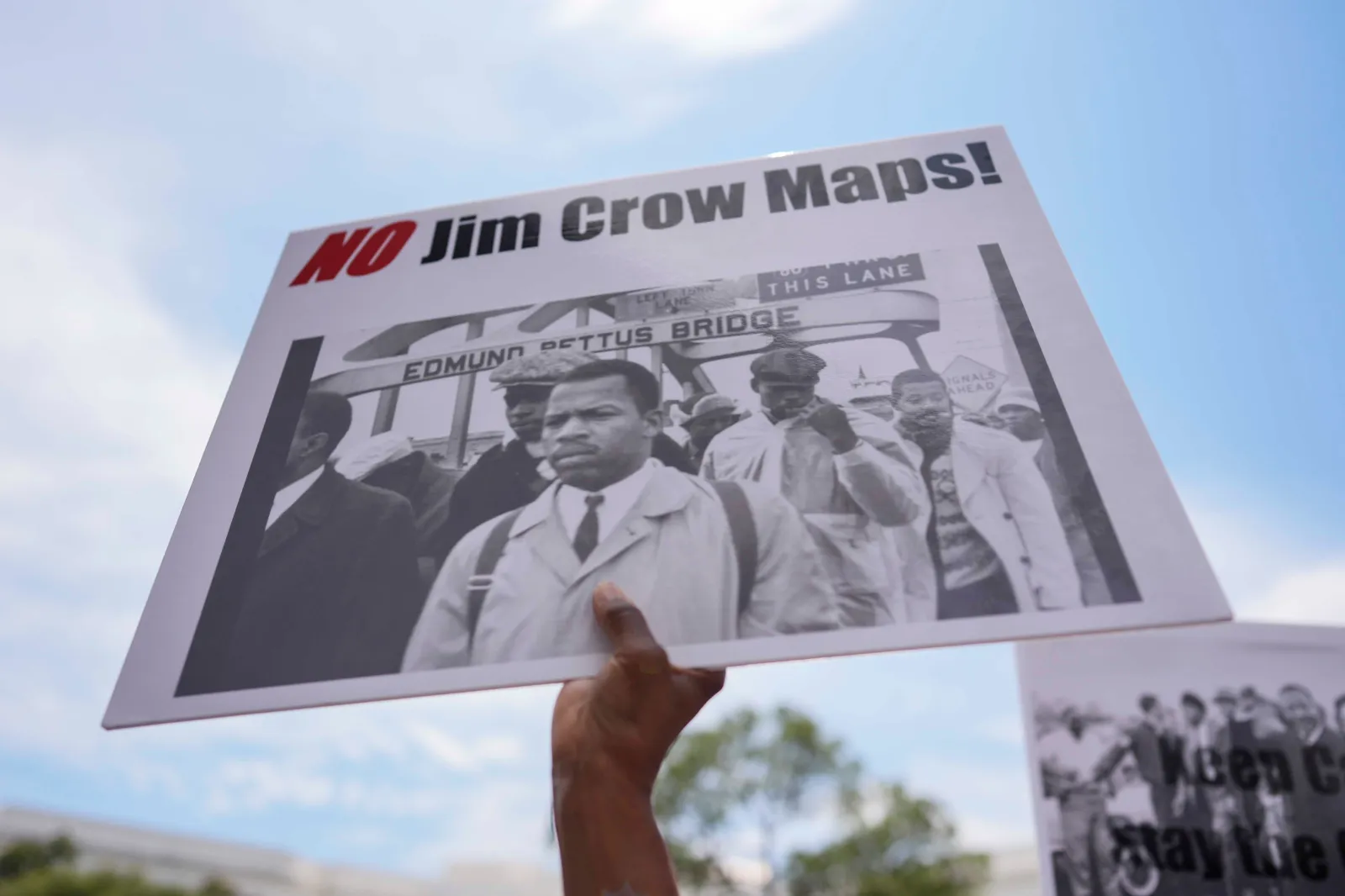
The crowds gathered near historic landmarks in Montgomery, including the Alabama Capitol. The site carries deep historical weight: it is where the Confederacy was founded in 1861, and where the Reverend Martin Luther King Jr. spoke in 1965 at the conclusion of the historic Selma-to-Montgomery voting rights march.
Politicians from across the country traveled to Montgomery in solidarity, including Democratic Senator Cory Booker and Representative Alexandria Ocasio-Cortez. “If we in our generation do not now do our duty, we will lose the gains and the rights and the liberties that our ancestors afforded us,” Booker told the crowd.
Reverend Jamal Bryant, pastor of the New Birth Missionary Baptist Church, also addressed the crowd in Alabama’s capital. “Today is the death of the Confederacy,” Bryant said, urging younger Americans to carry forward the causes of the Civil Rights Movement. “I am tired of us just letting older people die with the torch in their hands. It’s time for a new generation to take over.”

What Did the Supreme Court Rule on Voting Rights Act?
- In late April, the Supreme Court ruled in Louisiana v. Callais that Louisiana’s congressional map amounted to an unconstitutional racial gerrymander, finding the state relied too heavily on race when drawing a second majority-Black district. The majority opinion said, “Compliance with §2 [of the Voting Rights Act] thus could not justify the State’s use of race-based redistricting here. The State’s attempt to satisfy the Middle District’s ruling, although understandable, was an unconstitutional racial gerrymander.”
- The case stemmed from Louisiana’s effort to redraw its congressional districts following population changes identified in the 2020 census.
- In 2022, Louisiana enacted a congressional map that maintained only one majority-Black district, despite Black residents making up roughly one-third of the state’s population. Civil rights groups sued, arguing the map diluted Black voting power in violation of the Voting Rights Act.
- After multiple legal challenges, Louisiana adopted a revised map known as SB8, which added a second majority-Black district stretching from Baton Rouge to Shreveport.
- A separate group of plaintiffs then challenged SB8, arguing the district was drawn predominantly on the basis of race and violated the Equal Protection Clause. Lower courts sided with the challengers before the case reached the Supreme Court.
- Writing for the majority, Justice Samuel Alito said Louisiana’s attempt to comply with the Voting Rights Act did not justify the state’s use of race-based redistricting.
- The ruling intensified national debates over voting rights and redistricting, particularly in Southern states where legal disputes have centered on how congressional maps affect Black political representation.

Alabama’s Map Battle
- Alabama Republicans have sought to redraw the state’s 2nd and 7th Congressional Districts following recent court rulings over racial gerrymandering and Black voter representation. Both districts are currently represented by Black Democrats.
- The legal fight centers on whether Alabama’s congressional map unlawfully dilutes Black voting power under the Voting Rights Act. Republican lawmakers have argued the districts should be redrawn, while voting rights advocates say changes will weaken Black representation in the state.
- The matter is now before a three-judge federal panel based in Birmingham, which will decide whether Alabama must adopt a new congressional map. Court filings from both sides referenced the state’s election calendar after congressional primary proceedings were delayed to allow time for redistricting litigation and potential map changes.
- Primaries are scheduled to take place on August 11.
- State lawmakers across the country have moved to redraw congressional maps in an effort to strengthen the party in power. Last year, Texas lawmakers approved a mid-cycle congressional redistricting plan pushed by Republicans after encouragement from President Trump, a move to help the GOP gain five seats. California Democrats, led by Governor Gavin Newsom, responded with their own map designed to give the party five additional seats.
Reporting from the Associated Press contributed to this article.
Read the full article here


