



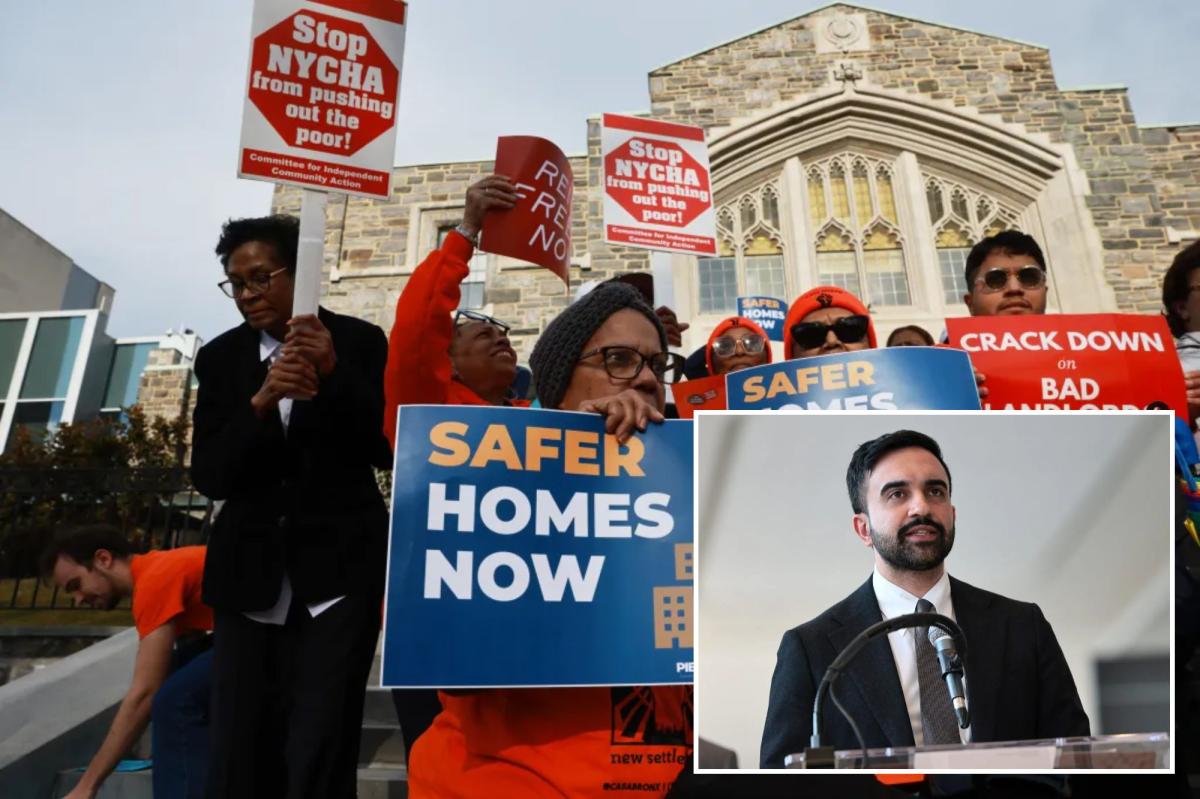
Nearly 10% of rent-stabilized properties in New York City are run down, it was revealed Thursday — as landlords claimed Mayor Zohran Mamdani’s promised rent freeze will only make it harder to get those units up to snuff.
Members of the city’s Rent Guidelines Board said at their first meeting of the year Thursday they expect to approve the rent freeze in May, fulfilling a key campaign promise of the new, democratic socialist mayor.
Brian Hoberman, the RGB co-research director, told the board that 9.2% of rent-stabilized buildings were considered distressed, slightly fewer than last year’s 9.3%.
“Since 1990, when 13.9% of stabilized properties were considered distressed, the proportion of distressed buildings declined to as low as 4.9% in 2016,” said Hoberman.
“Subsequently, distress rates rose. So by 2022, the distressed rate was up to 9.8% and since falling over the last two years to 9.2%,” he said.
Hoberman claimed that: “Revenues generally exceed operating costs, generating funds that could be used for mortgage payments, improvements and pre-tax profit.”
But Christine Smyth, an owner representative on the board who was appointed by former Mayor Eric Adams, argued the financial state of these buildings was much more dire.
“We can’t just look at that mean or median numbers that’s going to not tell us what’s going on at the tails,” she said, noting that the COVID pandemic hurt landlords so badly, that they are still just breaking even.
The tally only includes nearly 18,000 of the 50,000 buildings since ones with 11 units or fewer are not required to report finances to the city.
The distressing stat comes after Mamdani campaign that was based around freezing the rent for New Yorkers is stabilized apartments.
The board is set to cast its first vote on the freeze in early May.
Former Mayor Bill de Blasio’s administration froze the rent three times during his tenure starting in 2015 — just as the percentage of distressed properties started to tick up each year.
De Blasio heralded the board’s decision in 2017 after the two consecutive rent freezes, saying, “I’m very proud that the board made that decision.”
“That’s never been done in history before,” he said, adding, “That happened under this administration because I instructed the Rent Guidelines Board — I name the members — and I instructed them to not follow the biases of the past, but be respectful of the needs of tenants and not just the needs of landlords, and look at all the facts.”
Read the full article here


