



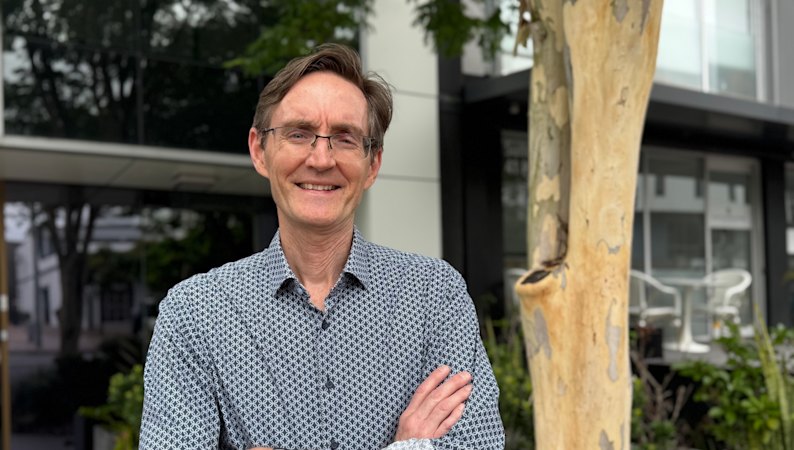
When Craig Stanley-Jones’ six-year-old daughter suddenly stopped talking, eating and sleeping, he was at a loss for where to turn for help, despite almost two decades working in mental health.
The Brisbane dad called a 24-hour child and youth mental health support line.
They told him his options were limited, encouraging him to ask for the Acute Response Team (ART) if they decided to take her to hospital.
Days after their daughter became unwell, Stanley-Jones and his wife took her to emergency.
“We turned up at the hospital after making a call at 4 o’clock in the morning,” he says. “We started telling the intake nurse about her symptoms … but she said, ‘I’m not sure if we can help you.’
“She was about to turn us away [when I asked] about the ART team. And her face just lit up.”
Stanley-Jones’ daughter spent weeks in hospital and was later diagnosed with autism, attention deficit hyperactivity disorder and obsessive compulsive disorder. The episode was triggered by a combination of her neurodevelopmental conditions and a sharp change in routine.
“Just saying those words got us [into the hospital], but what if you were someone who just turned up and didn’t have that information, how would you get your child help?” Stanley-Jones says.
He spoke to other people who had faced similar challenges navigating mental health systems for their kids.
“We decided we needed an organisation, and hence Raising Minds was formed in December 2022.”
Raising Minds is a peer-led, lived-experience organisation offering workshops, information and resources.
Mental health disorders such as anxiety and depression affect an estimated one in seven Australian children aged between four and 17, with half of all adult mental illness beginning before the age of 14.
Stanley-Jones estimated 50,000 young people – “a stadium full of kids” – in Queensland who, alongside their families and carers, would benefit from their work.
“Benefit in the sense of navigating the mental health system, finding the right service, [and] getting an understanding of the education system as well.”
While some parents home-school as a preference, Stanley-Jones says he hears from many families who have abandoned mainstream school as a result of their child’s neurodevelopmental or mental health challenges.
“The difficulty in keeping a kid going to school or engaged in school is part of the journey, and some of our workshops are just focused on navigating the education system,” he said.
Home-schooling registrations have nearly doubled in Queensland since 2020, with about 11,800 students registered for home education as of August 2025.
A survey of parents in 2023 revealed 61 per cent of the children being home-schooled in the state had a disability or health issue, including ADHD, autism or a mental health condition.
Raising Minds has secured federal funding with Parent to Parent Association Qld Inc, a not-for-profit assisting people with disabilities and their families, to run the Resilience in Reach project which includes the delivery of nearly 60 workshops across Queensland.
“There are organisations working with parents, families, carers and kin in Queensland in the mental health space, but not in that child and youth space, which is very different,” Stanley-Jones said.
“Not everyone has the resources or knows where to turn to. We’re trying to provide the torch in terms of the way ahead for people to find their way.”
If you, or someone you know, needs support you can call Lifeline on 13 11 14 or Beyond Blue on 1300 224 636.
Start the day with a summary of the day’s most important and interesting stories, analysis and insights. Sign up for our Morning Edition newsletter.
From our partners
Read the full article here


