



Good morning from Brussels. I’m Mared Gwyn.
The President of the International Energy Agency (IEA), Fatih Birol, has warned the world that the energy fallout of the Iran war could be worse than the impacts of the twin 1970s oil crises and Russia’s war in Ukraine combined, as the Trump-imposed deadline on Iran to open the Strait of Hormuz nears. We have the latest from the Middle East further below.
But we kick off today with a round-up of election results across Europe, starting with Slovenia, where Prime Minister Robert Golob’s centrist Freedom Movement claimed a narrow victory over right-wing nationalist Janez Janša’s Slovenian Democratic Party (SDS) on Sunday night, after a dramatic, last-minute turnaround in the polls.
Yet the slim margin of victory narrowed even further as the results were confirmed overnight, with the result effectively tied this morning. Golob’s Freedom Movement holds 29 seats to the SDS’s 28 in the country’s 90-seat parliament, making the road ahead to forming a government fraught with difficulty.
Janša – an ally of Hungary’s Viktor Orbán and admirer of US President Donald Trump – had been topping opinion polls for over a year before allegations of foreign interference torpedoed his campaign in the final stretch. The centre-left coalition government had accused him of enlisting the support of Black Cube, a private Israeli intelligence firm, to discredit Prime Minister Golob.
Tapes showing a Slovenian lobbyist, lawyer and former minister discussing ways of influencing Golob’s government had leaked publicly, as part of what journalists, activists and the government said was a coordinated campaign to smear Golob with corruption allegations and sway the result of the vote.
While Janša has acknowledged contact with Black Cube, he denies that any of those conversations related to the election. The Israeli firm has in the past been linked to campaigns seeking to discredit women accusing disgraced former film producer Harvey Weinstein of sexual violence.
Although the road ahead to forming a government in Ljubljana remains unclear, Janša’s sudden drop in the polls comes as a blow to a growing group of like-minded nationalist EU leaders, including Hungary’s Orbán, Slovakia’s Robert Fico and the Czech Republic’s Andrej Babiš.
Janša’s victory would have set the stage for his political ally across the border in Hungary, as Viktor Orbán faces the biggest contest of his political career to date when Hungarians head to the ballot boxes on April 12.
Orbán has been trailing opposition leader Péter Magyar of the conservative Tisza party in the polls for months, but the result is looking increasingly unpredictable as the campaign gets more rancorous and hostile.
Damning reports emerged over the weekend alleging that the Hungarian Foreign Minister has been secretly providing live intelligence to the Kremlin from EU ministerial meetings. More on that in our first top story below.
French voters also headed to the ballot boxes in municipal runoffs over the weekend, with the result offering an early snapshot of France’s political balance just a year before a critical presidential election, our Paris correspondent Sophia Khatsenkova reports.
The vote delivered a mixed verdict for the country’s main political forces on Sunday: the Left held Paris with Socialist Emmanuel Grégoire, the far-right and its allies scored a major symbolic win in Nice, and mainstream parties pointed to resilience in several big and mid-sized cities ahead of the 2027 presidential race.
In the capital, Socialist Emmanuel Grégoire defeated conservative rival Rachida Dati, ensuring Paris remains under left-wing control after outgoing mayor Anne Hidalgo chose not to seek another term.
Elsewhere, the left also had reasons to celebrate. In Marseille, Socialist incumbent Benoît Payan was re-elected after the far right had hoped to seize France’s second-largest city.
Meanwhile, in Lyon, Green mayor Grégory Doucet held on after a hard-fought race against his conservative rival, which was reshaped by a last-minute merger with the list of hard-left party France Unbowed. Sophia has more on the results.
Hungarian Foreign Minister briefed Moscow on EU meetings for years, report claims
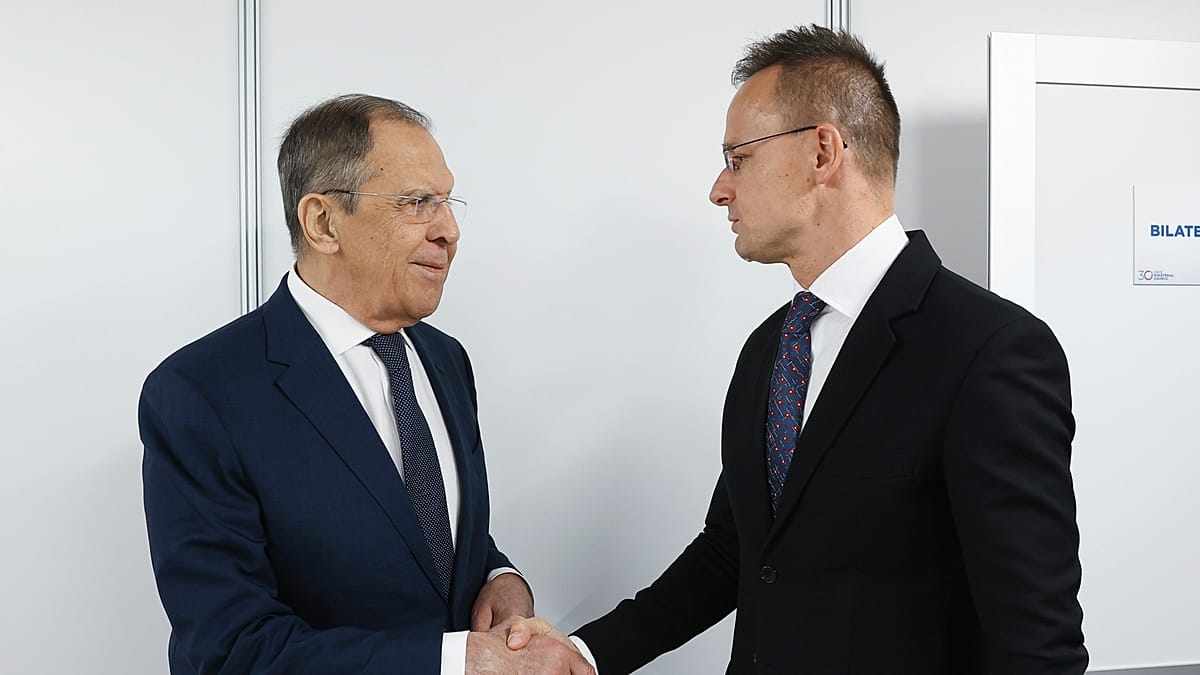
Explosive reports emerged over the weekend that the Hungarian Foreign Minister, Péter Szijjártó, has for years been briefing his Russian counterpart Sergei Lavrov on meetings in Brussels by directly calling him during breaks.
According to a Washington Post investigation, Szijjártó has been stepping out of EU ministerial meetings in Brussels to fill Lavrov in on the talks by phone, while also discussing possible “solutions”. The US newspaper also cites a European security official who said that “every single EU meeting for years has basically had Moscow behind the table.”
Szijjártó has made 16 official visits to Moscow since the outbreak of Russia’s war of aggression in Ukraine in February 2022, and his government is now actively blocking the EU’s €90 billion loan to Kyiv over the ongoing dispute over the damaged Druzhba pipeline. The allegations have sparked outrage in Poland, with Prime Minister Donald Tusk saying they “shouldn’t come as a surprise to anyone.”
“We’ve had our suspicions about that for a long time. That’s one reason why I take the floor only when strictly necessary and say just as much as necessary,” Tusk wrote on X.
Szijjártó has hit back, claiming the report is “fake news.”
It comes as the tense campaign ahead of the Hungarian elections on April 12 enters a critical phase. US President Donald Trump repeated over the weekend his “complete and total endorsement” of Prime Minister Viktor Orbán, who has been trailing in the polls
Weronika Wakulska has the details.
IEA chief warns of unprecedented energy crisis amid Trump’s ultimatum on Strait of Hormuz
The President of the International Energy Agency (IEA) Fatih Birol has warned of a looming global energy shock that could supersede that of the twin oil crises in the 1970s and the fallout of Russia’s war of aggression in Ukraine – as a Trump-imposed deadline of 48 hours for Iran to re-open the Strait of Hormuz nears.
Speaking in Canberra on Monday, Birol described the situation as a “major threat” to the global economy and warned no country is immune.
Tehran has threatened to “irreversibly damage” energy and desalination facilities in the Middle East if Trump follows through on his threat to attack Iranian power plants unless the Strait of Hormuz is re-opened to commercial vessels by the end of Monday.
Asian stocks tumbled again when trading commenced on Monday as oil prices continued to rise.
It comes after mixed messaging from the US President over the weekend, as he ramped up threats of energy attacks while also saying he wanted to “wind down” the war in the Middle East. Treasury Secretary Scott Bessent said in an interview on Sunday that the US may have to “escalate to de-escalate.”
More from our newsrooms
Highest referendum turnout in years as Italians vote on high-stakes judicial reform. Polling stations across Italy opened on Sunday for a two-day referendum on judicial reform, which would split the career paths of judges and prosecutors, a reform that has sharpened political divisions and unified the centre-left opposition. More.
Election in Rhineland-Palatinate: AfD achieves record result in western Germany. Projections from the Western state show the centre-right CDU defeating the Social Democrats, who have governed for 35 years, while the AfD is set to make the biggest gains. Margitta Kirstaedter and Sonja Issel have the details.
We’re also keeping an eye on
- The EU’s foreign policy chief, Kaja Kallas, visits Nigeria
- European Commission President Ursula von der Leyen is in Australia ahead of the expected announcement of a free trade deal this week
That’s it for today. Remember to sign up to receive Europe Today in your inbox every weekday morning at 08.30.
Read the full article here


