



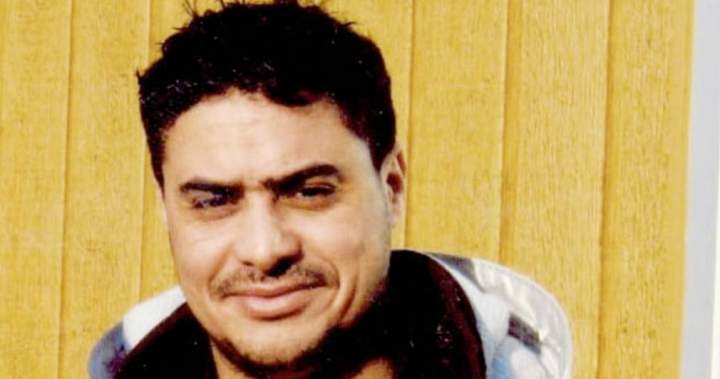
A Moroccan terrorist convicted in Quebec almost two decades ago has been denied parole in a decision that said he had no remorse and continued to legitimize violence.
Said Namouh, 52, remains a “significant, indeed concerning, risk,” despite having been behind bars since 2007, according to the Parole Board of Canada.
In its ruling, the Board noted that “no signs of de-radicalization have been observed” in Namouh, who was sentenced to life in 2010 and faces deportation upon his release.
While Namouh insisted he no longer believed in “jihad aimed at fighting injustice and oppression,” the Parole Board said it could not accept him at his word.
The Board denied Namouh’s latest request for parole. The decision was handed down on Dec. 9. A redacted version was released to Global News on Friday.
It is the latest parole decision to deal with Canada’s growing population of terrorism offenders, some of whom have not changed their extremist views while incarcerated.
In one case, an ISIS supporter who conducted an attack in Toronto was released from prison only to be arrested again because she had vowed to strike once more when she was freed.
A Toronto-area man who had completed his sentence for terrorism was similarly arrested again when Al Qaeda bomb and poison manuals were found on his phone.
The Parole Board’s decision on Namouh comes amid heightened security concerns in Canada in the wake of the ISIS-inspired antisemitic attack in Australia.


Get daily National news
Get the day’s top news, political, economic, and current affairs headlines, delivered to your inbox once a day.
On Friday, three Toronto men were charged with hate-motivated crimes targeting women and Jews. One was also charged with ISIS-related terrorism offences.
Namouh was one of the first to be convicted under the anti-terrorism laws Canada enacted in response to the Sept. 11, 2001, Al Qaeda attacks in the United States.
After immigrating to Canada in 2003, he joined the Global Islamic Media Front, an Al Qaeda affiliated terrorist group that produces propaganda and training manuals in several languages.
In 2006, Namouh began working with GIMF operatives in Europe to threaten governments and plan attacks – specifically a suicide bombing.
He believed in “ideas promoting violence in the name of your religion” and was “convinced that it was justified to give your life for jihad,” the Parole Board said.
Police arrested him in 2007, and he was convicted of four counts of terrorism and sentenced to life, but he has was allowed to apply for parole after serving 10 years.
At a parole hearing earlier this month, the Board said Namouh had refused to participate in a psychological risk assessment, which had determined he remained a “significant/concerning risk of violent recidivism.”
The Board said he had received a warning from prison officials “related to the production of religious pamphlets” that were found in his cell, and he had been leading Muslim prayers in violation of rules.
In reaching its decision, the Parole Board said it was not convinced Namouh had undergone “a genuine change in thinking” during his years behind bars.
He insisted the GIMF was not a terrorist group and continued “to legitimize the use of violence in certain situations,” according to the decision.
His recent entries in his logbook indicate that he continues to view the world through a prism of oppressed and oppressors, which was “consistent with the logic that motivated your offences,” the Board wrote.
“You show little, if any, remorse or empathy for the victims of your crimes, but express some guilt towards those who have to live without due to your incarceration,” the decision said.
The Board also noted that Namouh’s case management team was of the opinion that “you still legitimize the use of violence in certain situations, such as self-defence or the defence of your country. Your feelings of persecution, discrimination, and victimization remain evident.”
When he is let out of prison, Namouh will likely be arrested by the Canada Border Services Agency, which has obtained an order for his deportation.
But Namouh could also delay his departure from Canada by claiming he faces risks if returned to Morocco, and could be released from custody while the CBSA processes his request, the Board said.
Calling his progress “limited and insufficient,” the Board denied his parole, writing that it was “of the opinion that the risk you pose would be unacceptable to society, particularly in Canada, pending your deportation.”
Stewart.Bell@globalnews.ca
Read the full article here


