



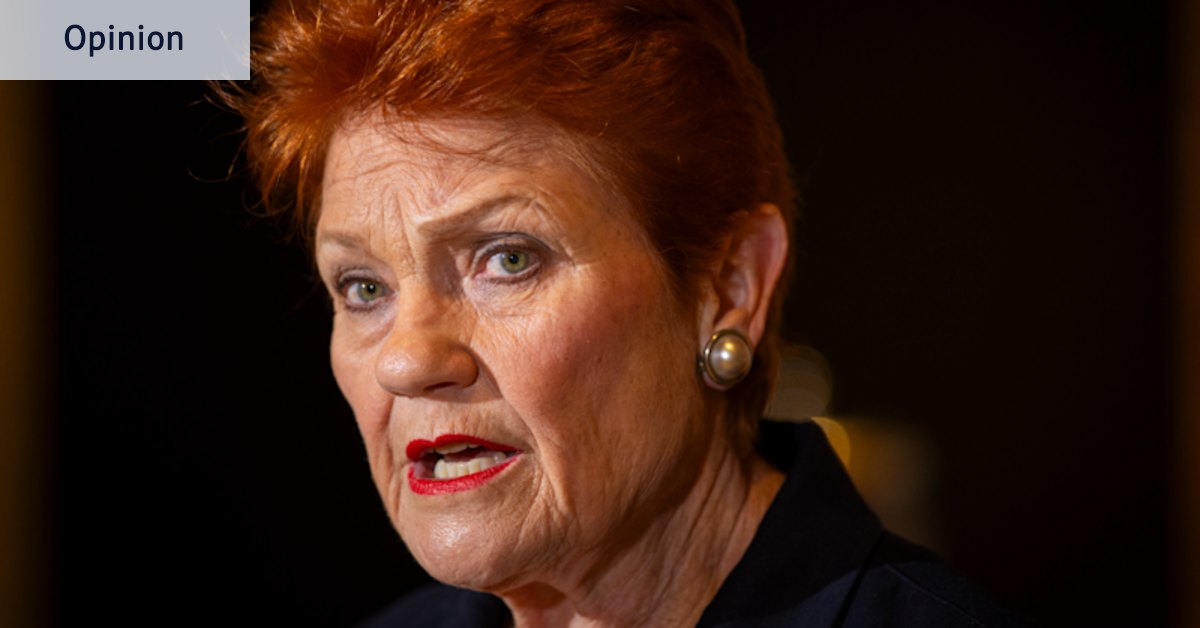
Pauline, if we have both been victims of domestic violence, why aren’t we on the same page?
There is no “two-way street” when it comes to domestic violence but hidden within the controversy of Pauline Hanson’s words are two ideas that deserve to be judged. Sadly, in some landscapes of thriving populist chauvinism, these ideas can be adopted unchallenged.
The first is that women can perpetrate domestic violence. They can. Men can be victims. Same-sex relationships can be violent. Abuse is not the exclusive preserve of one sex.
The “two-way street” playbook has haunted domestic violence discourse for decades. It’s a line that sounds reasonable on the surface and that’s precisely what makes it so corrosive. It launders victim-blaming through the language of balance. At times, the public conversation has become trapped between slogans such as “believe women” on one side and “it takes two to tango” on the other.
The conversation we actually need requires us to hold two ideas at once: that domestic violence can affect anyone, but that intimate-partner violence remains overwhelmingly gendered. Hanson’s foray into this space is presented as plain-speaking, but its effect is to legitimise one of the oldest and most damaging misconceptions about domestic violence.
The appeal of that story is obvious. It’s easier to sit with. It doesn’t require us to confront uncomfortable truths about gendered violence, about the culture that enables it, or about the fact that most perpetrators are men and most victims are women and children.
It lets some commentators avoid the harder, more specific work of understanding why abuse happens and what stops it. “Two-way street” is a rhetorical shrug dressed up as insight. I know first hand that this framing doesn’t describe domestic violence. It describes an excuse for it.
When someone says a beating or a campaign of coercive control was somehow mutual or provoked, they are not offering a nuanced take on relationship dynamics. They are shifting responsibility away from the person who caused harm and onto the person who suffered it. This has happened publicly to me and was published in headlines. It does immeasurable damage.
Survivors already carry enormous shame and self-doubt and abusers are often skilled at convincing their victims that they caused their own mistreatment or that if they’d just behaved differently none of it would have happened.
The mechanics of abuse are not symmetrical. We continue to imagine domestic violence as a collection of bad incidents: A punch, a shove, a bruise. The far more sophisticated weapon is coercive control: the slow rearrangement of another person’s reality until leaving feels more dangerous than staying. Control can be financial before it is physical. Emotional before it is criminal. It isolates before it intimidates. It convinces intelligent, capable people that they are incapable. It erodes confidence so gradually that survivors can’t identify the precise moment they stopped believing they had choices.
Choices only exist within the options available to you. A woman with independent income, secure housing, supportive family and accessible childcare does not face the same decision as someone who is financially controlled and socially isolated, who doesn’t have confidence or language to navigate the legal system or someone who is terrified that leaving will provoke retaliation against her children.
Another simplistic part of this narrative is that leaving is the end of the danger. In fact, it is often the point at which danger escalates. This is not opinion, but is reflected repeatedly in research.
When a public figure with a national platform echoes that message, it doesn’t stay abstract. It reaches victims currently deciding whether to leave, whether to report, whether they’ll be believed. It reaches perpetrators looking for validation. It is a mouthpiece to a population vulnerable to learning to look through a lens of mutual culpability.
What’s more, Pauline’s rationalising of violence in the context of financial hardship is particularly worrying in this current economic climate. One Nation is now a mainstream political party, so to have its leader almost excusing such violence, among a base who often see themselves as strugglers, is extremely concerning.
I think all of us need to be honest about why this kind of comment keeps recurring in Australian public life. It reliably generates attention, it flatters a certain audience’s sense that “political correctness” has gone too far, and it costs the person saying it very little. The costs are borne elsewhere – by the one in four Australian women who will experience partner violence in their lifetime, by children witnessing and experiencing abuse and by the generations beyond who will carry the trauma.
Orly Lavee is a doctor and lives in Sydney.
From our partners
Read the full article here


