





Beyond commercial ambitions, the initiative also documents indigenous patterns, designs and techniques that risk disappearing with older generations of weavers.
WEAVING CULTURAL IDENTITY INTO TOURISM
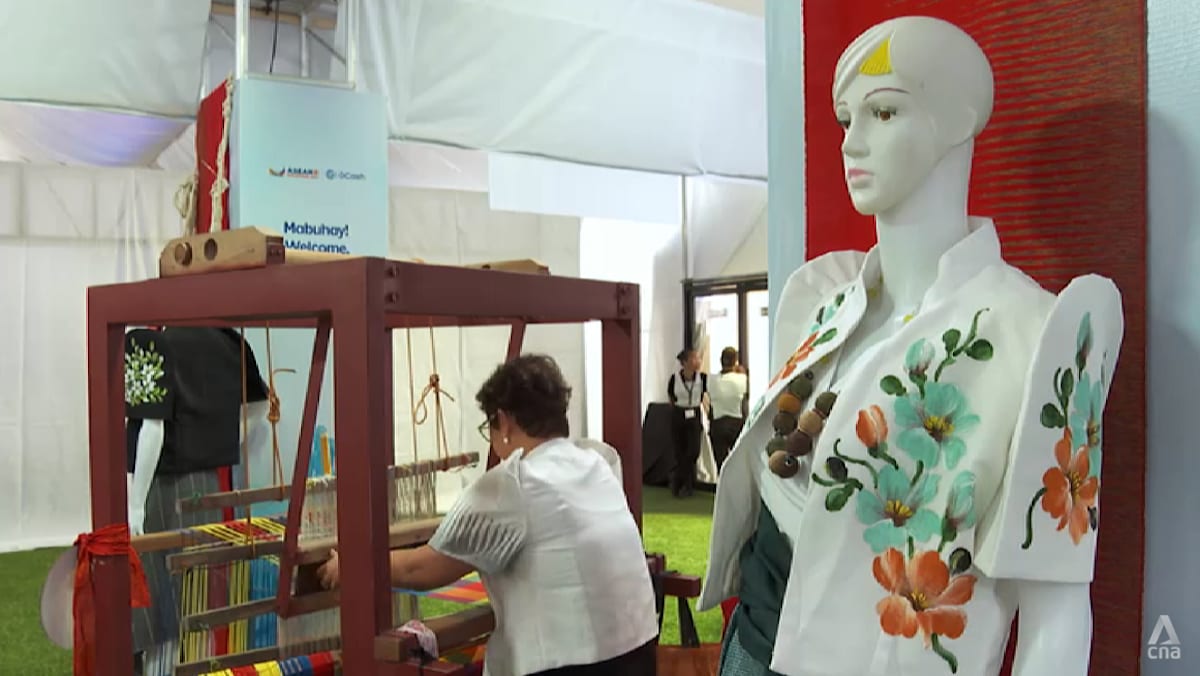
Concepcion said traditional Filipino clothing carries deep historical and cultural roots tracing back to the Spanish colonial era.
The sheer pina fabric used in barong tagalog garments, for instance, was originally intended to ensure colonial authorities could easily see whether men were concealing weapons beneath their clothing.
Meanwhile, the iconic butterfly sleeves of the Filipiniana dress – also known as the terno – are more than a decorative element.
“The terno serves many purposes,” Concepcion said.
“The sleeve, especially, is used to send messages, to communicate. For example, during courtship … (women) can hide their faces … you can angle your head (behind the sleeve) to show your best feature.”
As the Philippines looks to boost tourism, authorities have increasingly promoted immersive cultural experiences centred on traditional arts and weaving. Tourists can visit workshops and factories and try their hands at handloom work or embroidery.
Industry players say efforts to revive indigenous craftsmanship have gained attention not only from regional visitors but also from international audiences and fashion capitals.
Libiran, the designer, said barong-inspired fashion have even graced global runways.
“We see a lot of inspirations right now being used by international designers. (Filipino fashion) is becoming noticeable on the international stage,” he said.
The government has also long mandated that civil servants wear traditional Filipino attire every Monday, a policy that continues to sustain demand for locally made garments and support artisan communities.
Read the full article here


