
Victoria’s population grows by about one person every four minutes and 40 seconds.
Factoring in births, deaths, international and interstate migration, and the fact most of these people will live in Melbourne, Victoria’s capital is well on the way to becoming a megacity of more than 10 million people by 2101.
To put that in perspective, in the lifetime of a baby born today, Melbourne would need to absorb the population of two Perths.
It’s a confronting reality that puts us on a course matching the likes of New York, Moscow and Shanghai, as about 2000 newcomers make Melbourne their home every week.
If Melbourne continues to allow the city’s footprint to expand, Wallan, Whittlesea, Cranbourne South, Sunbury and Eynesbury would see the biggest population boost by 2101.
However, if we focus growth into established areas, some heritage streetscapes in the city’s inner east will be lost and industrial land around our port, in West Melbourne and Port Melbourne, would have to be transformed into residential hubs.
Population and housing projections from Johnny Barnard, founder of the National Forecasting Program at demographic consultancy Informed Decisions (.id), and commissioned by The Age, show the areas of metropolitan Melbourne that would see the biggest population increases. Use the interactive map above to see how your suburb could change.
This week, The Age has explored the dilemma that housing almost 5 million extra residents, in 2 million more dwellings, would create for the city.
In October, The Age and the University of Melbourne will host Melbourne Assembly, a three-day forum bringing together some of the world’s brightest minds in city planning, innovation, education, arts and sport to discuss ideas for the city’s future.
However we choose to grow Melbourne, a city with a growth rate higher than that of most developed countries, poses challenges for all levels of government and the city’s residents.
Today we ask: Are there alternatives to the way we are handling the growth? Can we do better, and if so, how?
Megacity blues
More than seven in 10 Australians live in six state capitals, a phenomenon influenced by the country’s colonial history and the “top-down” establishment of port-dominated settlements that once reported back to imperial London.
European fear of our vast desert interior further marked the coastal capitals as the places to be.
In that sense, the evolution of our cities has been less organic than in many other countries.
Melburnians do not have a direct say in the size and growth of their city.
The federal government is responsible for immigration levels and neither it nor state governments have population policies that dictate how big our cities should be.
Our cities are left to cope with the influx of people as best we can.
While acknowledging the demands and challenges of rapid growth, most planners believe allowing Melburnians to dictate the overall size of the city, would give existing residents too much authority and future residents none.
“It’s not a good idea,” says Pat Fensham, Victorian president of the Planning Institute of Australia, pointing to the experience of New South Wales in 2000.
Then-premier Bob Carr sought to slow the growth of his capital, bemoaning that his government could not keep up with the infrastructure needed to service a booming population. It was a call famously interpreted as Sydney being “full”.

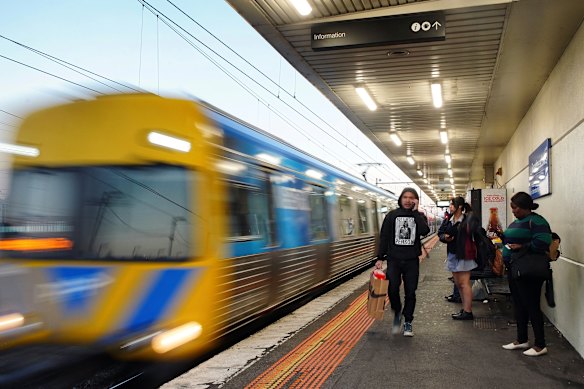
“Carr declared Sydney full soon after the 2000 Olympics and stalled infrastructure investment for a growing city,” says Fensham. “It has taken two decades of freeway and metro line building, et cetera, since he left to get close to catching up and addressing some of the damage done.”
So, if we don’t pull up the drawbridge, what do we do?
Back to the future of regionalisation
Under the “populate or perish” ethos of post-WWII, Australians didn’t stress too much about where all the people would go.
We just kept adding detached single-level housing onto cities that spread into the vast Australian expanse.
But by the 1960s, commentators such as Robin Boyd, author of The Great Australian Ugliness, were scathing of our sprawling suburbs, and politicians such as Gough Whitlam had grown concerned that services and infrastructure were not keeping up with our car-dependent frontiers.
Whitlam’s alternative was to decentralise, proposing the Commonwealth proactively help build and service centres around the country – such as Albury/Wodonga on the Victorian, NSW border – as part of a wider push for regional planning and government.
While Labor’s demise in 1975 put a dampener on decentralisation, the idea is regaining momentum amid growing concern about our capitals as megacities.
“It once seemed far-fetched to decentralise, but it is arguably a better model than the megacity option,” says Dr Elizabeth Taylor, a senior lecturer in urban planning and design at Monash University.
She stresses, however, that revisiting the idea requires big federal commitment, including to the long-elusive dream of fast rail linking eastern coast capitals and regional centres.
Taylor says governments have been reluctant to back decentralisation because it means establishing infrastructure such as train stations ahead of the people who will use them.
“The argument goes around and around in circles, government won’t invest because there’s no accompanying urban plan, but there is no urban plan because there’s no infrastructure.
“To build and nurture real liveable cities, you have to stick at it for 20 or 30 years and well beyond any electoral cycle,” Taylor warns.
Julian Bolleter, director of the Australian Urban Design Research Centre and co-author of Planning for a Continent of Cities, says it seems Australia is at a tipping point where decentralisation may work better than our current sprawling cities approach, and make economic and political sense.
He is encouraging what he calls a national settlement plan, which would redirect population growth away from sprawling capitals and towards satellite cities and regional hubs.
The Albanese government has a low-key National Urban Policy which talks about “a shared vision for sustainable growth in our cities and suburbs” but does not map out a plan of action or spending.
The state government has launched a housing strategy committing to putting 70 per cent of growth in established suburbs, including a network of activity centres.
“But we need more than aspirations. We need to be planning for an Australia of 70 million people,” Bolleter says.
He envisages a “halo of satellite cities” linked by fast trains to Melbourne, an idea that would only work if Melbourne “holds the line on its urban growth boundary”, allowing farms and open space to exist between the city and its satellites – think London and surrounds.
“Not just a line on a map,” says Bolleter. “Something recognisable on the ground – a legible edge.”
Geelong, Ballarat, Bendigo and Traralgon, in the Latrobe Valley, are often cited as the obvious candidates to target for more growth, including through faster and more frequent trains.
The future or a fantasy?
While many politicians across the spectrum, as well as planners and developers, support the idea of decentralisation, they also doubt it is a realistic alternative for coping with our growth.
Nationals senator Bridget McKenzie, whose electoral office is in Wodonga, evokes Whitlam when she talks of her vision of a network of regional cities with populations in the hundreds of thousands, absorbing half of the nation’s population growth.
She notes how governments of earlier generations planned for the future with transport and infrastructure ahead of population, while “policymakers” now chase their tails with building infrastructure retrospectively.
“We pour people into the major cities, but are creating spaces that are not optimal for humans living in communities,” McKenzie says.
While Fensham is sympathetic to the idea, he says “turning the ship around” to build up regional centres is a big ask.
“To have, say, 50 per cent of growth in the regions requires a massive investment and is not necessarily going to give you the outcomes that you could get by investing in proper transport and other infrastructure in suburban Melbourne,” he says.
Demographer Johnny Barnard has been tracking the development of Australian cities for 30 years. He suggests that rather than thinking about decentralising beyond Melbourne, we should decentralise within it.
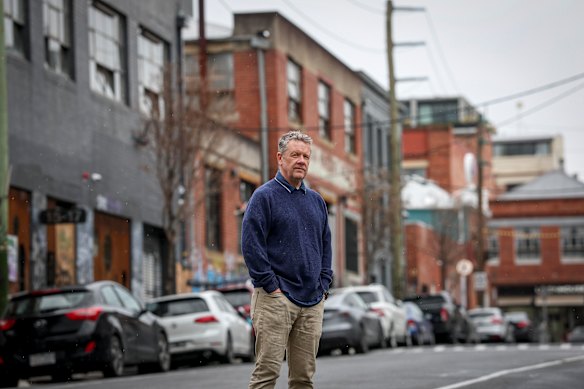
“It would be really good if we didn’t think of Melbourne and surrounds as a city, but more as a region, a series of economic rings or spheres of influence.”
Underutilised Geelong would be an important player in that region, says Barnard, and play an important part in spreading the growth load.
Rather than trying to impose a more urban future on regional cities such as Ballarat, Barnard, backs bigger government investment and involvement in key transport hubs, such as Dandenong, Broadmeadows and Melton.
His projections show that these centres already face big growth pressure in the coming decades. The population of Broadmeadows is projected to increase by more than 50 per cent and Dandenong by about 25 per cent by 2101.
Melton already has about 50,000 people and under a “business as usual” growth model will end up with close to 120,000 in the same time frame.
“Assuming we electrify the Melton line, it’s far better to put people around Cobblebank and Rockbank than it is in Armstrong Creek [near Geelong].”
However, Barnard says careful government attention to planning and infrastructure can ensure we build vibrant, liveable centres.
“I would favour decentralisation within the Melbourne urban region; that’s probably more useful, and probably more environmentally desirable.”
As for Traralgon, current Latrobe City Council Mayor Sharon Gibson supports growth “within reason”, while noting the impracticality of a 2½ hour train trip.
“We have a train to Melbourne that actually takes longer than it used to years ago,” she says. “Give us the infrastructure to make it work, so the extra growth does not bottleneck our towns.”
One thing just about everyone agrees on, is that federal and state governments need to be playing a bigger role in ensuring that our cities and towns are well connected, planned and designed to be liveable.
“The very point of living in a city is to be around other people, and the cultural, social and economic opportunities that come with it,” says Taylor. “But we also value the countryside because it’s cleaner and greener. We need both.
“There has to be more to planning than just growth. It should also be about improving the places we live in.”
Melbourne Assembly will be held from October 19 to October 21. More information is available on the Melbourne Assembly website, including special offers for Age subscribers
Read the full article here