



Welcome to Brisbane Times’ Queensland public sector column, Public Circus. This week: a case for democratic improvement, State Development shareholdings, looming teacher pay talks, and the simmering four-day week.
People don’t like the idea of more politicians, according to the widely held belief.
Some people also dislike vegetables, but the consequences of going without are not ideal. And if your doctor suggested you should eat more vegetables, you’d listen – right?
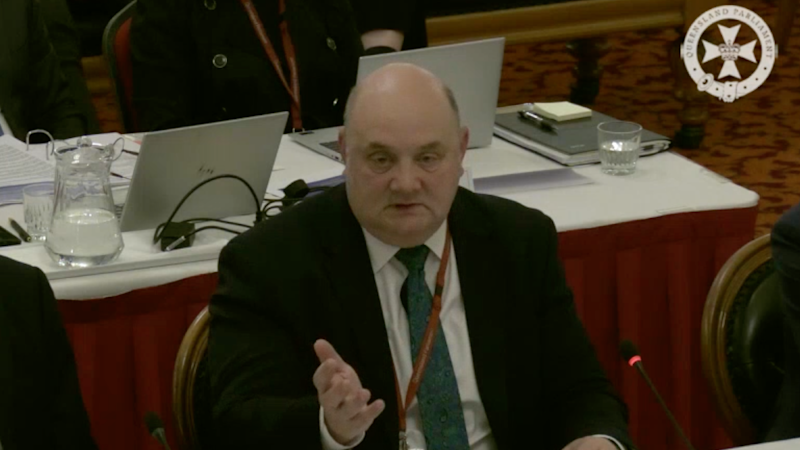
In this metaphor, the doctor is the Clerk of the Parliament of Queensland, Neil Laurie, who has held the top parliamentary service job since 2003.
Responsible for steering MPs through procedures and rules, making sure those proceedings happen as they need to, and running the wider parliamentary service, he knows his stuff.
On the rare occasion Laurie speaks, people usually listen, making his yet-to-be-reported remarks on a recent academic paper about restoring an upper house all the more interesting.
The Legislative Council self-abolished in 1922, leaving Queensland uniquely placed without an upper house and at the whim of “winner takes all” politics.
Dr Nicholas Aroney revisited his arguments for a new one in a public lecture late last year, and a subsequent paper. Laurie wrote a commentary paper with a more nuanced view.
While proud of the reform he has been part of, and not reflecting on any particular parliament or government, Laurie wrote he is “neither blind nor mute about the institution’s weaknesses”.
Laurie said an upper house would need to be designed properly but, ultimately, would be unlikely to occur due to the need for a referendum and bipartisan support.
Instead, he floats constitutional entrenchment of safeguards, including super-majority style votes to rush bills or add unrelated last-minute amendments.
But he also suggests lifting the number of MPs in parliament to make up for decades of unmatched population growth putting pressure on its ability to properly fulfil its functions.
The usual argument against this on costs is a “false economy”, Laurie says, because an extra $35 million a year – at least – is now being spent supporting strained MPs and their offices.
That’s compared with an estimated cost of $1 million a year for a new MP, office and staff.
For Laurie, another non-upper house reform would be bolstering the government-controlled committee system, which has changed little in 15 years.
The last review of that, a decade ago this year, held its punches to allow the changes to “slowly evolve and develop”. Develop they have, but not all in a positive direction.
Even June’s electoral boundary redraw said government was facing a choice to boost MP numbers or allow more unequal representation, before more rural MPs disappear.
At the time, a spokesperson for Attorney-General Deb Frecklington told us the government was “focusing on delivering more police, not more politicians”.
While crossbenchers have in the past, and still do, call for reform, the LNP – and Labor – don’t want to talk about it. Why? The idea it’s unpopular.
But is this a good-enough reason for inaction, when the health of democracy is concerned?
More answers – and curiosities – in State Development chief shares
The changing of the guards at State Development is complete, as newly minted director-general David Mackie officially gets his knees under the desk for the five-year term.
(Circus is yet to receive a hint of a response from Premier David Crisafulli’s team about the appointment process after numerous nudges.)
The news presents an opportunity to share an update to an earlier question we’d asked the government: specifically, the Queensland uranium shareholdings of Mackie’s predecessor John Sosso.
While Mackie has spent this year offloading potentially tricky shares ahead of a sideways move to serve under his marriage celebrant and minister, Deputy Premier Jarrod Bleijie, Sosso held on.
Sosso, through the department, had previously refused to answer our questions about when he purchased the shares. Through the magic of Right to Information, we can narrow the window.
Department bosses have had to declare their interests for decades, though it wasn’t until the Palaszczuk government that such disclosures became public-facing.
Through this scheme, we were able to nail down Mackie’s purchase of shares in Paladin Energy to July 2021, while he was leading the Justice Department. (We suggest no wrongdoing by him or Sosso.)
Paladin, one of three firms in which Mackie and Sosso held shares, lays claim to the largest uranium reserves in Queensland – although mining the resource remains banned in the state.
Readers will know that before Sosso’s return to the state public sector at the 2024 change of government, he headed up Justice under then attorney-general Bleijie in the Newman era.
The goods from Circus’ RTI request for Sosso’s declarations of interests from this time show he held no shares coming into the role, and filed an update adding Commonwealth Bank shares in mid-2014.
Speaking of shares, the declaration from (former) acting State Development chief Shaun Ferris had him take the title during his short-lived term atop the department as the only DG with shares in Tesla, Twitter co-founder Jack Dorsey’s Block Inc, and bitcoin.
The more you know.
Teachers’ day in court looms for first pay rise in more than a year
We’re now well over a year since the expiry of a workplace deal between state school teachers and the government – which means a year without the pay rise that would come from a renewed one.
And the next date in the ensuing industrial court dance between the teachers’ union and the Education Department looms (before your next Circus edition) on Monday, August 24.
In it, the parties will hash it out not over the broader deal, but a 3 per cent interim pay case.
Negotiations between the state and the Queensland Teachers’ Union (QTU) fell apart in June last year, leading to a statewide strike last August.
In October, the state made what Education Minister John-Paul Langbroek called its “best and final offer” to the union.
The offer was summarily rejected by voting members, and by early November, the QTU threatened (and then carried out) a second strike, alongside rolling work bans and industrial action.
A letter from Education Department director-general Sharon Schimming leaked to media outlined several asks from the union to halt the further strike action in late 2025.
Those requests included ditching matters the union considered well-trodden ground, and including the interim wage increase in line with wages policy – which the department rejected.
Langbroek warned at the time it could take months for arbitration of the case to make it to the industrial court, with repeated warnings from the state the process could take up to two years.
While teachers across several pay brackets hit the award threshold in late 2025 – triggering minor pay bumps – the state has remained steadfast against any pay increase outside a new EBA.
Langbroek reiterated this point during his recent estimates appearance, saying that while the state wasn’t opposed to wage increases in line with wages policy, it was opposed to this one.
This was because of, in the minister’s words, “the wide scope of the claim and the likely effect on the employer and employees” with an interim pay rise an “arbitrary figure” while parties waited for an Industrial Relations Commission ruling.
Miles pumps brakes on talk of four-day public sector work week
It’s the simmering push that keeps bubbling up: a four-day week in the Queensland public sector.
Fresh from a fuel-price linked approach by the Australian Services Union in March, outlined in Circus and promptly waved away by the Crisafulli government, the idea is back.
This time, the idea of a shorter week for the same pay has emerged as an element of the draft policy platform getting around before the state Labor conference at the end of the month.
As laid bare by our column comrades Chooks, the draft form of the now ACTU-backed effort would ask a state Labor government to trial a four-day week in sections of the public sector before a progressive expansion push through legislation and lobbying with industries and unions.
While a spinner for Opposition Leader Steven Miles had said the pitch showed his party was the only one concerned about working Queenslanders, the man himself qualified things a tad more.
“Let’s not get too far ahead of ourselves,” Miles said, noting it was a draft to be hashed out over two of the annual Labor gatherings before a call was made on what would be taken to the 2028 election.
“[It’s] not something that we’d be open to implementing in any kind of statewide fashion.”
Have a curiosity for the Circus tent? Email us on m.dennien@nine.com.au or james.hall@nine.com.au. For more security, sing out with a non-work device and network via Signal (mattdennien.15 or here) and mattdennien@protonmail.com.
Start the day with a summary of the day’s most important and interesting stories, analysis and insights. Sign up for our Morning Edition newsletter.


From our partners
Read the full article here


