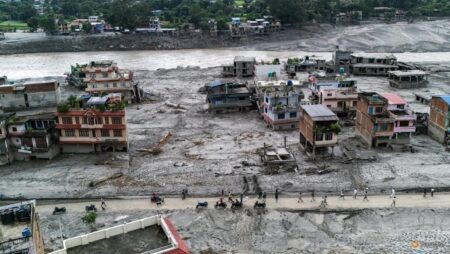



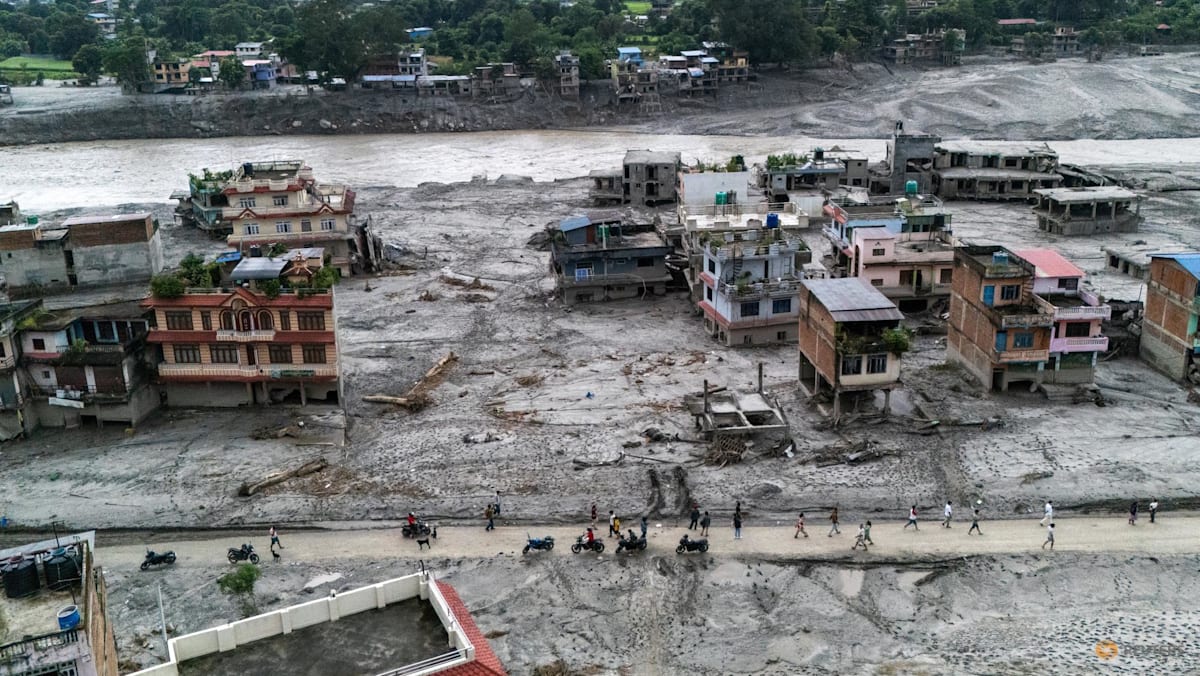
Nepal’s economy is already under pressure, with limited resources to respond to a disaster of this scale with Foreign Minister Shisir Khanal saying the reconstruction bill could run into “billions of dollars”.
He appealed for specialised assistance, including heavy-lift drones and technology to help locate people who are trapped.
Khanal also called for forensic testing kits to identify bodies and freezer units to store them, saying bodies that have been in water could decompose at a faster rate.
The deluge of ice and mud caused huge lakes, and one of these formations has become a risk of further floods.
The Chinese and Nepali foreign ministers spoke Saturday and discussed sharing satellite and hydrological data, both sides said.
In Tibet, where Chinese authorities are the only source of information, rescue operations were temporarily paused at the hardest-hit area of Gyirong over the risk of more flooding from a newly formed lake.
But state broadcaster CCTV said late Saturday that the lake was “discharging naturally” and had been “essentially drained”, citing China’s ministry of water resources.
A total of 2,141 rescuers were near the Gyirong site, the Xinhua state news agency reported, including the more than 500 in the worst-hit area.
Read the full article here