



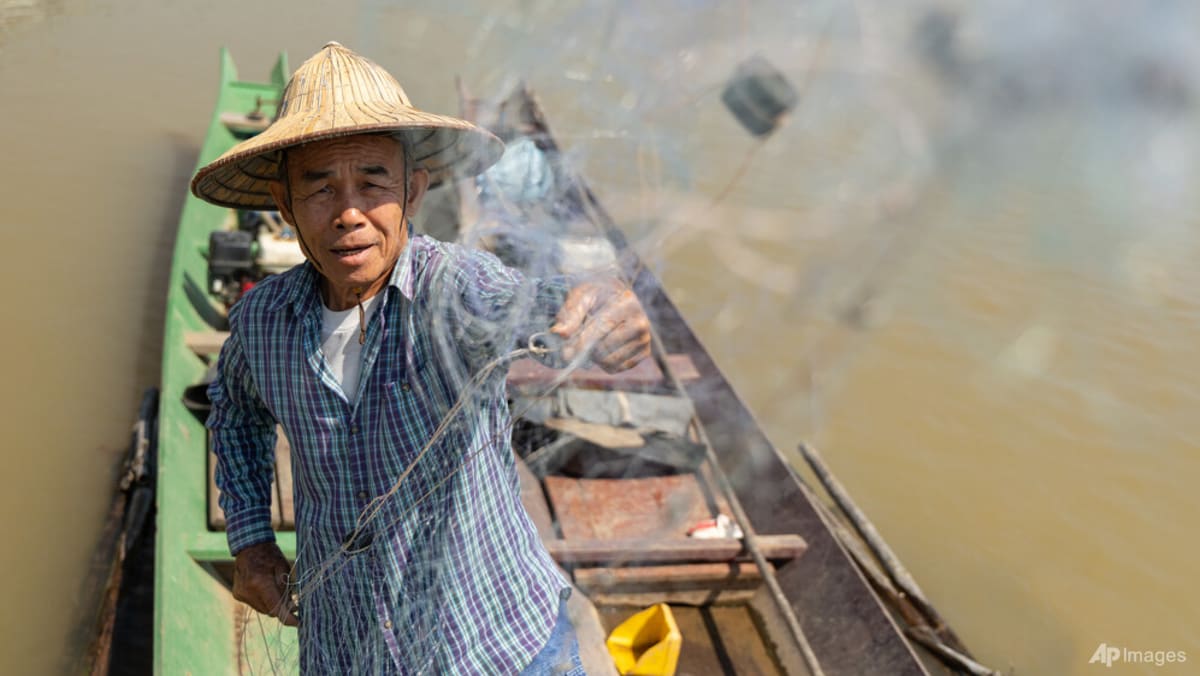
CHIANG SAEN, Thailand: Perched on the bow of his long-tail fishing boat, 75-year-old Sukjai Yana untangled a handful of small fish from his net, disappointed by his catch and fretting over whether he can sell them.
Some days Yana earns nothing: demand for fish is falling due to worries over contamination of the Mekong River and its tributaries by toxic runoff from rare earth mines upstream that is threatening millions who rely on those waters for farms and fisheries.
Chiang Saen, a fishing hub in northern Thailand, has been Yana’s family’s home for decades. “I don’t know where else I’d go,” he said.
Yana is one of 70 million people in mainland Southeast Asia who depend on the nearly 5,000km Mekong River. Rising demand for rare earth materials is driving an unregulated mining boom centred in war-torn Myanmar, to the west, that is spreading to Laos, in the east.
The Mekong has long faced mounting pressures, from plastic pollution to hydropower dams hemming it upstream and sand mining devouring its banks. But experts warn that the toxic runoff from the mines could pose an existential threat.
Exposure to heavy metals such as arsenic, mercury, lead and cadmium raises risks of cancer, organ failure and developmental harm, especially for children and pregnant women.
Thailand is bearing the brunt of the mining boom as such toxins imperil its global food exports — from bags of rice in US supermarkets to edamame snacks served in Japan and garlic used in Malaysian kitchens.
Responses remain local and limited, while smuggling and Myanmar’s civil war complicate regional fixes, raising concerns for downstream Cambodia and Vietnam.
Agriculture is the backbone of Southeast Asia’s economies, said Suebsakun Kidnukorn of Mae Fah Luang University in northern Thailand’s Chiang Rai, warning that rare earth mines are destroying “the world’s kitchen.”
TOXIC RUNOFF SEEPS INTO THAILAND
While cutting banana bunches on a farm in the hilly Thai village of Tha Ton, 63-year-old Lah Boonruang taps his fingers to count the toxin-exposed crops he harvests — rice, garlic, corn, onion, mangoes and bananas.
He irrigates his fields with water from the Kok River, a Mekong tributary that flows into Thailand from Myanmar and is laden with toxins.
“Everyone is afraid of the toxins,” he said. “If we can’t export, a farmer is the first to die.”
Read the full article here


