



Published on •Updated
A drought gripping central Europe has seen record-low water levels in the Danube River, forcing governments across the region to take drastic action to prevent a looming energy crisis.
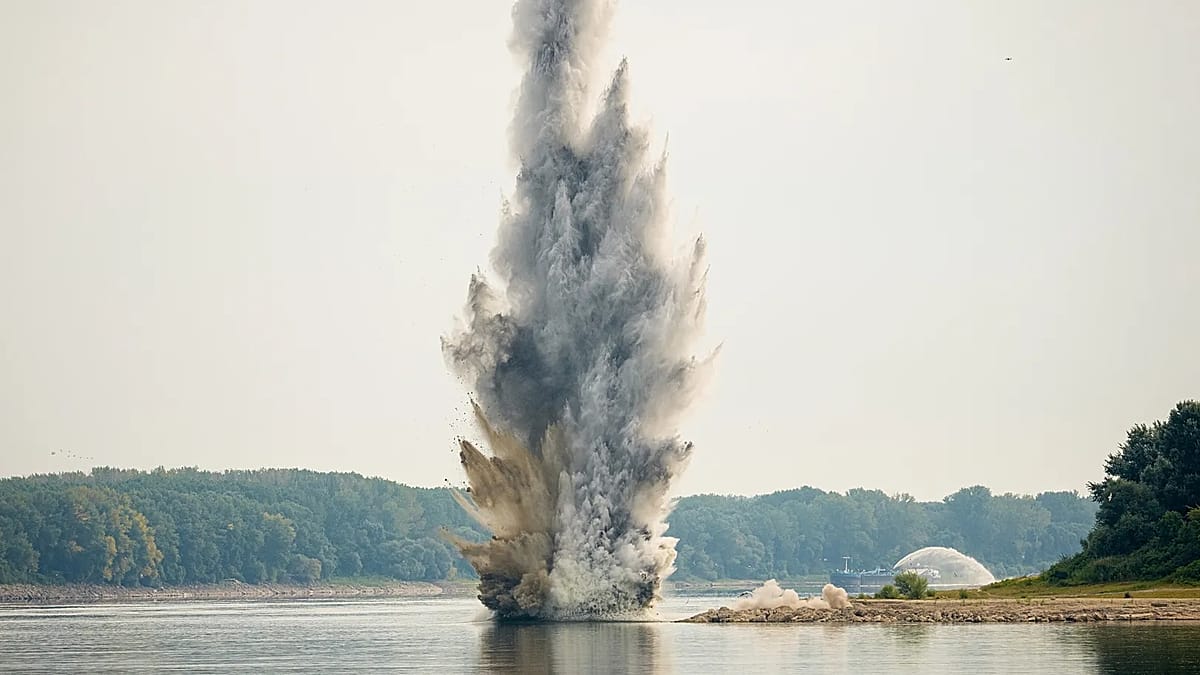
In Romania, where the Danube’s water flow has reportedly dropped to 1,500 cubic meters per second, the country’s navy has carried out a controlled explosion to clear rock near the river’s Bala Canal in an effort to maintain the required water flow for the safe operation of Romania’s Cernavodă nuclear power plant.
The drastic action came after authorities had already shut down one reactor unit at Cernavodă.
Romania’s energy sector has been under a state of alert since Friday, when acting Prime Minister Ilie Bolojan called on residents to voluntarily lower their electricity usage during peak evening hours and warned that the low level of the Danube could lead to the shutdown of the second reactor at the Cernavodă power station.
In Serbia, the government has made moves to reduce energy production from some of the country’s hydroelectric plants.
The two biggest, Djerdap I and Djerdap II – which provide around 18% of Serbia’s electricity generation – have reduced output to 20% and 30% of their respective capacities, Serbian Energy Minister Dubravka Đedović told local media.
Hungary is also facing energy-production challenges.
On Sunday, Hungarian Prime Minister Péter Magyar announced that the nation’s only nuclear power station was expected to shut down amid soaring temperatures across the region.
“Due to the further drop in the Danube’s water level, one of the last two generating units at the Paks Nuclear Power Plant will be shut down at 1:30 a.m,” Magyar wrote in a post on X shortly after midnight on Sunday.
“As a result, the plant’s output will fall to just 240 megawatts, and tomorrow it will be completely shut down for the first time in 44 years,” he added.
On Monday, the PM offered a slightly more upbeat update, saying “water management forecasts” for the next few days had “become slightly more optimistic.”
“The Danube’s water level has remained stable since this morning at both Paks and Budapest,” he said, adding: “The last turbine at Paks continues to generate power.”
Read the full article here


