



The vast ballroom in Victoria’s Government House, itself a wonder of the state’s optimistic gold rush period, its tower visible for miles around, is made for royal visits.
Three chandeliers blaze, illuminating golden touches to the eggshell blue walls and soaring ceilings. A throne, all gold and blue, sits beneath a draped and tasselled pedestal. Famously, the ballroom is larger than the one at Buckingham Palace.
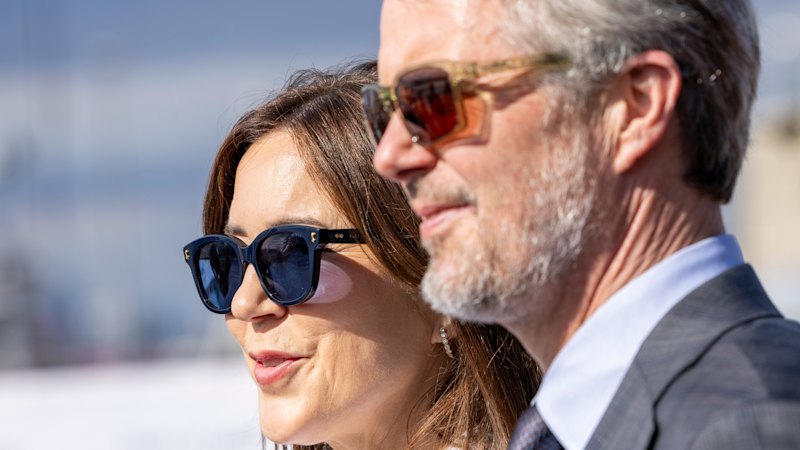
There were, however, no diamond tiaras or extravagant robes or much beyond a glass of sparkling wine and a sandwich when the king and queen of Denmark, Frederik X and Mary, dropped by on Tuesday.
No one ascended the throne, either – properly called the State Chair. It is reserved for Australia’s monarchs when they visit from Britain.
On Tuesday, it was all business. Guests were advised they were not to take photos, and certainly no attempt at a selfie should be made by anyone.
This was more trade mission than royal tour; the king in a plain business suit and even plainer tie, the queen in a simple red dress gathered at the neck.
The guest list of 200 or so was heavy with representatives of numerous Danish businesses keen to network and push their wares.
Government House seemed keen to assist.
A notice at the entrance to the ballroom informed that each name tag bore a coloured dot indicating which business sector the wearer represented, and expressed the hope that “you will find this useful with meaningful networking”.
Those sectors included agribusiness and resources, manufacturing and technology, government and diplomacy, green building and built environment, green transition, health, and trade and investment.
King Frederik made clear that the scores of business people accompanying him and the queen were not simply the tag-alongs of any old trade mission, but represented a distinctly futuristic agenda.
“Partnering across borders for a green, secure and sustainable tomorrow is a central objective of this visit,” he declared, adding that “history is looking down at us”.
“We may hope that many new, possibly historical outcomes will materialise between Denmark and Australia as an outcome of our visit here in Melbourne.
“Turning sustainability into good business is a powerful driver.”
He didn’t have to mention that his wife was the very embodiment of partnering across borders.
The Danish queen was simply Mary Donaldson of Tasmania, an advertising professional and luxury real estate marketer when she met then Crown Prince Frederik in a Sydney pub during the 2000 Sydney Olympics. They were married in 2004, and have made frequent private and official visits to Australia since then.
However, this is the first time they have visited as king and queen.
Frederik and Mary became the king and queen of Denmark on January 14, 2024, following the abdication of Frederik’s mother, Queen Margrethe II.
Their six-day tour began on Saturday in the Northern Territory, where the couple visited Uluru at sunset, followed by a sunrise visit to the Mutitjulu Waterhole. From there, it was on to Canberra for engagements including a state dinner with Governor-General Sam Mostyn, a meeting with the prime minister, and a visit to the Australian War Memorial to visit the tomb of the unknown soldier.
Landing in Melbourne in the early hours of Tuesday, their first day of a two-day visit to the city was something of a marathon.
After the reception at Government House, where they were welcomed by Governor Margaret Gardner and her husband, Glyn Davis, they travelled to Prahran to inspect a redevelopment site where 63 older-style homes are being replaced with a mix of 155 new social, affordable rental, market rental and specialist disability homes.
The king spoke enthusiastically of the project, describing it as “symbolising the journey from outdated stock to the sustainable housing of tomorrow”.
Queen Mary gave guests in Prahran a presentation on the sustainable redevelopment of the circular annexe near the couple’s residence at Fredensborg Palace, north of Copenhagen.
Sustainability in Denmark is taken as both future and present. Almost 90 per cent of the nation’s energy is produced by renewables: biomass, wind, solar and hydropower.
Then it was on to the Port of Melbourne Education Centre to meet companies associated with the Danish business delegation representing renewable energy, and to explore the port’s role in achieving sustainable solutions in the maritime sector.
Finally, the royal couple got the chance to relax a little when they travelled to Melbourne’s palace of sport, the MCG.
There, they mingled with Hawthorn Football Club players and children from the Hawthorn Auskick league.
They will continue their tour in Melbourne on Wednesday, ending the day by hosting an evening event in the Royal Botanic Gardens, and then completing their Australian visit in Queen Mary’s home state, Tasmania.
Start the day with a summary of the day’s most important and interesting stories, analysis and insights. Sign up for our Morning Edition newsletter.


From our partners
Read the full article here


