



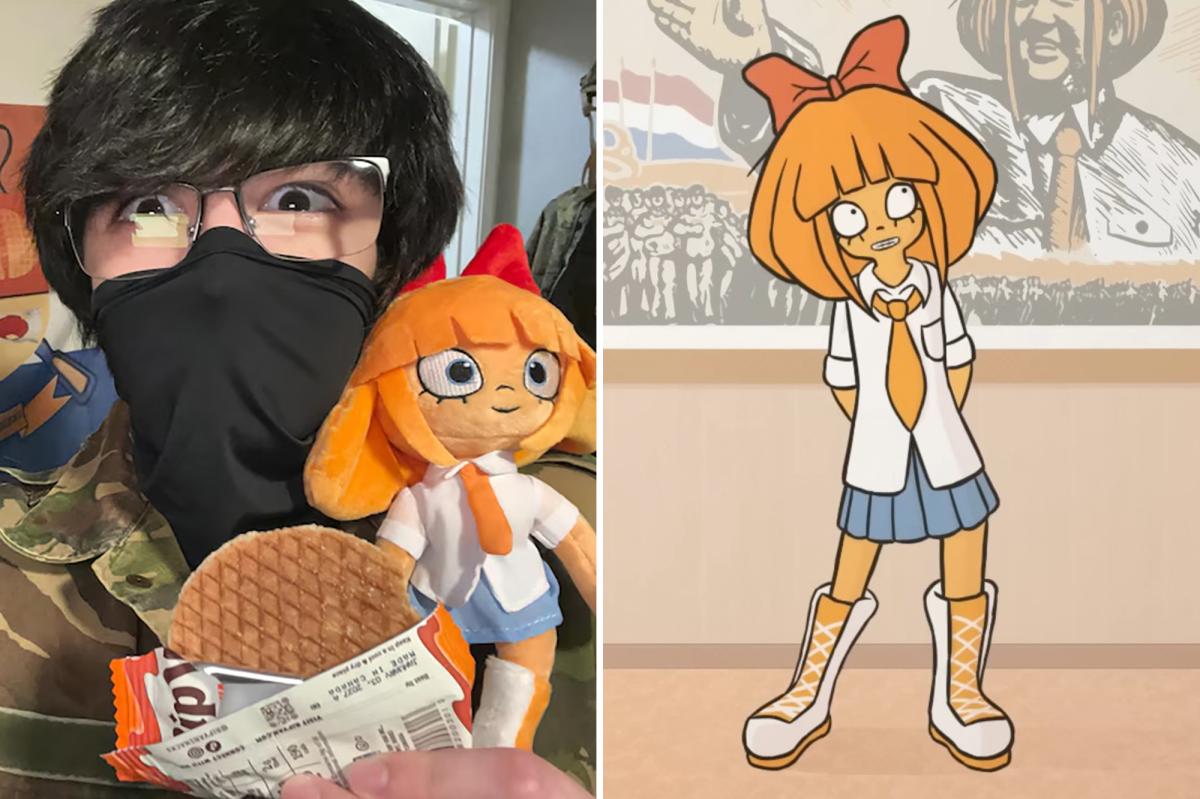
San Diego mosque shooter Caleb Vazquez was obsessed with a “based racist” Dutch cartoon character, according to his online pals and his purported manifesto.
Vazquez, 18, and his co-killer Cain Clark, 17, met through twisted internet circles encouraging Nazi and incel rhetoric — and acted on their hateful fantasies during the Monday bloodbath at the Islamic Center of San Diego.
Aside from the neo-Nazi symbols found at the grim scene, Vazquez had an unsuspecting hate-filled icon — a schoolgirl character named Mymy Schoppenboer from discontinued Dutch series called “Ongezellig.”
The adult animated sitcom, which translates to “Unsociable,” aired on YouTube from 2018 to 2022 and followed three adoptive sisters, Maya, Coco and Mymy.
According its Wiki page, Mymy’s “patriotism for the Netherlands” caused her to “adopt a racist view of Belgium.”
The character is originally from Japan, but “despises her Japanese heritage and does everything she can to appear more Dutch.”
Social media accounts that appeared tied to Vazquez had the school girl character as its profile photo. He also seemingly reposted clips from Ongezellig on a since-banned TikTok account.
“[Ongezellig] has a very right wing fanbase for some reason,” Vazquez’s online friend, who spoke on the condition of anonymity, told The Post.
A disturbing 75-page manifesto believed to have been penned by Vazquez and Clark described Mymy as “based racist nationalist” which “accounts for the Nazis and Chuds who love the show.”
About two months before the fatal shooting, Vazquez purchased a plush Mymy doll from Etsy, according to its seller.
Vazquez allegedly left a review for the doll, posting a photo of himself wearing camouflage and a black face covering next to it.
“I make unofficial fan-made plushies based on characters from the show because people in the community enjoy them,” the Esty seller, who goes by Soy Toys, told The Post.
“Caleb Vazquez appeared to be a very large fan of the character Mymy and purchased one of the plushes from my store.”
Vazquez’s family released a statement denouncing the fatal attack, saying he was autistic and was influenced by radical ideas circulating online.
“Our son was on the autism spectrum, and it is painfully clear to us now that he struggled not only with accepting parts of his own identity but also grew to resent them,” the statement reads.
“We believe this, combined with exposure to hateful rhetoric, extremist content, and propaganda spread across parts of the internet, social media, and other online platforms, contributed to his descent into radicalized ideologies and violent beliefs.”
Vazquez was allegedly in a TikTok group chat called “THOSE WHO ARE SIEGESTS,” according to a screenshot reviewed by The Post and two of his online friends.
“It is an accelerationist and NatSoc [National Socialism] group. The opinions were anti-immigration and antisemitic stuff,” another one of Vazquez’s friends claimed.
“He would say [Muslim people] were gaining more power than they should. That they want Sharia law, being violent and uncivilized.”
Clark and Vazquez “didn’t discriminate on who they hated,” Mark Remily, the FBI special agent in charge in San Diego, told reporters Tuesday.
“[The manifesto] covered a wide aspect of races and religions.”
In January 2025, law enforcement agents conducted a welfare check on Vazquez and wrote he was “involved in suspicious behavior idolizing Nazis and mass shooters.”
They filed a court order to have firearms in the home confiscated, but his parents turned over their guns days prior, according to the affidavit.
On the day of the shooting, Cain’s mother sounded the alarm to authorities that her suicidal son stormed out of their home with her guns.
Sickening livestream video from the attack shows Cain shooting Vazquez dead before turning the gun on himself after the pair killed three people — Mansour Kaziha, Amin Abdullah and Nadir Awad.
“As parents, we are grieving in ways we never imagined possible. But our pain does not compare to the suffering of the victims and their families,” Vazquez’s family said.
“This moment is not about us. It is about the innocent people whose lives were taken, the survivors whose lives have been forever changed, and a grieving community trying to heal from unimaginable trauma.”
Read the full article here


