



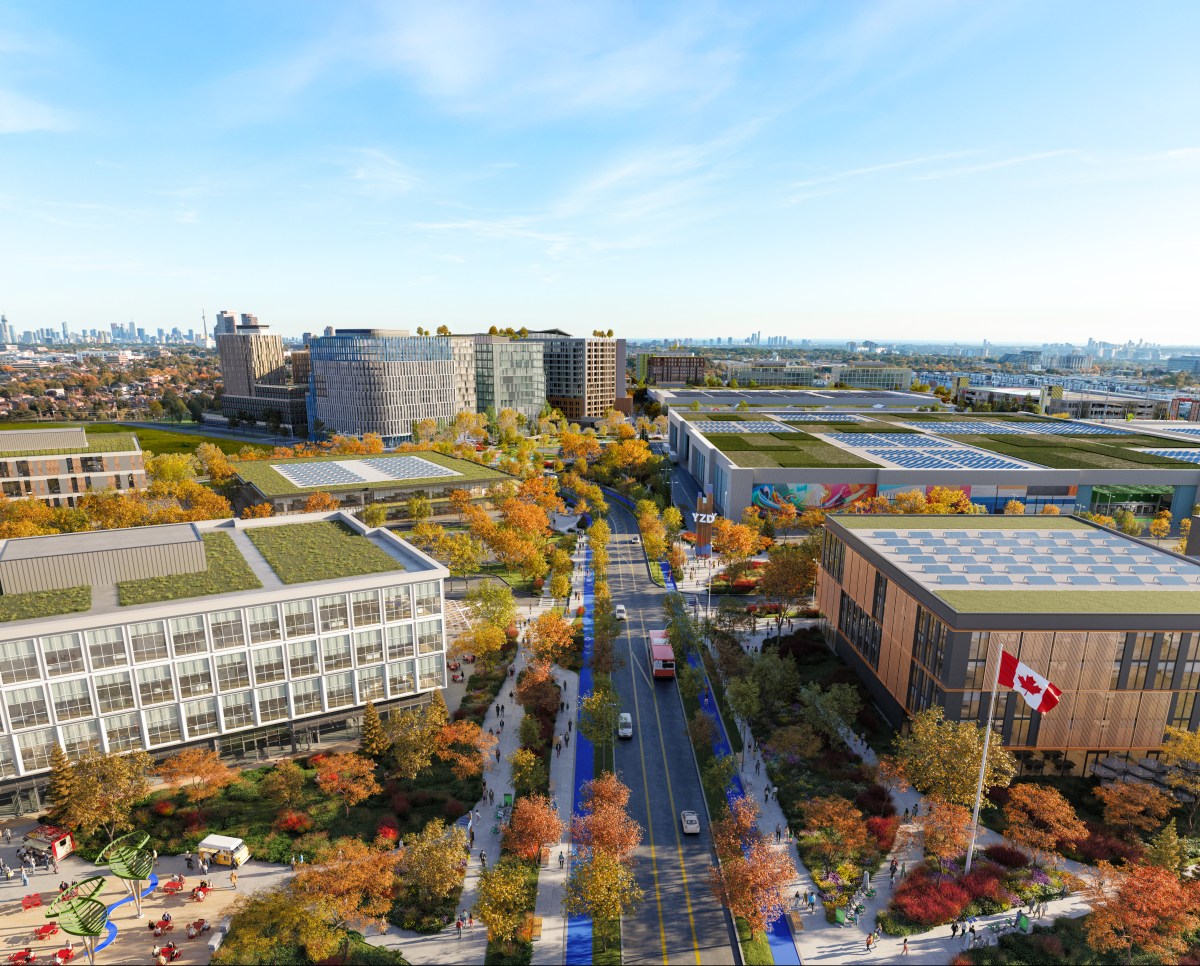
A disused airport in Canada is being transformed into a $30 billion sustainable urban development that promises to redefine modern living.
Toronto’s Downsview Airport, which closed in 2024 after decades of service, is being reborn as YZD.
“YZD is the largest urban development project in North America, unfolding in one of the fastest-growing regions on the continent,” Derek Goring, CEO at Northcrest Developments, the lead developer behind the project, told Newsweek. “It will redefine what it means to live in a city that prioritizes quality of life and represents a once-in-a-generation opportunity to change the way cities are built.”
From Runways to Neighborhoods
Named after the airport’s call sign, YZD spans 370 acres and was sold by Bombardier Aerospace in 2018 to one of Canada’s largest pension investors. “Northcrest Developments, a wholly owned subsidiary, was established to lead the master planning and development of YZD,” Goring said.
The scale of the project is unprecedented. “What is being built at YZD is a new part of Toronto—shifting the center of gravity. The development project is roughly the size of 185 downtown city blocks. The estimated cost for the multidecade development is $30 billion [CAD], around $22 billion USD,” added Goring.
Northcrest’s vision is to create a series of new neighborhoods that prioritize walkability, transit connectivity, and sustainable design. Housing and workplaces will sit steps from transit, shops, schools, cultural venues, and parks. At the heart of the community will be the 1.6-mile former runway, reimagined as a pedestrianized boulevard. “Envisioned as one of the most iconic public spaces in North America—a shared backyard for the future neighborhoods,” Goring noted.
Connected and Accessible
YZD’s location offers unmatched connectivity. “It is centrally located, immediately adjacent to three existing subway stations and a commuter rail line, with direct access into downtown Toronto and the broader metro area. YZD is less than five minutes away from Canada’s busiest highway, and a 20-minute drive to Pearson International Airport,” Goring said.
The plan includes more than 70 acres of new parks and open spaces, plus a bridge linking YZD to the 200-acre Downsview Park. Streets will be tree-lined and designed for walking and biking. “Getting around will be easy, with more bike lanes, shared paths, and everyday outdoor activity,” Goring added.
YZD aims for the highest environmental standards. “The plan is to create modern, climate-friendly buildings that could include features like green roofs and energy-efficient systems. The project will follow the City of Toronto’s goal to reach net-zero emissions by 2040,” Goring said.
Northcrest is prioritizing building reuse, low-carbon mobility, and innovative energy solutions such as solar PV (photovoltaic) systems, battery storage, and micro-grids. “Responsible development is woven into every aspect of YZD and underpins Northcrest’s process from planning to execution,” Goring added. The framework rests on five pillars: climate readiness, city nature, urban mobility, inclusive prosperity, and quality of place.
Sustainability efforts are already underway. “More than 20 tonnes of material from the site have been repurposed and given new life in the YZD Plaza, Indigenous Hub, and other installations. There are 40 bee hives at YZD, which produce YZD honey and support native planting across the site,” Goring said. Thousands of square feet of landscaped areas now sit on former Tarmac, planted with climate-adaptive species.
Green infrastructure is embedded throughout the city’s plan, “including abundant parks and open spaces, natural systems and stormwater management, all supported by strong existing transit connectivity,” Goring said.
A Multi-Decade Vision
Construction begins in early 2026 with the Hangar District, slated for completion in 2031. “Once fully developed, YZD will be home to more than 60,000 residents, supporting over 20,000 new jobs and creating more than 30,000 new housing units,” Goring said. Housing will include family-sized units and affordable options to meet diverse needs.
To minimize its carbon footprint over time, YZD will integrate energy-efficient buildings, explore renewable and low-carbon energy systems, and deliver transit-oriented, walkable neighborhoods that reduce reliance on cars, Goring said. He added that “Ontario’s electrical grid is powered by 92 percent renewable energy, and thermal energy will rely on electricity rather than fossil fuel.”
“The decisions made today will define how tens of thousands of Torontonians will live for decades to come, and how millions more will experience what Toronto has to offer, so we’re committed to getting it right,” he concluded.
Do you have a travel-related story to share? Let us know via life@newsweek.com, and your story could be featured on Newsweek.
Read the full article here


