



NEWYou can now listen to Fox News articles!
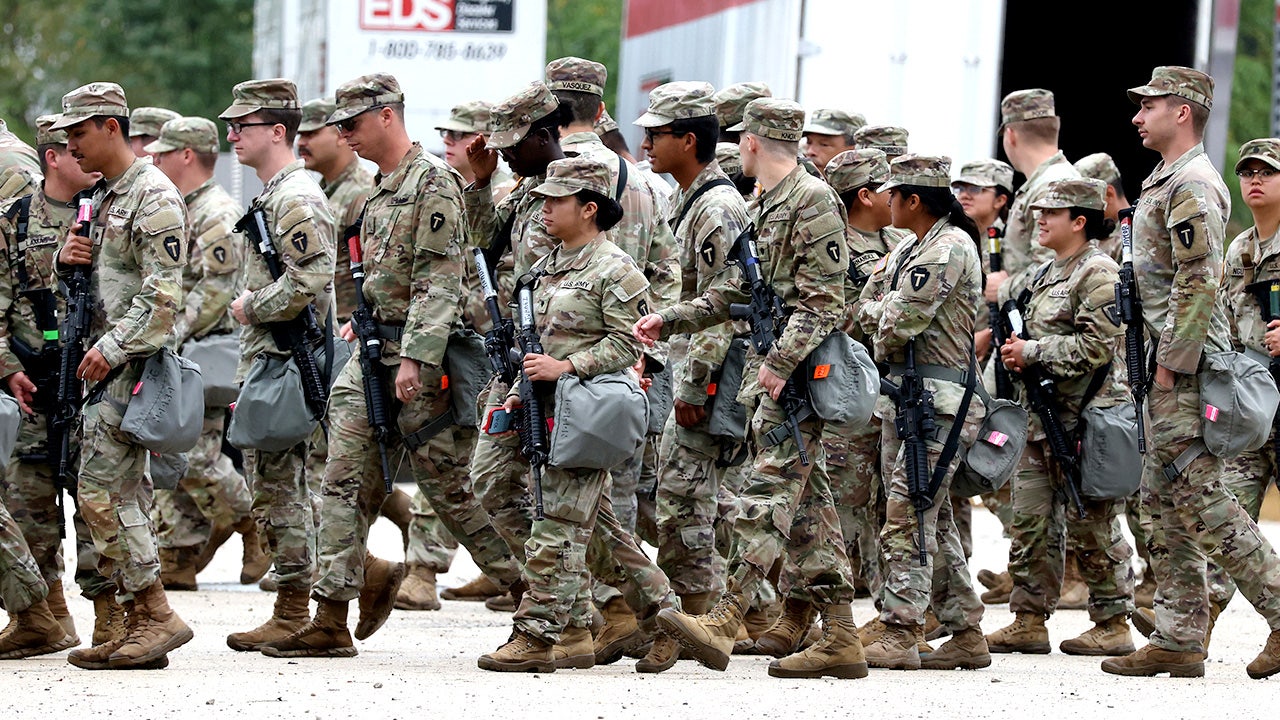
The Supreme Court rejected the Trump administration’s request to allow the president to proceed with immediately deploying National Guard troops to Chicago — delivering a blow, if temporary, to President Donald Trump as he seeks to expand his federalization push across the U.S.
The justices declined the Trump administration’s emergency request to overturn a ruling by U.S. District Judge April Perry that had blocked the deployment of troops. An appeals court also had refused to step in. The Supreme Court took more than two months to act.
“At this preliminary stage, the Government has failed to identify a source of authority that would allow the military to execute the laws in Illinois,” the high court majority wrote.
Three justices, Samuel Alito, Clarence Thomas and Neil Gorsuch, publicly dissented. The outcome is a rare Supreme Court setback for Trump, who had won repeated victories in emergency appeals since he took office again in January.
‘UNTETHERED FROM REALITY’: LAWYERS FOR TRUMP, OREGON, SPAR OVER NATIONAL GUARD DEPLOYMENT IN COURT CLASH
The White House told Fox News Digital that the Trump administration plans to keep working “day in and day out to safeguard the American public.”
“The President promised the American people he would work tirelessly to enforce our immigration laws and protect federal personnel from violent rioters. He activated the National Guard to protect federal law enforcement officers, and to ensure rioters did not destroy federal buildings and property,” White House spokesperson Abigail Jackson said in a statement. “Nothing in today’s ruling detracts from that core agenda.”
In a statement, Illinois Attorney General Kwame Raoul praised the court’s decision.
“Nearly 250 years ago, the framers of our nation’s Constitution carefully divided responsibility over the country’s militia, today’s U.S. National Guard, between the federal government and the states – believing it impossible that a president would use one state’s militia against another state,” he said. “The extremely limited circumstances under which the federal government can call up the militia over a state’s objection do not exist in Illinois, and I am pleased that the streets of Illinois will remain free of armed National Guard members as our litigation continues in the courts.”
The update comes after the Trump administration asked the high court last week to stay a lower court order blocking Trump from immediately deploying federalized National Guard troops to Chicago.
“This decision reinforces that domestic deployment of troops is rare and exceptional, and it was absolutely unjustified in Illinois,” said Hina Shamsi, director of ACLU’s National Security Project. “With each court decision against the President’s domestic troop deployments, it becomes clearer that his version of American cities as hellscapes, and protest against his policies as requiring troops, is plain false. We’re glad that the Supreme Court has upheld the order blocking this blatant abuse of presidential power because there’s no reason for any troops policing civilians in our streets.”
Solicitor General D. John Sauer argued in the administration’s appeal to the Supreme Court that a federal judge’s earlier order, as well as the partial stay granted by a unanimous 7th Circuit Court of Appeals, “improperly impinges on the president’s authority and needlessly endangers federal personnel and property.”
Blocking the deployment of National Guard troops, Sauer argued, risks “jeopardizing the lives and safety of DHS officers,” and prevents officials from taking what he argued are “reasonable and lawful measures” to protect federal agents from the “violent resistance” that they argue has persisted in Chicago.
Lawyers for Illinois and Chicago disputed that contention, however.
‘UNTETHERED FROM REALITY’: LAWYERS FOR TRUMP, OREGON, SPAR OVER NATIONAL GUARD DEPLOYMENT IN COURT CLASH

They argued in their Supreme Court filing that the Trump administration’s arguments “rest on mischaracterizations of the factual record or the lower courts’ views of the legal principles.”
They also cited the lower court judge’s order, which found the administration’s declarations about the nature of the protests in Chicago and nearby Broadview were “unreliable” and overstated the violence and difficulties officers faced enforcing the law.
“As the district court found, state and local law enforcement officers have handled isolated protest activities in Illinois, and there is no credible evidence to the contrary,” lawyers for the state of Illinois said Monday.
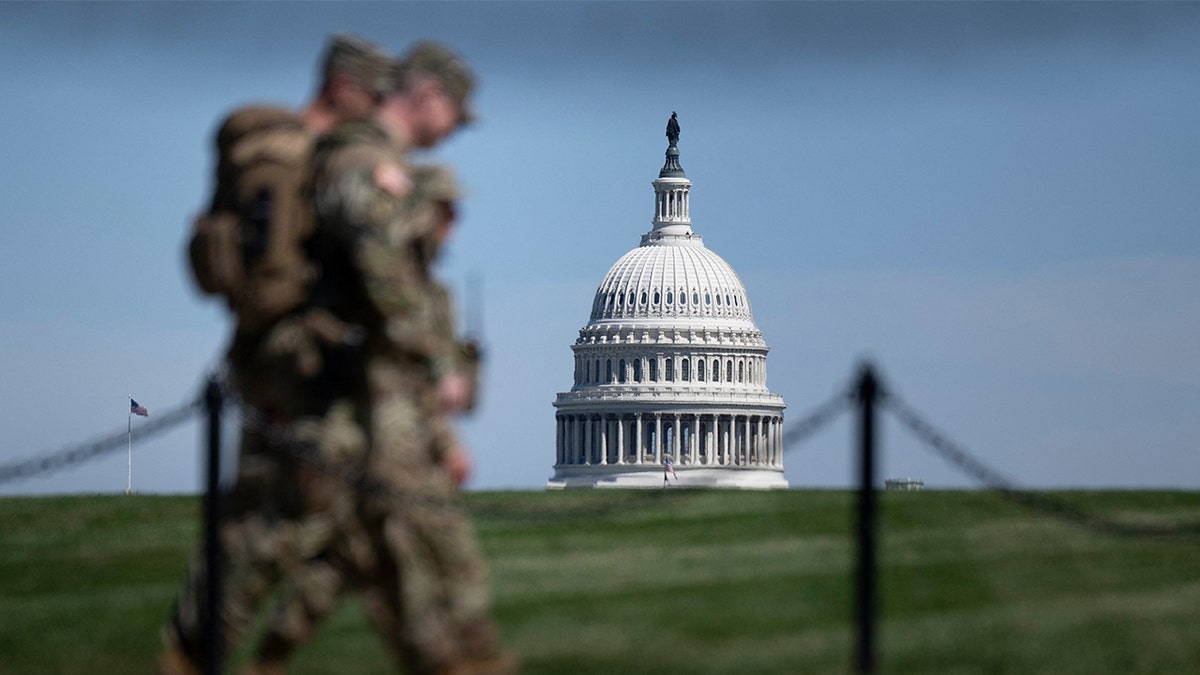
The update comes as Trump has sought to deploy hundreds of National Guard troops to a growing list of Democratic-led cities, despite stated opposition from local and state leaders.
He has faced opposition from a handful of federal courts, including U.S. District Judge Karin Immergut, a Trump appointee, who described Trump’s actions in a restraining order this month as “untethered to reality,” and failing to reflect the situation on the ground.
A three-judge panel for the 9th Circuit later stayed her order, allowing Trump to proceed with his deployment to Portland.
TRUMP IS THREATENING TO ‘FEDERALIZE’ DC WITH NATIONAL GUARD AND MORE. HERE’S HOW THAT COULD PLAY OUT
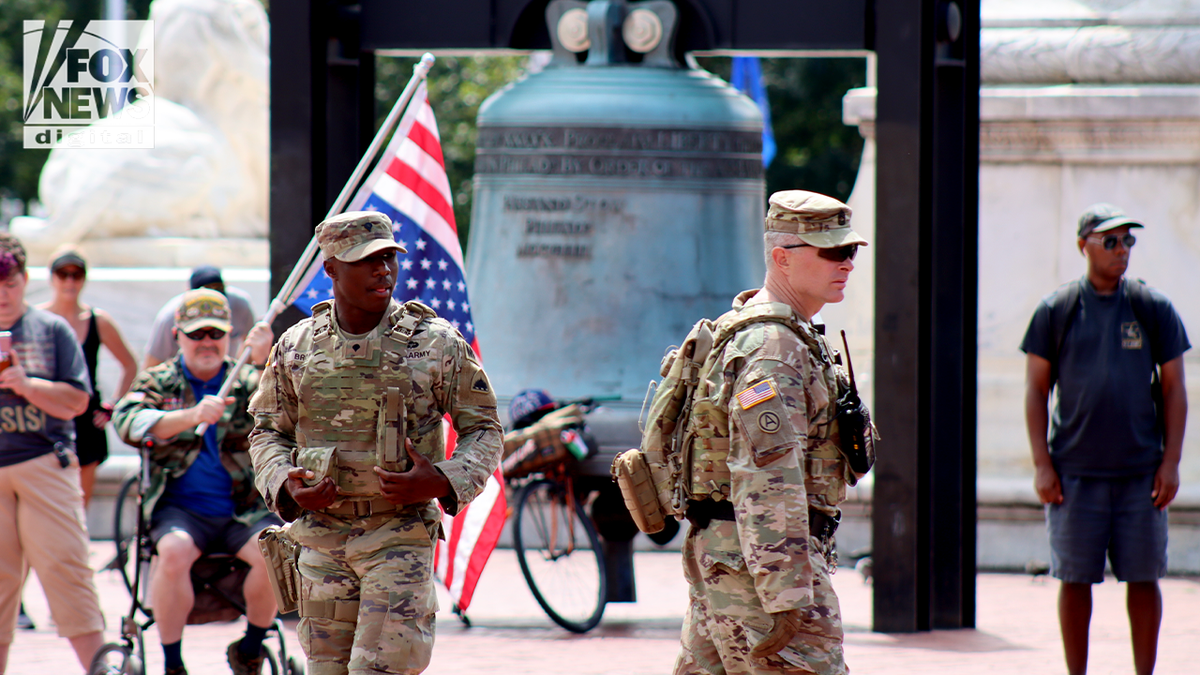
In D.C., a federal judge on Friday will hear updates on the status of Trump’s National Guard deployments in the nation’s capital, after the city’s attorney general said in a new court filing that it appears the National Guard troops will remain deployed through at least summer 2026.
It is unclear whether that is the Trump administration’s plan — and if so, how many of the 2,500 National Guard troops originally sent to D.C. in August would remain through that date.
The fight comes as Trump officials argue that the deployments are a necessary step to crack down on what they have said is an uptick in violent crime and protect against threats from protesters, including anti-ICE demonstrations.
Democrats, meanwhile, argue that Trump has failed to satisfy the criteria needed to federalize National Guard troops under USC § 12406, which allows a president to do so in cases of a foreign invasion, if there is “danger of a rebellion” or in cases when regular officers are unable to enforce the law.
They have also argued that Trump’s characterizations are hyperbolic and merely a pretext to “federalize” Democratic-led cities and states.
Fox News Digital has reached out to the White House.
The Associated Press contributed to this report.
Read the full article here


