



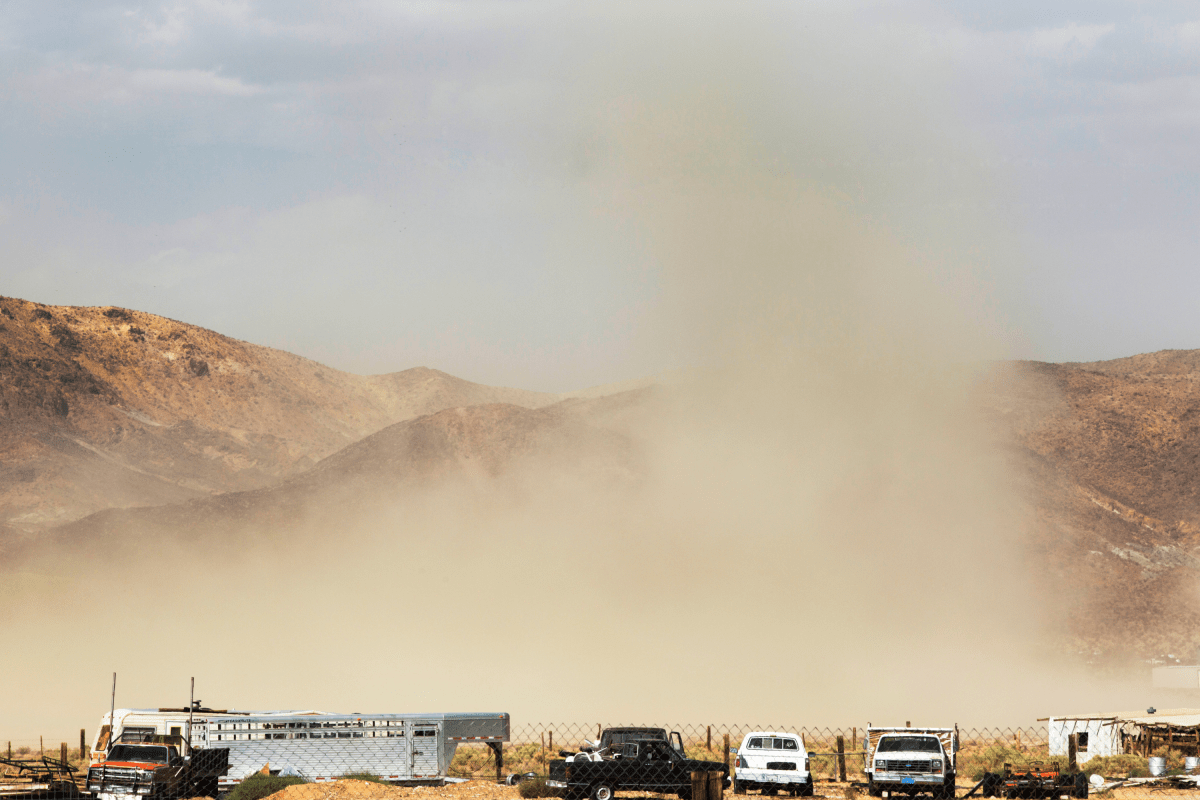
Thousands of residents across parts of southern and southeastern California have been advised by the National Weather Service to “keep windows and doors closed” as a pocket of fine particle pollution has reached “unhealthy” and “very unhealthy” levels, according to the Environmental Protection Agency’s AirNow map, which monitors the air quality across America in near real-time.
What Is Causing the Poor Air Quality Across California?
According to the NWS air quality alert, the area of “unhealthy” air pollution is due to “harmful levels of windblown dust,” as westerly winds ranging between 25 mph and 35 mph, with gusts up to 60 mph, are forecast for parts of the region through Sunday morning.
The dust particles are so fine that they can be easily inhaled, traveling deep into the heart and lungs, triggering symptoms ranging from chest tightness and shortness of breath to excessive coughing and eye, throat, and nose discomfort. This is why the air quality alert has been issued.
The blowing dust is also likely to reduce visibility, the NWS warns.
Which Areas Are Affected?
The areas likely to be impacted by “unhealthy” air are the Coachella Valley—including the cities of Indio, Palm Springs, Cathedral City, Palm Desert, Palm Desert Country, La Quinta, and Coachella—and the Imperial Valley—including the cities of Mountain Spring, Coolidge Springs, Salton City, Winona, Coyote Wells, Ocotillo, Plaster City, El Centro, Calexico, Alamorio, and Brawley.
What Should Residents Do?
When air quality reaches “unhealthy” and “very unhealthy” levels, the NWS and the EPA warn that everyone in the impacted area could be affected. Those in sensitive groups, which include the elderly, young children, and those with existing heart or lung conditions, are likely to be especially vulnerable.
This means everyone should take steps to reduce or limit their exposure to the polluted air. Sensitive groups should avoid all outdoor physical activity, and everyone else should try to reduce the intensity and length of outdoor activities.
The NWS suggests that residents also try to reduce the amount of emissions released by vehicles—which could further worsen the quality of air—by carpooling, sharing rides, taking public transport, or working from home where possible. If driving is unavoidable, drivers should avoid dirt roads, which could create more dust.
Inside—along with keeping doors and windows closed—residents should use air purifiers and filters to keep clean air circulating and avoid other sources of pollution such as burning candles, indoor fires, or incense. They should also avoid grilling, using house fans and swamp coolers—as they can bring polluted air inside—and running gasoline-powered lawnmowers and garden tools, until conditions improve.
Forecast for Week Ahead: Is Air Quality Likely To Improve?
The NWS air quality alert for the Coachella Valley area is in place until mid-Sunday morning, as winds are forecast to die down after around 11 a.m. The warnings remain in place for the Imperial Valley until Sunday evening.
Looking ahead, the NWS is forecasting that the strongest winds could stick around through most of Monday, but the strongest gusts should peak through Sunday and Sunday night. The winds should be much lighter from Tuesday onward, as calmer conditions settle in for the rest of the week, which means the air quality is likely to improve.
Residents are advised to keep a close eye on conditions and monitor local forecasts for updates and further alerts.
Read the full article here


