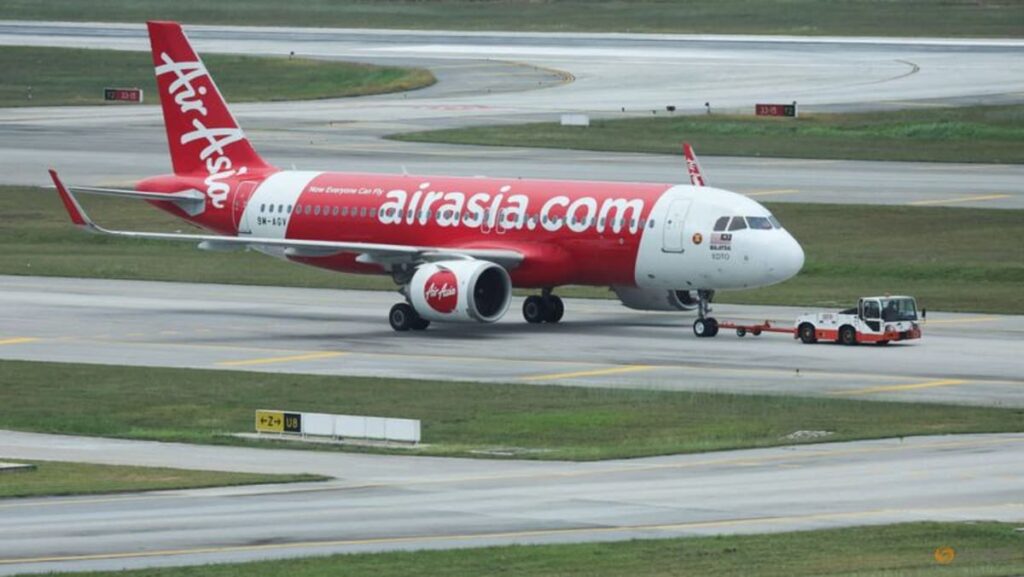
SINGAPORE: Bought for RM1 (US$0.25) in 2001, AirAsia grew from a struggling Malaysian carrier into one of Asia’s best-known low-cost airline groups, helping transform air travel across Southeast Asia.
More than two decades later, however, the budget airline is facing financial pressure, weighed down by debt and a sharp rise in fuel costs.
Malaysia’s government has asked Malaysia Airlines and Batik Air whether they could absorb AirAsia’s domestic routes and passengers if necessary, people familiar with the matter told Reuters, as authorities carry out contingency planning while monitoring the budget carrier’s financial health.
The discussions do not mean a takeover or transfer of AirAsia’s operations has been decided.
AirAsia, meanwhile, has said it remains focused on maintaining stable operations and that underlying travel demand remains strong.
So how did an airline that helped pioneer low-cost travel in Southeast Asia arrive at its latest financial crunch?
1993-2001: AirAsia before the low-cost revolution
AirAsia was established in 1993 and began flying in 1996 as a conventional airline, years before it became synonymous with budget travel in Southeast Asia.
But the carrier struggled financially, accumulating about RM40 million in debt.
In September 2001, Tune Air, led by Malaysian entrepreneurs Tony Fernandes and Kamarudin Meranun, acquired the debt-laden airline for a token RM1 while taking on its liabilities.
The deal laid the foundations for a dramatic overhaul of the carrier.
2002-2004: Reinvention as a budget airline
AirAsia was relaunched as a low-cost carrier in 2002, adopting a model built around low fares, high aircraft utilisation and a streamlined operation.
It also embraced new ways of selling tickets directly to customers, introducing online booking and later an SMS booking service.
International expansion soon followed. AirAsia began flying to Phuket in 2003, while a Thai affiliate was established as the airline sought to replicate its model beyond Malaysia.
In 2004, the group expanded into Indonesia and launched its Kuala Lumpur-Jakarta route. AirAsia was also listed on Bursa Malaysia that year.
Its expansion was accompanied by major fleet commitments. AirAsia signed an agreement with Airbus to purchase up to 100 A320 aircraft.
2005-2008: Rapid regional growth
AirAsia received its first Airbus A320 in 2005, beginning a shift towards a standardised Airbus narrowbody fleet that would become central to its low-cost model.
AirAsia Thailand launched its first flight to China via its Bangkok-Xiamen route.
The airline moved to Kuala Lumpur International Airport’s Low Cost Carrier Terminal in 2006 as passenger numbers surged.
In 2007, the launch of AirAsia X extended the low-cost model into medium- and long-haul markets.
By 2008, AirAsia had flown 50 million passengers. It retired its final Boeing 737 in Malaysia, making its Malaysian operation an all-Airbus carrier.
That year, AirAsia also began flying between Kuala Lumpur and Singapore after the route was opened to low-cost competition, ending the decades-long dominance of Malaysia Airlines and Singapore Airlines on one of Southeast Asia’s busiest international routes.
2009-2011: From regional budget carrier to mass-market giant
AirAsia was named the world’s best low-cost airline by aviation consultancy Skytrax for the first time in 2009.
Passenger numbers continued climbing rapidly. By 2010, AirAsia had carried its 100 millionth passenger and was expanding into the Philippines.
In 2011, the group introduced its Fly-Thru service, allowing passengers to connect between AirAsia and AirAsia X flights without collecting and rechecking their baggage.
AirAsia X, meanwhile, pushed deeper into long-haul flying, launching London services in 2009 and Paris in 2011.
Read the full article here