



NEWYou can now listen to Fox News articles!
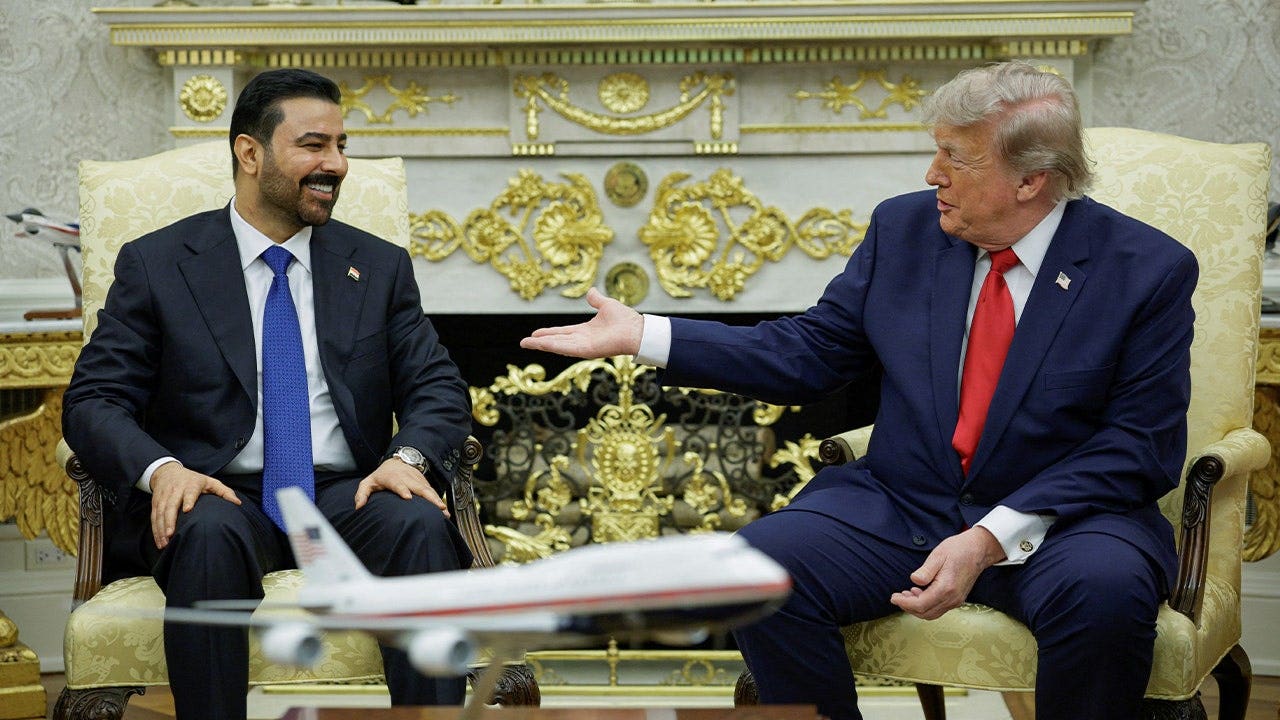
President Donald Trump said Tuesday the United States no longer believes it needs a military presence in Iraq, arguing Iran has been weakened enough for Baghdad to stand on its own as Washington prepares to end its coalition mission later in 2026.
Iraqi Prime Minister Mohammed al-Zaidi echoed that vision, declaring that armed factions operating outside state control would have “no justification” once the coalition mission concludes and insisting Iraq’s security forces would be capable of protecting the country on their own. Al-Zaidi said limiting weapons to the state was “a decision, not an option.”
Trump said the U.S. partnership with Iraq would shift away from military cooperation toward investment and energy development, while al-Zaidi summarized the transition by saying, “U.S. forces will be out of Iraq. U.S. companies will be inside Iraq.”
TRUMP ADMIN WARNS IRAQ OVER IRAN TERROR PROXIES AS US REPORTEDLY BLOCKS CASH PAYMENTS
“We don’t think we need the military there anymore,” Trump said. “We’re there to help them. We’re there to protect them if need be. But we don’t think that’s going to be necessary.”
He argued Iraq’s security environment had fundamentally changed because Iran had been “very much destabilized” and its military was now “just a tiny fraction” of what it had been four months ago.
The remarks underscore a remarkable shift for a country once synonymous with roadside bombs, sectarian violence and the fight against ISIS. More than two decades after the U.S. invasion of Iraq, the Trump administration is publicly arguing the security environment has improved enough to replace a military partnership with an economic one, pointing to billions of dollars in planned U.S. energy investments as evidence American companies are now willing to do business where American troops once fought.
Iran has long exercised influence in Iraq through political parties and powerful militias within the Popular Mobilization Forces, many of which have operated alongside — but outside — the Iraqi security apparatus. Washington has for years pressed Baghdad to bring those groups fully under state control.
HOW IRAN ATTACKS ARE FORCING THE PENTAGON TO RETHINK ITS DECADES-OLD MIDDLE EAST BASE STRATEGY
Under a 2024 agreement, the U.S. and Iraq agreed to end the American-led coalition’s military mission in Iraq starting in September 2025. While U.S. forces drew down from several bases, American troops have remained in the country in an advisory role and to support counter-ISIS operations tied to neighboring Syria.

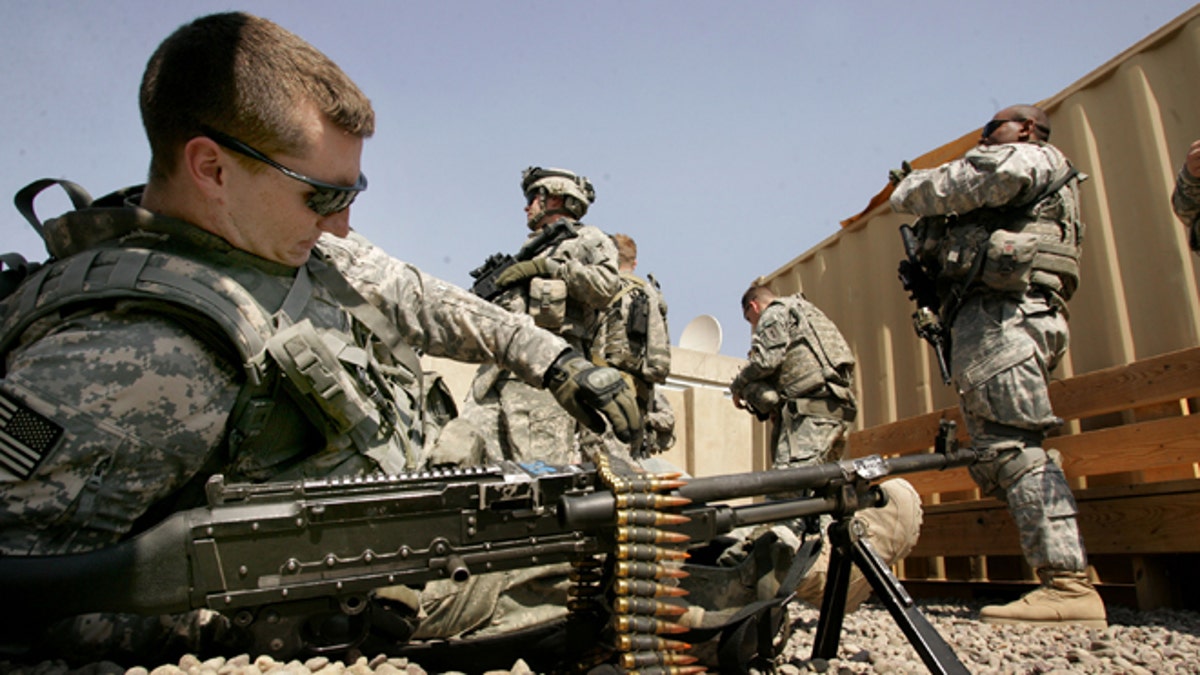
About 2,500 U.S. troops remained in Iraq prior to the beginning of the drawdown in September 2025, down from a peak of about 170,000 during 2007 at the height of the Iraq war. Nearly all U.S. forces departed in 2011 before about 5,000 returned in 2014 to fight ISIS.
CLICK HERE TO DOWNLOAD THE FOX NEWS APP
Al-Zaidi, a businessman and political newcomer, took office this year after emerging as a consensus candidate following months of political deadlock. Trump publicly backed his candidacy and opposed the return of former Prime Minister Nouri al-Maliki, whom the administration viewed as too closely aligned with Iran.
During Tuesday’s Oval Office meeting, Trump repeatedly praised al-Zaidi, calling him “a great leader” and predicting his influence would extend “all throughout the Middle East.” Trump also claimed he had “played a role” in al-Zaidi’s rise to power and said his endorsement helped propel the Iraqi leader to victory.
Read the full article here


