



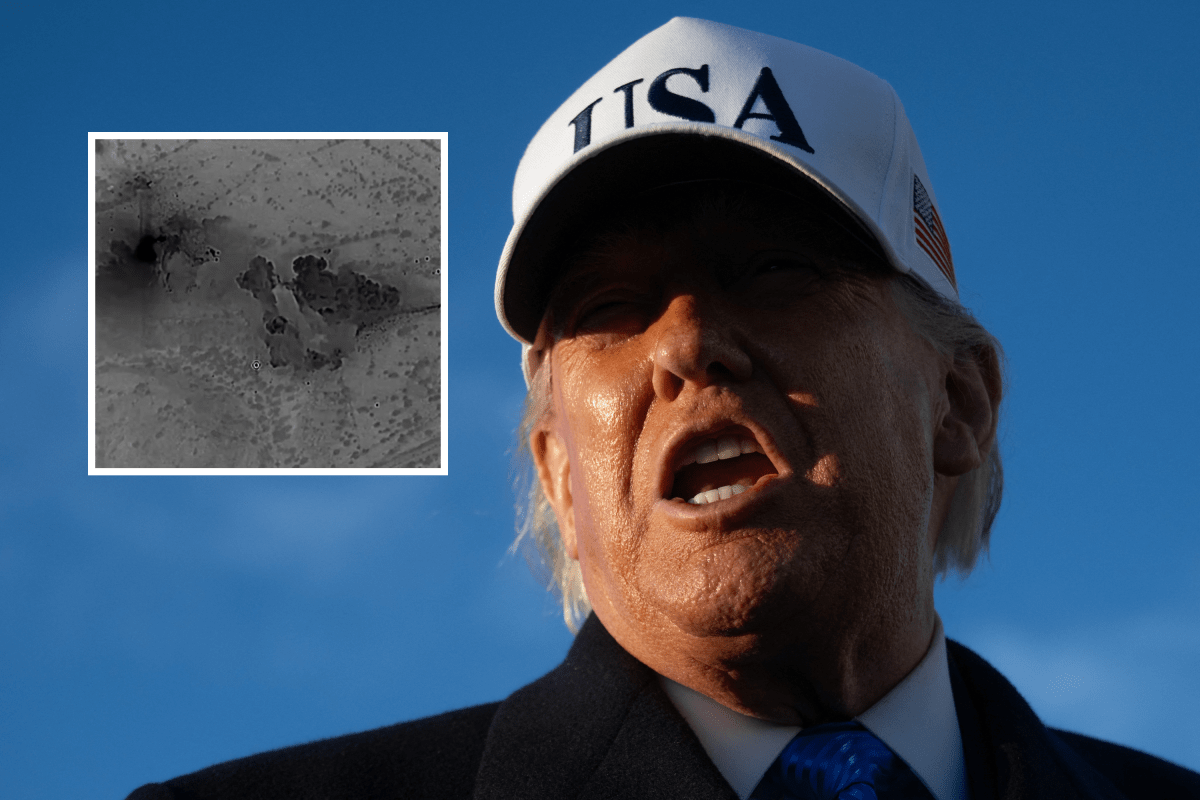
President Donald Trump said Iran wants a deal, which he would reject anyway, as the U.S. confirmed strikes on a key Iranian island and warned oil infrastructure could be targeted next.
Why It Matters
Trump’s comments come as military action intensifies and warnings expand beyond battlefield targets to oil infrastructure, increasing the stakes for regional security and energy markets.
What To Know
Trump claimed Iran is “totally defeated” and seeking negotiations, framing recent U.S. military action as a decisive blow while signaling little appetite for compromise.
In a post early Friday on Truth Social, Trump accused the “Fake News Media” of downplaying U.S. military success against Iran and said Tehran now wants a deal he would not accept.
The statement followed U.S. strikes on Iran’s Kharg Island, a strategically vital hub that handles most of the country’s oil exports.
Trump said American forces “obliterated” military sites on the island while deliberately sparing oil infrastructure—for now.
“Moments ago, at my direction, the United States Central Command executed one of the most powerful bombing raids in the History of the Middle East, and totally obliterated every MILITARY target in Iran’s crown jewel, Kharg Island,” he wrote on his social media platform shortly before posting “unclassified” black and white aerial footage of the strikes.
Mohammad Bagher Qalibaf, the speaker of Iran’s parliament, said Thursday that any attack on islands along the country’s southern maritime frontier would prompt Iran to “abandon all restraint,” underscoring how critical the areas are to its economy and security.
Trump warned that restraint would not last if Iran continues to interfere with shipping through the Strait of Hormuz, a strategic important route and chokepoint for roughly a fifth of the world’s traded oil.
Iran has effectively closed the strait in recent days and continued missile and drone attacks across the region, even as U.S. and Israeli warplanes strike military targets inside Iran.
An American official also confirmed that additional U.S. forces are being sent to the Middle East, including 2,500 Marines and an amphibious assault ship, nearly two weeks into the conflict, as first reported by the Wall Street Journal.
Military imagery shows the 31st Marine Expeditionary Unit and the USS Tripoli operating out of Japan after several days in the Pacific.
Commercial satellite tracking later placed the Tripoli near Taiwan, indicating it remains more than a week from the waters off Iran.
Earlier this week, the Navy confirmed a dozen ships were operating in the Arabian Sea, including the aircraft carrier USS Abraham Lincoln and eight destroyers.
Should the Tripoli arrive, it would be the second-largest ship in the region.
While overall troop numbers have not been made public, Al Udeid Air Base in Qatar—one of the largest U.S. installations in the Middle East—typically hosts roughly 8,000 American troops.
Iranian officials have warned that any attack on oil infrastructure would prompt retaliation against U.S.-linked energy assets across the region, underscoring the risk of further escalation.
Defense Secretary Pete Hegseth said in Washington that U.S. forces have hit more than 15,000 enemy targets, with the pace exceeding 1,000 strikes a day since the war began.
He also played down concerns over the Strait of Hormuz, telling reporters: “We have been dealing with it and don’t need to worry about it.”
What People Are Saying
Trump, on Truth Social: “The Fake News Media hates to report how well the United States Military has done against Iran, which is totally defeated and wants a deal. But not a deal that I would accept! Thank you for your attention to this matter. President DJT.”
Hegseth, on Friday: “As the world is seeing, they are exercising sheer desperation in the Straits [sic] of Hormuz, something we’re dealing with. We have been dealing with it and don’t need to worry about it. We’re on plan to defeat, destroy, disable all of their meaningful military capabilities at a pace the world has never seen before.”
What Happens Next
Attention now turns to whether Iran escalates attacks on regional shipping or energy assets, and how long the U.S. and its allies sustain military operations as political pressure builds at home and abroad.
Read the full article here


