



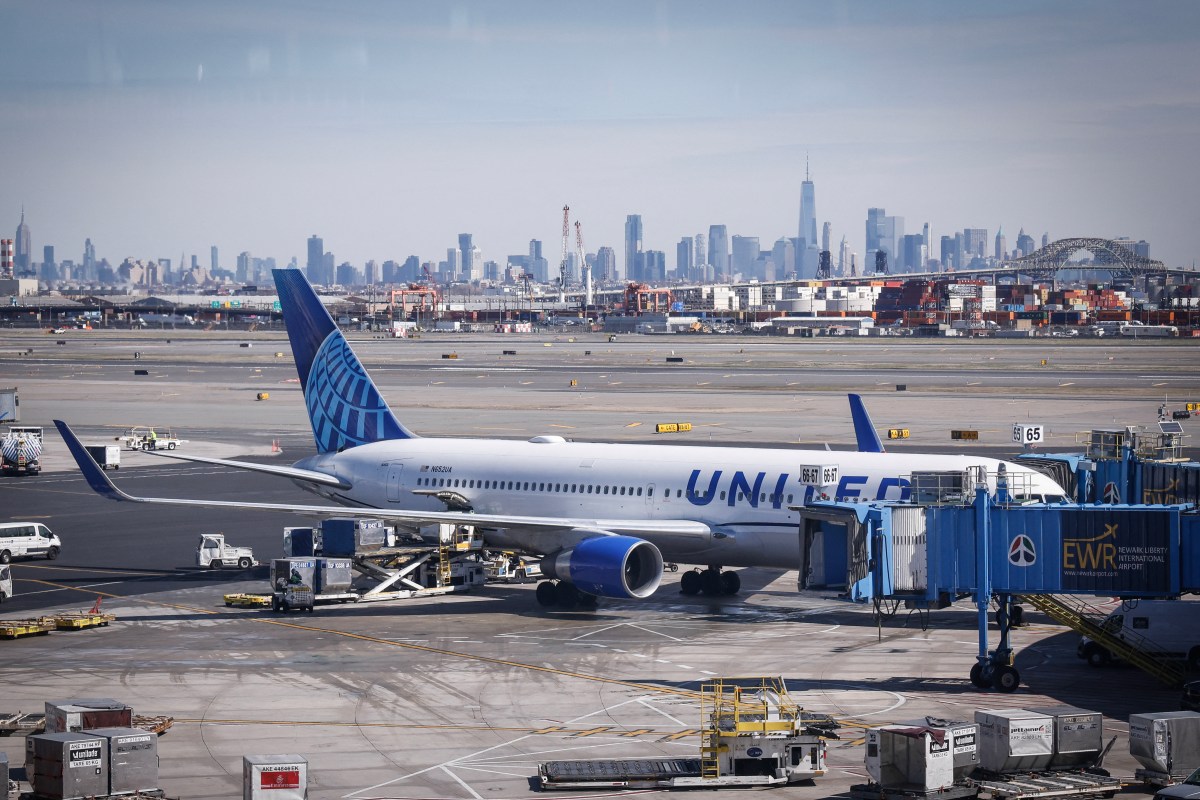
United Airlines is cutting a total of about 5 percent of flights as the price of oil soars amid the ongoing U.S.-Israeli war with Iran, CEO Scott Kirby said on Friday.
The Chicago-based carrier said it would cancel roughly 3 percent of “off-peak” flying—including red-eye and midweek services—reduce about one point of capacity at Chicago O’Hare International Airport and keep services to Tel Aviv and Dubai suspended, bringing the total reduction to around 5 percent of the year’s planned capacity, Reuters reports.
Newsweek reached out to the airline via email for comment Friday night.
Why It Matters
Air travel is already impacted due to a partial shutdown affecting the Department of Homeland Security as crowds for spring break season have ramped up.
Spikes in oil and gas prices along with threats to energy infrastructure across the Middle East underscore how securing the Strait of Hormuz and nearby facilities has become central to both the war’s trajectory and its global economic fallout.
What To Know
In the memo, Kirby said in part, “The reality is, jet fuel prices have more than doubled in the last three weeks. If prices stayed at this level, it would mean an extra $11B in annual expense just for jet fuel. For perspective, in United’s best year ever, we made less than $5B.
“That may sound scary, but the first piece of good news is that, for now at least, demand remains the strongest we’ve ever seen. The 10 biggest booked revenue weeks in our history have been the last 10 weeks.”
Shipping slowdowns and heightened risks in the Persian Gulf’s Strait of Hormuz—through which roughly one-fifth of global oil typically transits—have driven prices higher, with Brent crude holding above $108 per barrel as the war in Iran enters its fourth week, heightening pressure on governments to stabilize markets.
Kirby said the airline is preparing for oil to rise as high as $175 a barrel and to remain above $100 through the end of 2027, per Reuters, reflecting United’s planning assumptions amid the conflict’s impact on energy markets.
Meanwhile, the U.S. Treasury Department announced that it has temporarily authorized the purchase of Iranian oil “stranded” at sea, Secretary Scott Bessent said in part on X Friday. The announcement comes as the Trump administration moves to lighten energy supply pressure that has continued to intensify since U.S. and Israeli troops launched the war on Iran.
What People Are Saying
Kirby, in part in his memo about the price of oil impact to the airline: “Be smart and nimbly manage our schedule– In the short term, that means tactically pruning flying that’s temporarily unprofitable in the face of high oil prices. So, we are canceling about 3 points of flying in off peak periods (think redeyes, Tues/Wed/Sat flying) during Q2 and Q3 and we’ll pull a point of capacity in ORD when the FAA process concludes. We’ve pulled TLV and DXB service, which represents about another 1 point of capacity.
“That’s about 5 points of this year’s planned capacity in the short term, and our current plan is to restore the full schedule this fall. To be clear, nothing changes about our longer-term plans for aircraft deliveries or total capacity for 2027 and beyond, but there’s no point in burning cash in the near term on flying that just can’t absorb these fuel costs.”
What Happens Next
The airline expects to have its full schedule restored in the fall. It is immediately unknown if the Trump administration’s move to temporarily lift sanctions on Iranian oil at sea will have a large impact on domestic oil and gas prices.
Read the full article here


