



A single large AI-focused hyperscale data center can require over 500 megawatts of steady load—roughly comparable to the electricity demand of a city like Pittsburgh. To dominate in AI, the United States must secure the critical mineral and energy supply chains that advance economic prosperity.
Today, in a time of renewed great-power competition, global critical mineral processing remains exposed to supply concentration risk in jurisdictions capable of weaponizing leverage. That concentration creates dependency, and dependency is a strategic liability.
President Donald J. Trump’s America First economic-security agenda confronts that reality directly. Supply chain resilience and resource independence are strategic imperatives. The mission is clear: reduce exposure, rebuild industrial strength, and align with partners prepared to produce at scale.
Recently in Washington, Vice President JD Vance and Secretary of State Marco Rubio convened the inaugural Critical Minerals Ministerial to turn that strategy into action by diversifying supply, unlocking private capital, and accelerating production in rule-of-law jurisdictions.
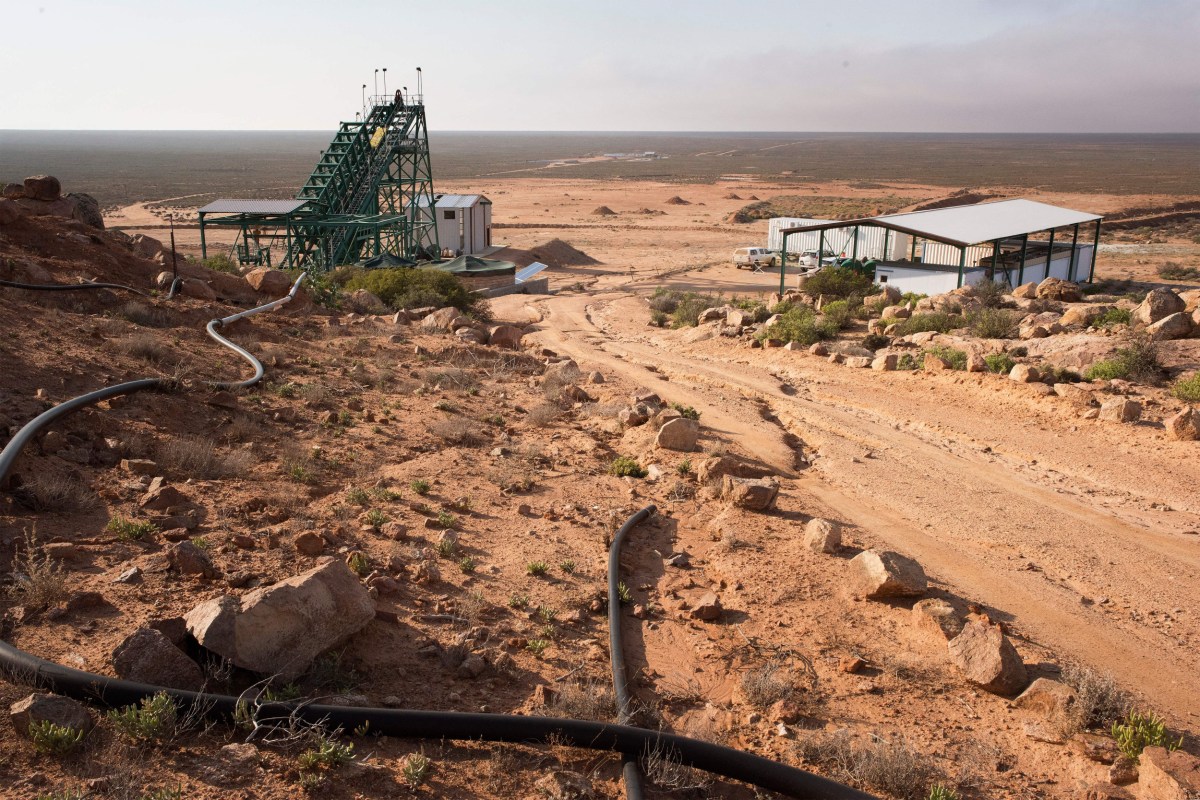
One such jurisdiction, and potentially one of the most consequential on the African continent, is Namibia. Seven times the size of my home state of Pennsylvania, and with one of Africa’s most coherent export-oriented infrastructure systems, integrating high-quality roads, ports, and logistics corridors. In addition to being the world’s third largest uranium producer, Namibia holds an outsized position on the global minerals and energy map. It also hosts globally significant lithium and heavy rare earth deposits, particularly dysprosium and terbium, placing it among Africa’s most significant Heavy Rare Earth Element jurisdictions. Moreover, it is a model for governance and stability on the continent, operating with regulatory frameworks capable of supporting large-scale development.
Uranium fuels nuclear power plants, which provide the high-reliability baseload electricity required for AI data centers. As AI demand expands, the strategic relevance of dependable nuclear generation and uranium supply expands with it.
But supply security ultimately rests on infrastructure.
After a series of meetings with government leaders and industry executives in Cape Town at this year’s Mining Indaba, Africa’s leading mining and investment forum, I led a senior U.S. Department of Energy delegation westward to Namibia’s Atlantic-facing port city of Walvis Bay. Standing at the port, watching a patchwork of containers load against the horizon, reinforced a simple truth: supply chains are built on ports, roads, rail, customs and border enforcement, and measurable throughput capacity.
Deep-water ports and logistics corridors are strategic assets. Energy resource exports, downstream processing, and industrial development depend on secure transport systems, effective enforcement, regulatory predictability, and permitting discipline. Where infrastructure is credible, capital moves. Sophisticated investors do not gamble on fragile systems.
Across Namibia and throughout Africa, American companies are competing to win. U.S. firms bring advanced engineering, disciplined compliance systems, high environmental and safety standards, and deep access to long-horizon capital. Properly structured projects strengthen host-country capacity while reinforcing American supply security and technological leadership.
Governments establish frameworks. Markets determine what gets built.
The next phase is execution. Commercial diplomacy is aligning trusted partners, mobilizing development finance alongside private capital, and prioritizing infrastructure corridors capable of moving energy and strategic minerals at scale. Our intent must translate into production, throughput, and measurable output.
Countries in critical minerals corridors such as Namibia that enforce the rule of law and maintain disciplined regulatory frameworks will attract durable American investment. Those that do not will see capital flow elsewhere as supply chains realign. Ultimately, these U.S. investments will benefit American workers and businesses, while ensuring that American technology, energy, and defense sectors are powered by materials sourced from reliable partners. This approach reduces the risks of supply chain disruptions and strengthens our economic and national security.
The competition for strategic natural resources and industrial supply chains is well underway in Africa. Under President Trump, the United States is competing with clarity and resolve to win the AI race—because energy security is national security.
John Giordano is the United States Ambassador to the Republic of Namibia. He is the first politically appointed U.S. Ambassador to Namibia and was the first U.S. Ambassador under President Donald Trump’s second Administration to take up post on the African continent.
The views expressed in this article are the writer’s own.
Read the full article here


