



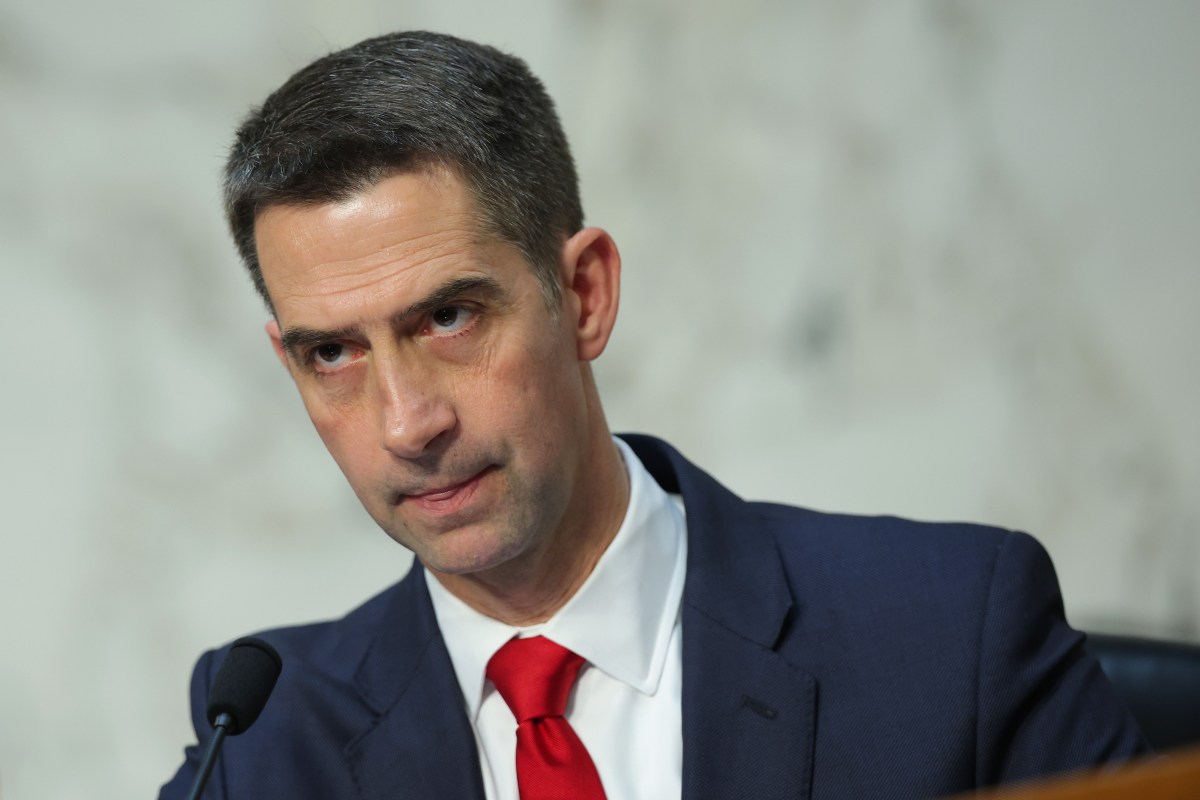
A GOP lawmaker has introduced legislation that would revoke U.S. visas and restrict future entry for the immediate family members of individuals designated by the U.S. government as terrorists.
Senator Tom Cotton, an Arkansas Republican, introduced the “No Safe Haven for Terrorist Families Act,” which would create a new basis under U.S. immigration law to bar relatives of certain designated terrorists from obtaining visas or immigrating to the United States.
Under the proposal, spouses, parents, children, siblings, grandparents, grandchildren, nieces, and nephews of individuals classified as “America’s most dangerous adversaries” would be deemed inadmissible.
Why It Matters
The legislation would also require the Secretary of State to revoke any existing visa held by a covered family member within 30 days of determining that the individual falls under the inadmissibility criteria.
What To Know
The bill would amend the Immigration and Nationality Act to make such relatives both inadmissible and deportable, applying to family members of individuals designated as Specially Designated Global Terrorists, senior officials of foreign terrorist organizations, high-ranking officials of governments deemed state sponsors of terrorism or foreign adversaries, and individuals sanctioned for corruption or human rights abuses.
The measure specifies that these restrictions would apply retroactively, regardless of when the family relationship was formed, and would bar those individuals from most forms of immigration relief while requiring federal authorities to prioritize their removal, according to the bill text.

GOP lawmakers argue that it is intended to strengthen national security by limiting the ability of families connected to designated terrorists to travel to, or live in, the United States.
“Relatives of terrorists have no business being in our country. My bill would revoke visas from family members of terrorists to keep Arkansans safer,” Senator Cotton said in a press release.
Building On Existing Provisons
U.S. immigration law already contains provisions that bar individuals involved in terrorism-related activities, including members of designated foreign terrorist organizations, from entering the country. The proposed legislation would expand those restrictions to include certain relatives, marking a significant broadening of eligibility criteria for visa denials.
Immigration advocates have in the past raised questions about proposals that extend penalties to family members, citing potential concerns about due process and the principle of individual liability. It was not immediately clear how such provisions would be implemented in practice or what evidentiary standards would be required to determine eligibility.
The bill has been introduced in the Senate but has not yet advanced through committee, and its prospects in Congress remain uncertain.
Relationship to Qasem Soleimani
U.S. visas can be revoked by the State Department if eligibility changes, fraud is discovered, or security concerns arise. CBP may cancel a visa at the border and deny entry even if it is still valid. DHS and ICE can trigger revocation through enforcement actions, investigations, or immigration violations.
It comes after the State Department has alleged that Hamideh Soleimani Afshar is related to Qasem Soleimani, the former commander of Iran’s Islamic Revolutionary Guard Corps’ Quds Force.

Lawyers for Soleimani Afshar and her daughter, Sarinasadat Hosseiny, dispute that claim, saying there is no evidence supporting any familial link to the Iranian general and arguing the allegation is inaccurate. Both individuals possessed green cards, according to the State Department.
In Colorado, immigration authorities detained an Egyptian mother and her five children after the family’s father, Mohammed Soliman, was accused of carrying out a high-profile attack targeting supporters of Israeli hostages.
The family said they were estranged from him and had no knowledge of the alleged attack, but were taken into ICE custody as officials investigated whether they had any connection to his actions, with authorities describing them as possible associates. The family have pending asylum applications, according to DHS.
The family has since been released, and there is no evidence connecting the mother or her children to any wrongdoing.
Read the full article here


