



Published on
Albania, Serbia, Montenegro, Bosnia and Herzegovia, North Macedonia Kosovo are at various stages of trying to join the bloc. Geographically, the region is completely surrounded by the EU. For nearly two decades, a period of relative calm kept enlargement on the backburner, but Russia’s invasion of Ukraine shattered that peace, turning expansion into a critical security priority.
However, it is also about money. The EU is already the region’s primary trading partner and investor and only last year, the total trade reached over €87 billion. It is a massive, two-way exchange of heavy machinery, chemicals, and metals flowing back and forth across the border. What’s crucial, the EU exported far more than it imported, running a handsome profit.
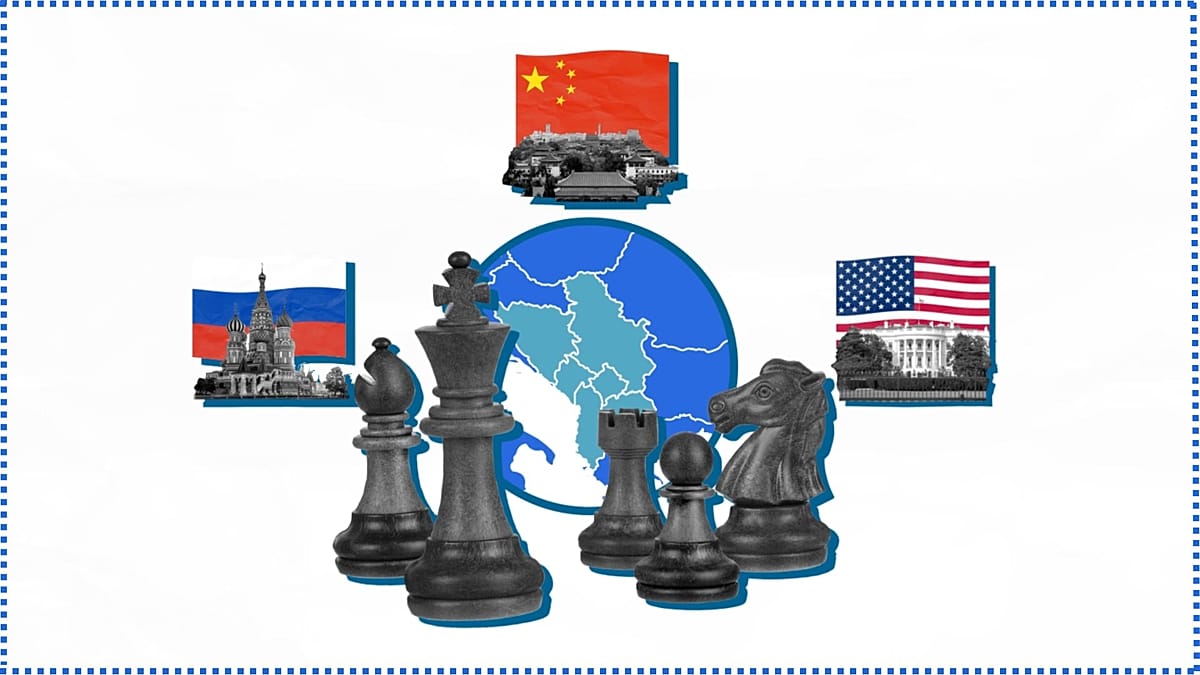
Yet, the EU is not the only power eyeing the region. Brussels faces immense outside pressure because Moscow, Beijing, and Washington are all actively competing for strategic influence there. If Europe leaves a power vacuum on its own doorstep, others will gladly fill it.
The region has already become a new frontline for geopolitical tensions, which is most visible in Serbia, where the government refuses to align with EU sanctions against Moscow.
Finally, EU capitals fear adding more nations will paralyse decision-making under the current voting rules. That is why Albania and Serbia proposed a phased integration, temporarily waiving their veto rights just to get through the door.
As European Council chief António Costa travels around the region, Brussels is clearly no longer driven by an idealistic dream of European unity. This is a cold calculation to secure borders.
Because if the EU doesn’t act, the alternative is a region politically dependent on Russia, economically reliant on Chinese investment, or potentially turned into the 51st state of the US—as it was suggested with Greenland, Iceland or Canada.
Watch the Euronews video in the player above for the full story.
Read the full article here


