



When the bombs fall, it is the middle of the night in Australia. My phone lights up.
Last night, strikes intensified in the south of Lebanon. I am Assyrian Lebanese. News like this takes me straight back to April 8 and to the shock of what happened that day.
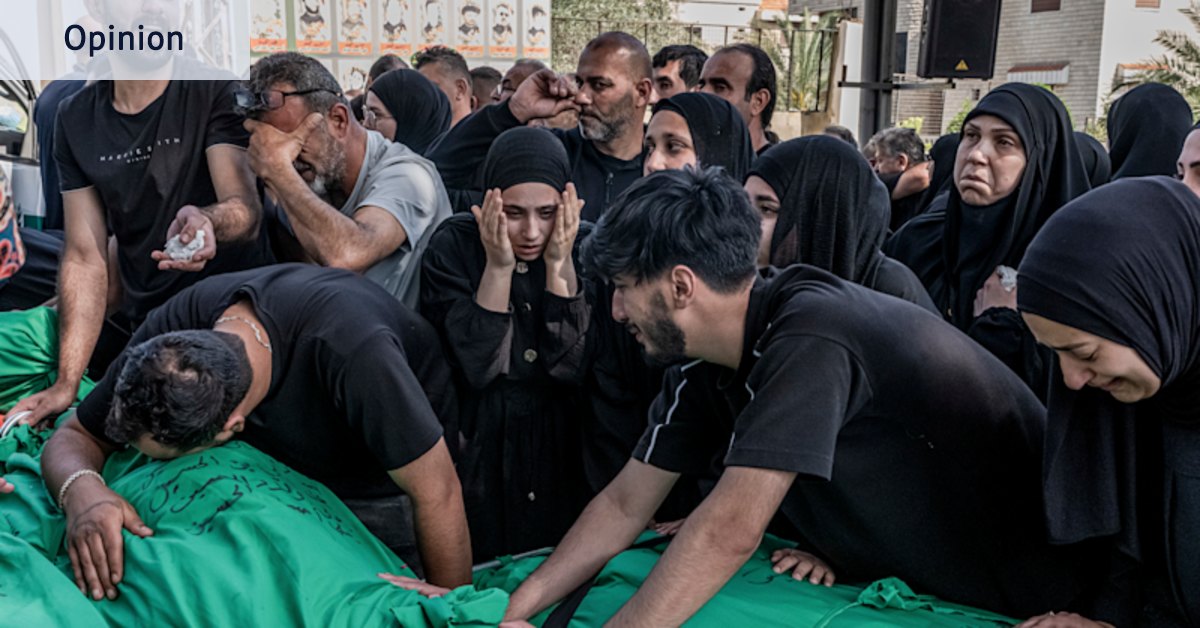
In Lebanon, they call it Black Wednesday. Israel launched more than 100 airstrikes in 10 minutes, the largest coordinated assault since March, hitting Beirut, the Bekaa Valley and the south.
Many of the bombs fell on residential and commercial areas, during rush hour, without warning. At least 357 people were killed. More than 1000 were wounded.
A ceasefire had just been announced. People had allowed themselves, briefly, to hope. They are still waiting.
My grandparents found refuge in Lebanon after escaping violence in Iraq and Turkey. When the civil war broke out in Lebanon in the 1970s, we were forced to flee to Australia. But much of my family stayed. I have aunts, uncles, cousins and nieces in Beirut who have stayed in Lebanon despite all the challenges, from the economic instability of the past few decades to the violence of recent months.
Almost every generation of my family has been forced to confront the same question: stay and risk everything, or leave and lose all you built. That is the type of experience that builds an inherited cycle of intergenerational trauma.
After Black Wednesday, I called my niece. She told me that she could no longer sleep, not because of the sounds of the explosions, which have become a norm for someone like her, but because of an all-consuming fear she is grappling with. For what felt like the first time ever, the strikes had come without warning, hitting terrifyingly close to her neighbourhood.
Another cousin, a woman in her 70s who had always insisted no country could match Lebanon’s beauty, said to me: “There is no Lebanon any more. The country we know has gone.”
The weight of what’s happening in Beirut is being felt in living rooms across Sydney, Melbourne, Adelaide and across the nation, where Australia’s 250,000 Lebanese Australians, one of the largest Lebanese diasporas, are watching their homeland fracture in real time.
Our community did not sever ties when it settled here. That is not how migration works. Our hearts exist in two lands now.
We’re glued to our phones, sending money for school fees because our relatives can no longer survive on local wages, hearing that electricity is rationed to hours a day, that hospitals are overwhelmed – that’s if you’re lucky enough to afford medical care. More than four-fifths of Lebanon’s population now lives below the poverty line.
More than 1 million people have been displaced in Lebanon since the war began in March. Close to 3000 have been killed.
There is a particular grief that belongs to a diaspora during a crisis. You are safe, and your loved ones are not. You slept last night and they didn’t. That feeling lodges in your chest and does not go away.
Through my work at Settlement Services International (SSI), which has supported refugee and migrant communities for over two decades, my colleagues and I have watched families carry this weight, their minds half a world away with loved ones in Syria, Iran, Afghanistan, Sudan, Ukraine and conflict zones across the globe.
Now I carry that weight myself.
Australia has a role to play, especially as a country where a quarter of a million of its own are experiencing this conflict in real time.
What happens in Lebanon does not stay in Lebanon. It lands here, in our group chats, our sleepless nights, the quiet dread of families who rebuilt once and cannot believe they’re watching it burn again. It is not just felt at the petrol pump. It lives in the phone calls no one wants to make, the money transferred before payday, the grief that has no clean border.
Lyda Dankha works in the Community Sponsorship Program for national non-profit, SSI. She was inducted into Victoria’s Multicultural Honour Roll in 2024.


From our partners
Read the full article here


