



Published on •Updated
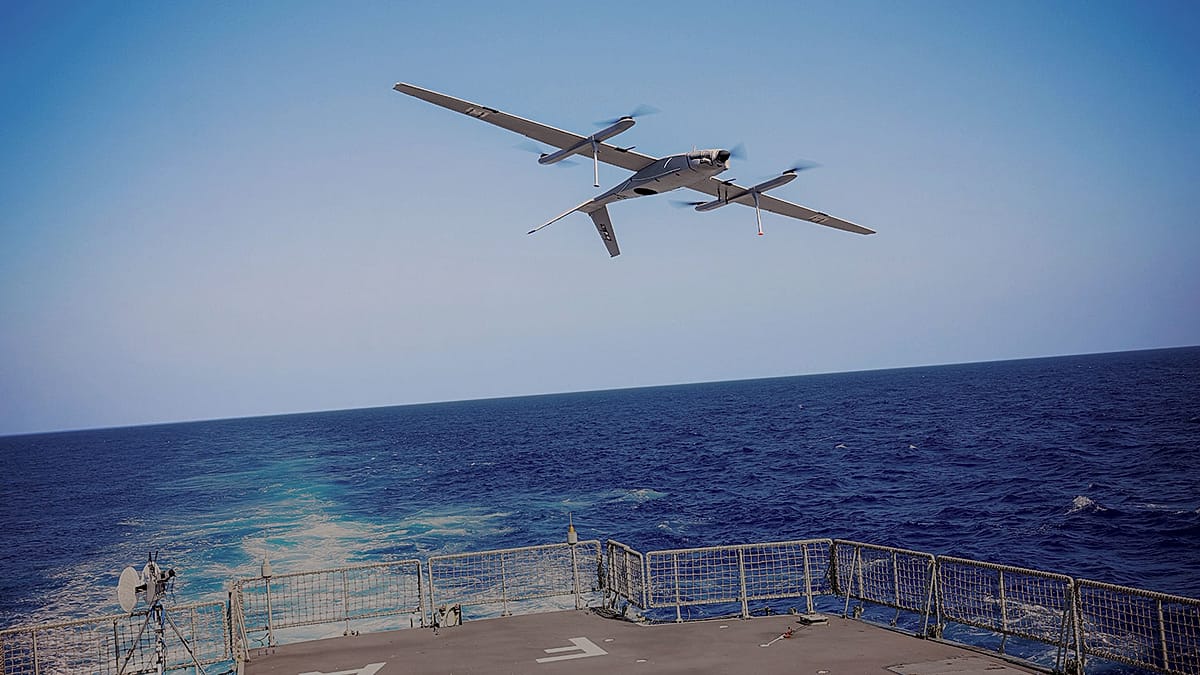
Russia’s state news agency reports that Russian forces have shot down a ‘rare’ Portuguese-made drone operated by the Ukrainian army. The Tekever AR3 was brought down by a Russian anti-drone battalion in the border region of Bryansk, the unit’s commander told TASS.
“An enemy reconnaissance drone entered our sector. We were surprised because we had never seen anything like it. The unmanned aerial vehicle (UAV) had a different structure at the tail and on the wings. When we reached the crash site, we found it was a Portuguese reconnaissance drone. It is important to shoot down reconnaissance UAVs because, first, they map out routes for enemy drones to fly, and second, they look for our positions so that we can be attacked,” the commander said.
The commander of the Russian battalion, which operates the interceptor drone ‘Lis’ (Fox in Portuguese), explained to TASS that after they had shot down the Tekever AR3 it came down in one piece, although “the engine was damaged” while “the fuselage and most of the airframe remained intact”. For that reason, and once they realised it was a ‘rare’ model, the UAV was transferred to a research institute. According to TASS, Russian specialists will study its design and its technical and engineering specifications.
The AR3 model produced by Tekever (source in Portuguese) has a wingspan of almost 4 metres, weighs just 25 kilograms, has a cruising speed of between 75 and 90 km/h and a communications range of up to 230 km. They are real “computers with wings”, said Ricardo Mendes, Tekever’s CEO, in an interview with Euronews. The company, founded in 2001, is the largest exporter of drones to Ukraine. In 2025, exports generated profits of more than 85 million euros. The unmanned systems (UAV) produced by the company have helped strengthen trade relations between Portugal and Ukraine, with Ukraine moving from 75th to 36th place in the national export rankings in just six years.
The interception of this aircraft near the border was described by the Russian army as highly ‘challenging’.
According to the military, after the target had been detected by radar, the “Lis” interceptor began a chase lasting almost 30 minutes. The AR3 “was circling at an altitude of about 2.5 kilometres at a speed of 90–100 km/h, preventing them from closing in on it. On the final approach, the ‘Lis’ battery was running low, but the crew still managed to catch and destroy the Portuguese reconnaissance drone”, the soldiers said.
The ‘Lis’ is a drone specialised in air interception, developed in Moscow. The small fixed-wing UAV is equipped with a warhead of around 1 kg and an automatic target-acquisition system. Once a target has been detected by radar it is launched to track it, and as soon as it locks on to the tail it detonates its explosive charge, destroying the enemy UAV.
Additional sources • TASS
Read the full article here


