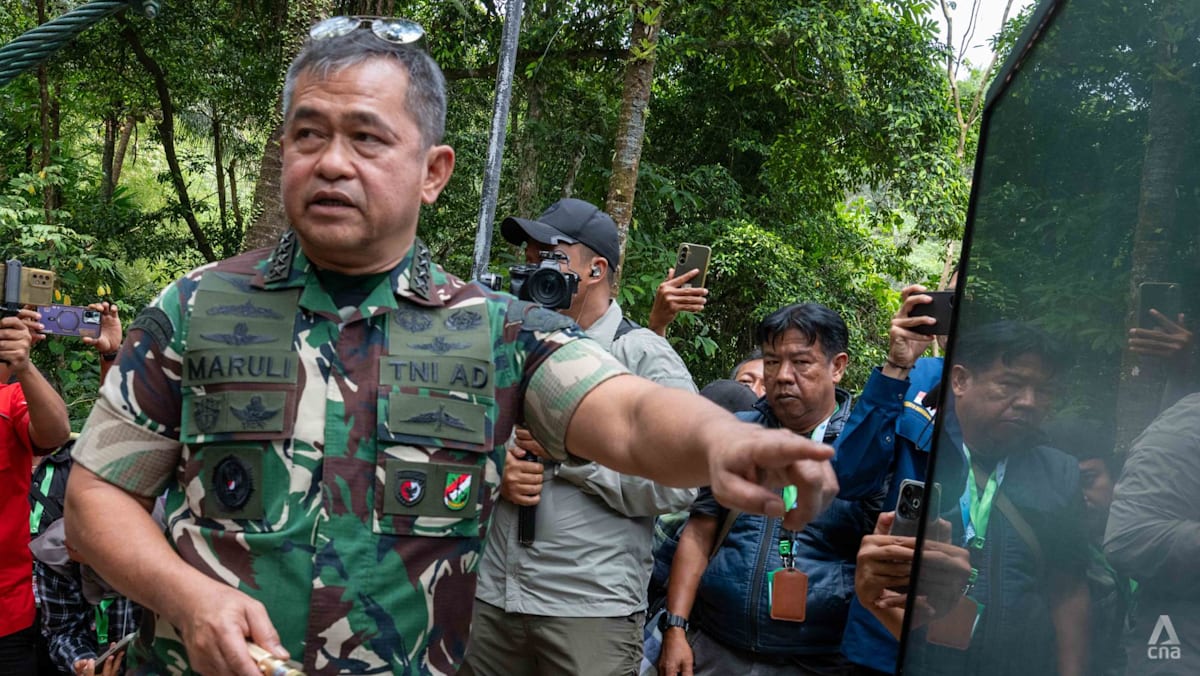
Maruli added that under the army’s bridge-building programme, it gathers representatives from all regions, trains them for several weeks on how to build bridges, and carries out practical exercises.
Such an approach allows the work to be labour-intensive and involve the local community, he said.
“When we go there with a self-managed, labour-intensive approach, we gain three advantages. First, the cost is clearly much lower,” he said.
“Second, we revive the spirit of mutual cooperation, gotong royong, within the community. Third, the money circulates directly in the local area instead of going to a contractor from far away.”
Gotong royong means community spirit in Indonesian.
What the army is doing is “truly for the benefit of the people, and it is actually consistent with our defence system”, said Maruli.
“In an emergency, we will fight alongside the people,” he said.
To local residents, the bridges are a means to get to school, healthcare facilities and other places.
Margacinta villager Ibrahim Firdaus, 16, who is in the 10th grade, said: “I need it to go to school. Because otherwise, I would have to make a U-turn (that takes about an hour with a motorbike), and also for our parents to go to work.”
Read the full article here