



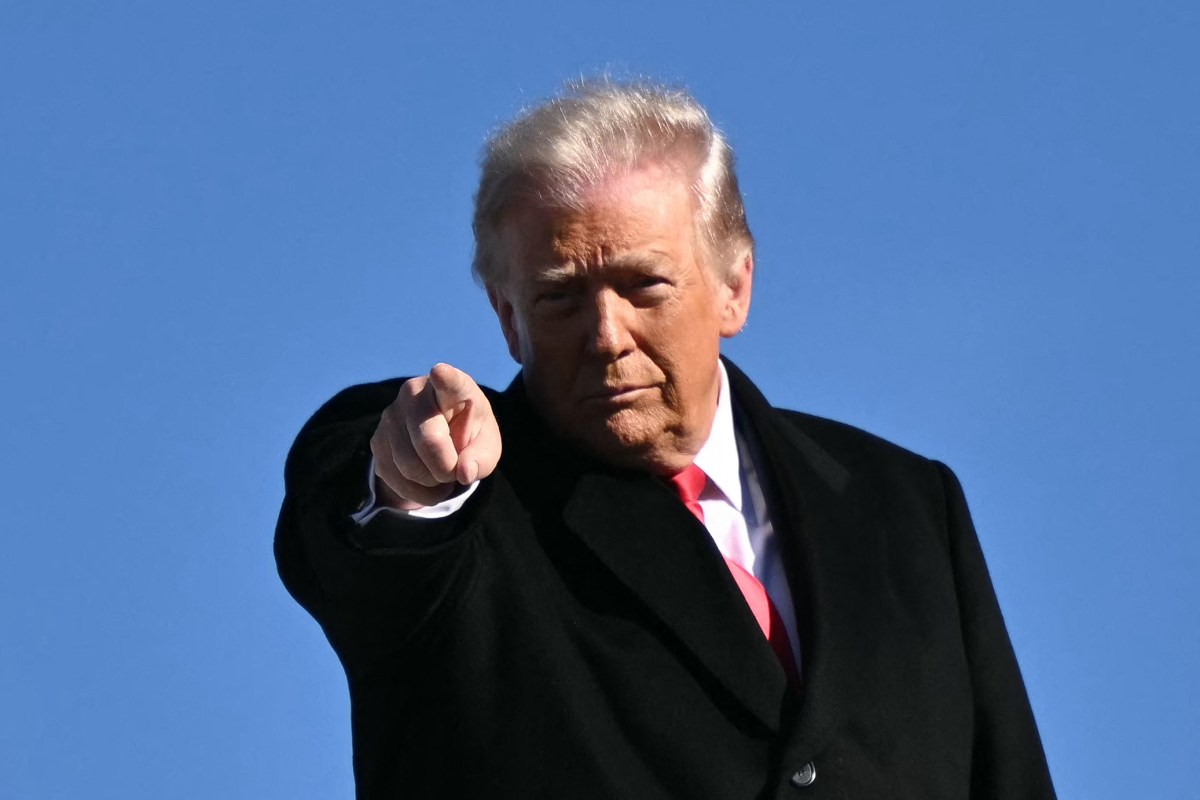
President Donald Trump has said his plan to impose a temporary cap on credit card interest rates would curb “abuse” by U.S. lenders, but this has faced pushback from the banking industry, and experts question whether his demands, even if enforceable, would provide any relief for the country’s borrowers.
On Friday, Trump posted on Truth Social that credit card companies had “ripped off” Americans by charging excessive rates, and called for a one-year 10-percent cap from January 20 to ease the burden on U.S. consumers.
Why It Matters
The vast majority of Americans use credit cards, which account for around one-third of all purchases. And credit card debt has become nearly as ubiquitous, with total household balances reaching a record $1.23 trillion in the latest New York Federal Reserve report, as delinquencies and defaults continue to rise.
But while Americans could benefit in the short term from a rate cap, experts have raised questions about Trump’s proposal, not least his ability to enforce the change on private companies. Major U.S. banking associations, meanwhile, have warned that this would prove “devastating” for millions of families and small businesses by limiting their access to credit.
What To Know
Trump said that his plan—the announcement of which saw shares in major card issuers sink when markets opened this week—is aimed at improving affordability and comes in response to companies “charging interest rates of 20 to 30 percent, and even more.”
“Lower interest rates always helps borrowers (unless it motivates people to overspend). If the interest rate cap applies to existing debt, then this will certainly help people pay off their existing debts faster,” Robert H. Scott III, a professor at Monmouth University’s Department of Economics, told Newsweek.
“It is estimated that 47 percent of people with credit cards have a revolving balance. So, for these borrowers, lower interest rates will make paying off the debt faster,” Scott said.
“In the short term, a 10 percent cap sounds like a win for anyone carrying a balance at today’s 20 percent+ average interest rates,” Jennifer Doss, a credit card analyst and executive editor at CardRatings.com, told Newsweek. “It’s immediate relief that puts money back in people’s pockets.”
But Doss went on to say she feared the “hangover effects” that could follow such a move.
“Banks use interest rates to manage the risk of lending to people with lower credit scores. If we take that tool away, banks won’t just lower their rates, but they’ll likely stop lending to those borrowers altogether,” she said, warning that this could mean “millions” losing their accounts, being denied new ones and missing out on the “upward mobility” that cards can provide, seeking to build up a credit history.
Credit card issuers and banking groups have highlighted this issue when voicing their opposition to Trump’s proposal.
“Evidence shows that a 10 percent interest rate cap would reduce credit availability and be devastating for millions of American families and small businesses who rely on and value their credit cards, the very consumers this proposal intends to help,” five banking associations said in a joint statement on Friday. “If enacted, this cap would only drive consumers toward less regulated, more costly alternatives.”
And the national trade association America’s Credit Unions has argued that, rather than making credit more affordable, such a cap “makes it unattainable for millions of working Americans because financial institutions will not be able to offer credit cards to most consumers at a 10 percent rate.”
“Credit cards are very profitable for banks and they will try to adjust in other ways if they are told to lower the rates on credit cards,” Lucia Dunn, an economist at Ohio State University, told Newsweek. “I would expect that a lot of consumers will see the borrowing limits on their credit cards lowered if banks are forced to lower their rates. Consumers with lower credit scores may not be able to get a credit card at all.”

Trump’s plan has received support in some corners, including from Democratic Senator Elizabeth Warren and the CEO of Klarna, a company at the forefront of the “buy now, pay later” alternative financing model that is increasingly seen as a rival to traditional credit cards.
“I think Trump is wise here and is proposing something that makes a lot of sense,” Sebastian Siemiatkowski told CNBC on Monday. “I mean, capitalism is great, but anarchy is not. And some rules are good for society to function slightly better.”
But a more immediate concern may be whether Trump has the power to impose such a measure on companies.
“I don’t see any way he could wholesale set an interest rate cap on credit cards without amending existing regulations or laws,” Scott told Newsweek. He noted that interest rates are generally governed by individual states, and that it would take either the Supreme Court overturning past rulings on anti-usury laws, or some form of congressional approval, to establish a federal cap on credit card rates.
Doss added that the president “cannot unilaterally cap interest rates through an executive order,” and that under the 1968 Truth in Lending Act, doing so would require congressional approval.
What People Are Saying
President Donald Trump told reporters on Air Force One on Sunday: “I want a cap on credit card interest rates. Because, you know, some of them are 28, 30 percent. People don’t know they’re paying 30 percent. People out there, they’re working, and they have no idea that they’re paying 30 percent. No way. We’re putting a one-year cap at 10 percent, and that’s it. They know it. They’ve really abused the public—the credit card companies have—I’m not going to let it happen.”
Professor Robert H. Scott III told Newsweek: “Credit cards are incredibly profitable for banks and popular with consumers. That’s the reason most of us receive many unsolicited credit card offers in the mail. With an interest rate cap, credit card companies will work to find ways to maintain profits, which could include introducing various fees such as annual fees and steeper penalty fees…or reducing rewards benefits. Also, it could result in less credit being available to a wider group of people.”
What Happens Next
Analysts have noted that any executive action by the administration would face a legal challenge from credit card issuers and the banking industry.
Trump on Sunday warned of “very severe” consequences if companies fail to comply and lower rates to 10 percent by January 20. But banking giant JPMorgan Chase has said that “everything’s on the table” when it comes to pushing back against the president’s demand.
In a polarized era, the center is dismissed as bland. At Newsweek, ours is different: The Courageous Center—it’s not “both sides,” it’s sharp, challenging and alive with ideas. We follow facts, not factions. If that sounds like the kind of journalism you want to see thrive, we need you.
When you become a Newsweek Member, you support a mission to keep the center strong and vibrant. Members enjoy: Ad-free browsing, exclusive content and editor conversatiopns. Help keep the center courageous. Join today.
Help keep the center courageous. Join today.
Read the full article here


