



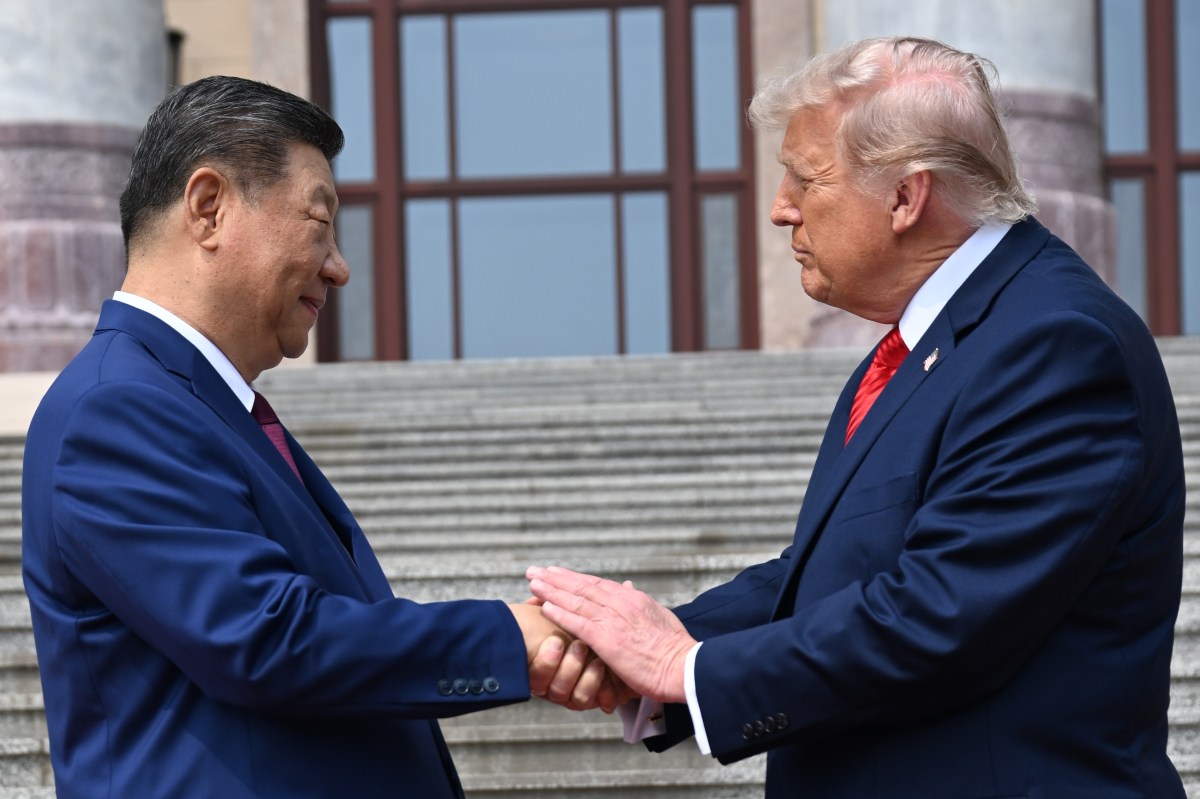
China could use its influence over Iran to push for the reopening of the Strait of Hormuz and may even consider purchasing American oil to reduce its reliance on the strategic waterway, the White House said on Thursday, signaling what would amount to a major policy shift by Washington’s foremost economic rival.
“The two sides agreed that the Strait of Hormuz must remain open to support the free flow of energy,” the White House said in a statement released after talks between U.S. President Donald Trump and Chinese President Xi Jinping in Beijing on Thursday. Xi also expressed opposition to the “militarization of the Strait” and to efforts to charge fees in exchange for transit, according to the readout. It added, “And he expressed interest in purchasing more American oil to reduce China’s dependence on the strait in the future.”
If confirmed, it could amount to a sea change in the Middle Eastern crisis. Beijing has so far largely played a behind-the-scenes role, such as working with Pakistan to bring Iran to negotiations with the U.S. Getting pulled into a Middle Eastern conflict would not align with China’s strategic interests, and the country has little to gain politically or economically from helping its rival, analysts have said.
Trump arrived in Beijing on Wednesday, marking the first visit to China by an American president since 2017, in a bid to find areas of common ground with the U.S. rival amid an ongoing trade war and competition across a number of fronts, including military buildups in the Pacific and artificial intelligence.
Newsweek has contacted the Chinese Embassy in the U.S., the White House and the Iranian Foreign Ministry for comment via email.
China’s Reliance on the Hormuz Strait
While China does not share an alliance with Iran, it has long maintained friendly ties with the Islamic Republic and is the top importer of almost all of its sanctioned oil.
China sources almost half of its oil imports through the strait, about 13 percent of which is Iranian crude, according to estimates from Kpler.
China has not imported any oil from the United States since May 2025, following Trump’s tariff hikes on Chinese goods. Chinese imports of U.S. crude reached a peak of 395,000 barrels per day in 2020, according to Energy Workforce—or slightly under 4 percent of China’s total imports.
And while China was far better prepared for the oil shock than neighbors such as Japan and South Korea—because of years of aggressive stockpiling, a strong roster of alternative energy sources, and heavy investments in green energy—the higher price of crude still weighs on the export-driven economy.
“China has a much bigger interest in reopening the strait than the U.S. does,” U.S. Treasury Secretary Scott Bessent said during an interview with CNBC on Thursday. “It’s very much in their interest to get the strait reopened, and I think they will be working behind the scenes, to the extent anyone has any say over the Iranian leadership.”
China’s Stance on the Iran War
Beijing has repeatedly condemned the war against Iran—which the U.S. and Israel launched on February 28—as illegal, as well as the ongoing blockade in which the U.S. Navy turns back ships found to have recently visited Iranian ports.
As negotiations for a lasting ceasefire dragged on and U.S. forces failed to end Iran’s grip on the strait, Beijing rebuffed Trump’s appeals for aid, namely to increase pressure on Iran to reopen the strait and to deploy its navy to protect commercial vessels from Iranian attack.
China-flagged tankers were also among the ships reported to have paid a transit fee in what was effectively a toll booth through Iranian waters.
A fog of war persists over the strait, and it remains to be seen what U.S. officials may have promised China to secure its alleged cooperation.
“Both Washington and Tehran expect Beijing to play a greater role, either in reaching a deal or in stopping its support for Iran,” Claus Soong, an analyst with the Berlin-based Mercator Institute for China Studies, told Newsweek.
Trump and Xi also agreed that Iran could never obtain a nuclear weapon, per the White House statement.
China has said it supports Iran’s right to peaceful nuclear energy, even as the Trump administration insists Tehran must fully abandon uranium enrichment under any permanent agreement.
Iran has said it maintains its nuclear program solely for civilian purposes.
Read the full article here


