



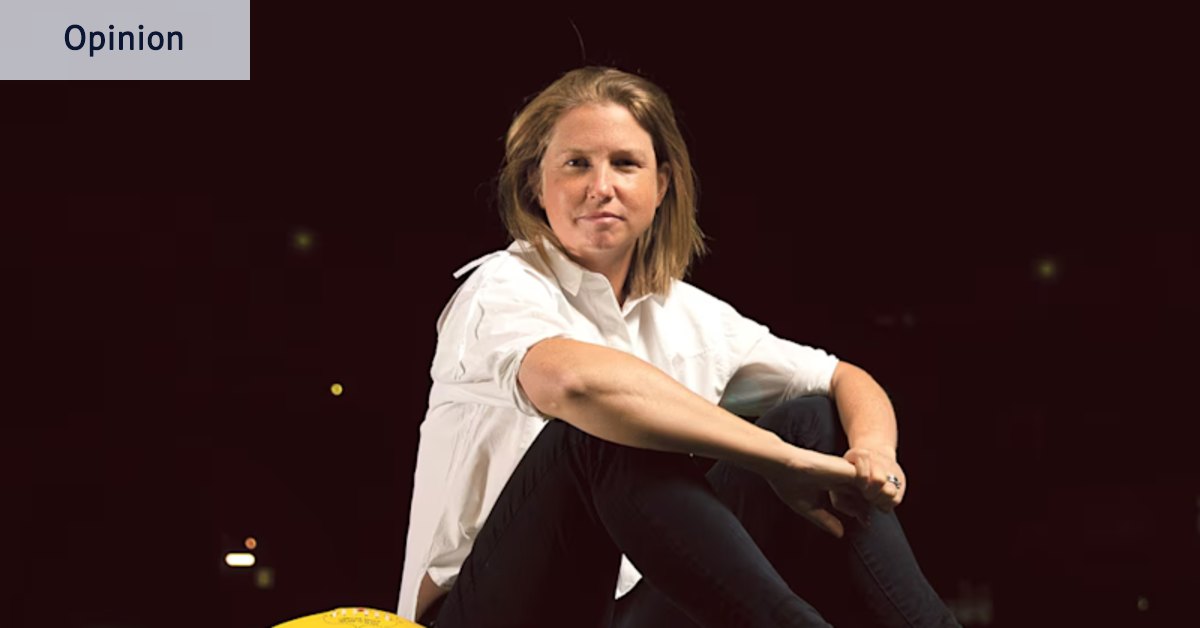
Victoria Rawlings
It’s been a hard week to be a Swans supporter, especially as a woman. The horror of headlines on Monday and Tuesday about some of our most revered players has led to a reckoning of who we are and what we can support. While police investigations are ongoing, the details that are emerging are both damning and distressing.
As a researcher in gendered violence, and a passionate Swans supporter, this has been a particularly challenging experience. Like many supporters, I have long seen the Swans as leaders in social justice and progressive issues in the AFL. They are the Pride Round club, and this year took a stand against another club’s inaction and hypocrisy around homophobia. They create a home ground experience that is incredibly inclusive and oriented to welcome all.
From this baseline, the best word to define my feelings this week has been betrayal. In many ways, I was foolish enough to think the Swans were different. But really, I should have paid more attention to my own two-decade experience as an AFL player, administrator, umpire and fan.
The signs of exclusion and hostility were there as a girl; there was no pathway for me to play football, so it never even appeared on my radar. We were framed as incapable, too delicate, not interested, or not active enough to have leagues warranted for us. Many current and past AFLW players continue to share this narrative.
The signs were there when I finally played in the Sydney Women’s Australian Football League, as it was then known, a group of teams from around Sydney that played a league that was run by women, for women. Even then, it was hard to find space and time for training that didn’t clash with the favoured men’s teams. At Sydney University, we trained on a grass hockey square, despite our games being played at large oval grounds. This, I was told, was a huge improvement from just a couple of years prior, where volunteers had to bring temporary Auskick posts to set up games on “cow paddock” fields each weekend.
They were there when I worked in a club administrator job in Sydney. They were keen to have a “ladies’ day”, not for the players of the adjacent women’s club, but for the wives and girlfriends of the men’s players. As I pitched the idea of fundraising for a charity that focused on violence against women, I was told that it was a bit grim, and we should go for the more palatable concern of breast cancer. The message? Men’s violence against women exists elsewhere, and is not our concern.
They were there as I umpired for around 10 years, where both personally and structurally, I was subjected to elements that make girls and women understand that they are, and always will be, outsiders. My research on the experience of female umpires in Australian football showed that this was not an individual experience, but a systemic issue, and one that the AFL has been slow to address.
While I’m not suggesting that these experiences are commensurate or comparable to the harms of sexual assault, they speak to a broader positioning of women as lesser, as peripheral, and of not warranting equal respect in football spaces. Coupled with “jokes” or “banter” that are difficult to act against, these are the seeds that grow into incidents of sexual violence. We might see the eventual outcomes as unintelligible, but they have been fostered through countless interactions that diminish the value and humanity of women.
Of course there have been incredible moments of hope and triumph – the establishment and expansion of the AFLW, the well-attended games at Henson Park, the increasing visibility and pay of these athletes and those who participate in the league. However, the challenges are ongoing.
This battle has had dramatic costs this week, with women again understanding the ways that sexism, objectification, and misogyny operate away from public eyes. Our thoughts are with those women as they navigate what is likely to be a horrific experience at protecting their privacy and their mental and emotional health.
As Angela Pippos and Kate McCarthy argued earlier in the week, this horror is compounded by the incredibly jarring use of passive language around sexual assault, like “players found themselves in this situation” from Matthew Pavlich, the CEO of the Swans. It is unacceptable that any statement on sexual violence does not centre the women who have been harmed. And it is unacceptable that we are not attentive to the women players and staff in this club who will have had the rug pulled out from under them again as they see and hear about disrespectful, objectifying and dehumanising behaviours from their colleagues.
Like so many this week I have been doing some soul-searching about whether to attend Sunday’s match. I was always, of course, going to attend the AFLW game. This is our time to show that the Swans are nothing without W. But I am also, with great apprehension, seeking to open myself up to supporting the remainder of the men’s Swans squad as they take the field later in the afternoon.
The five players allegedly involved in this case have been stood down, and that is the only correct step that the club could take to signal their institutional obligations and commitments to rightfully furious and disappointed fans. Coach Dean Cox and Captain Callum Mills fronted the media on Friday, and the latter started with an apology “to the AFLW players, our female staff, and the women in our lives, our partners, mothers, sisters, and all women in the community”. His words, though likely carefully crafted, seemed genuinely heartfelt, as he expressed that he was “deeply shocked and disappointed to be here”, and that as a playing group they fully supported the club’s suspension of the players involved.
These words matter. And it’s the club’s approach to saying them that have convinced me that it’s possible to both carry disappointment, rage, and betrayal, but also to show up with some care and openness for the other players on the team. Perhaps we can show them that we, too, are part of their team.
Women and girls have managed to sustain our relationship with football through many hostilities, and it’s through our commitment to this love of the game that we are seeing the painstakingly slow work of cultural change. By our voices being loud in membership, play, administration, and officiating, perhaps we can hang on to this game that we love, and perhaps one day, it will love us back.
Victoria Rawlings is an associate professor in the Sydney School of Education and Social Work. She conducts research about gender, sexuality, and schooling, and is a former AFLW and NEAFL field umpire.
Get a weekly wrap of views that will challenge, champion and inform your own. Sign up for our Opinion newsletter.
From our partners
Read the full article here


