



While global attention has once again fixated on Venezuela’s vast oil wealth—it is its next-door neighbor, Brazil, that represents the more consequential and enduring energy story in South America.
For decades, Brazil’s role in the global economy has been easy to summarize. It is an agricultural superpower—one whose scale, efficiency and competitiveness have long made it a formidable rival to American producers. That reality resurfaced recently during the tariff sparring between President Donald Trump and Brazilian President Luiz Inácio Lula da Silva, briefly thrusting Brazil’s farm economy and its impact on American grocery prices back onto the front pages.
What remains widely overlooked, however, is how much Brazil’s economic identity has expanded in recent years. In addition to feeding large parts of the world, Brazil is rapidly becoming one of the most consequential energy producers on the planet—and it is doing so with a strategy that deserves far more attention.
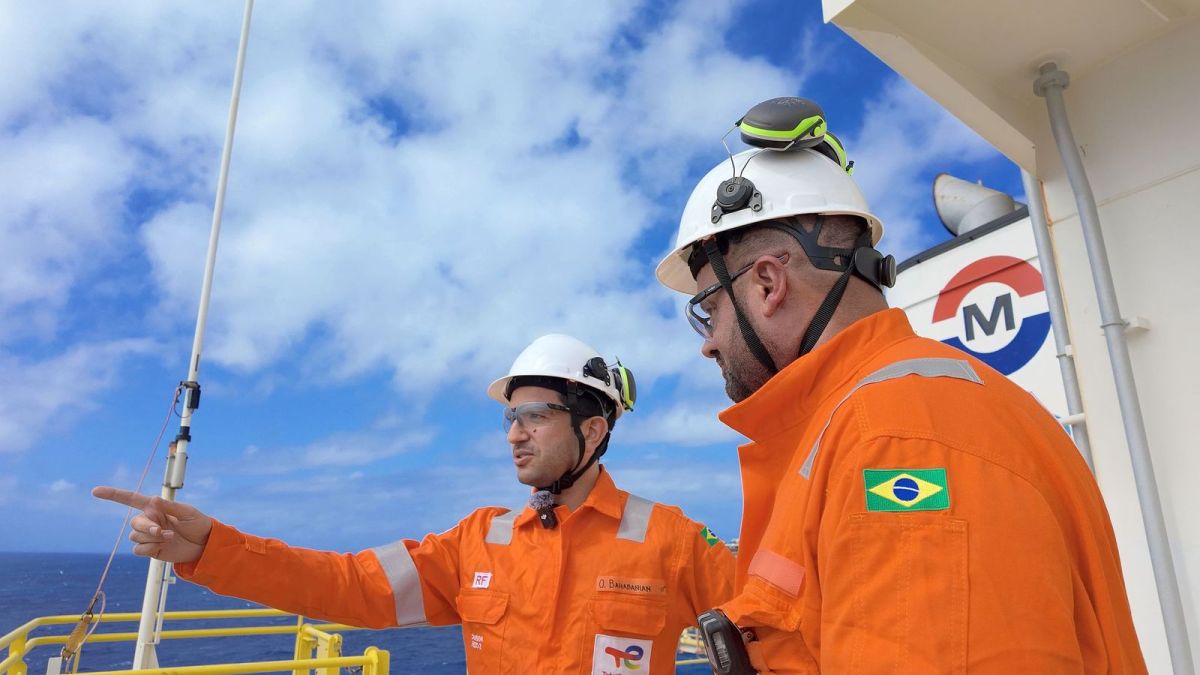
Over the past two decades, Brazil has climbed into the top tier of global oil producers, driven by the discovery of the pre-salt oil fields in 2006. These offshore finds, buried beneath thousands of meters of water and rock off the coast of the state of Rio de Janeiro, rank among the most technically demanding anywhere. They are produced using massive floating platforms that operate like self-contained industrial cities, delivering reliable, large-scale output that has turned oil into Brazil’s leading export and a core pillar of national growth. In 2025, Brazil’s crude oil production topped 4 million barrels per day, with total hydrocarbon output approaching 4.9 million barrels of oil equivalent per day, underscoring its emergence as one of the world’s significant producers.
Yet hydrocarbons alone do not explain the entirety of Brazil’s energy trajectory.
At the same time that offshore oil production has surged, Brazil has been building one of the world’s most dynamic renewable energy systems—particularly in solar and wind—now responsible for more than one third of Brazil’s electricity demands. Nowhere is this more evident than in Brazil’s Northeast, a region long shaped by harsh environmental conditions. For generations, relentless winds and arid land made agriculture difficult and economic opportunity scarce.
Today, those same harsh winds are being transformed into an asset of national importance.
Across states like Rio Grande do Norte, vast onshore wind farms now stretch across the horizon, feeding clean electricity into Brazil’s national grid and powering homes, cities and industry across the Northeast. Wind has become one of the country’s cheapest and fastest-growing sources of new energy. Much of that expansion has been driven by a new generation of domestic renewable developers, led by companies like Casa dos Ventos, which has built some of the largest onshore wind complexes in the Western Hemisphere and helped anchor Brazil’s wind build-out in the Northeast. Notably, much of this build-out is being led by companies more commonly associated with offshore hydrocarbons than onshore renewables.
France’s TotalEnergies—one of the world’s preeminent oil and gas producers and a major player in Brazil’s pre-salt fields—has also emerged as a significant investor in wind and solar across the Northeast. In Brazil, the company’s deepwater oil operations and renewable power portfolio are not competing visions of the future, but complementary pillars of a single, long-term energy strategy.
The effects reach well beyond power generation. Rural landowners earn stable income by leasing land for turbines, while communities that have long faced poverty are seeing new jobs, infrastructure investment and social programs tied directly to energy development.
I saw this transformation firsthand during a recent visit to the country—moving from Brazil’s offshore oil operations to the wind-swept interior of the Northeast. What stood out was not just the contrast, but the coherence. Brazil is not choosing between oil and renewables. It is deliberately pursuing both.
That approach stands in sharp contrast to the energy debate playing out in the United States. While leaders like Donald Trump have declared open war on offshore wind, framing it as an economic or cultural threat, Brazil treats wind power as a strategic national resource. What emerges is not a policy gesture, but a coherent industrial strategy—one that aligns capital, regulation and long-term demand.
Brazil is also refreshingly honest about timing. Even within Brazil’s deeply divided governing structure, policymakers broadly agree that oil and gas will remain essential for years to come, and that Brazil is well positioned to produce them efficiently as global demand persists. At the same time, it is aggressively expanding renewable capacity to ensure future energy security, affordability and competitiveness.
This is what energy diversification looks like when it is treated as an economic strategy rather than a political slogan. It is additive, not subtractive. It builds new systems without prematurely dismantling existing ones.
Brazil may still be famous for its beaches, caipirinhas and agricultural exports. But quietly, it is earning a different reputation—as one of the world’s most complete and strategically diversified energy producers.
Arick Wierson is a six-time Emmy Award-winning television producer and served as a senior media and political adviser to former New York City Mayor Michael Bloomberg. He advises corporate clients on communications strategies in the United States, Africa and Latin America.
The views expressed in this article are the writer’s own.
Read the full article here


