



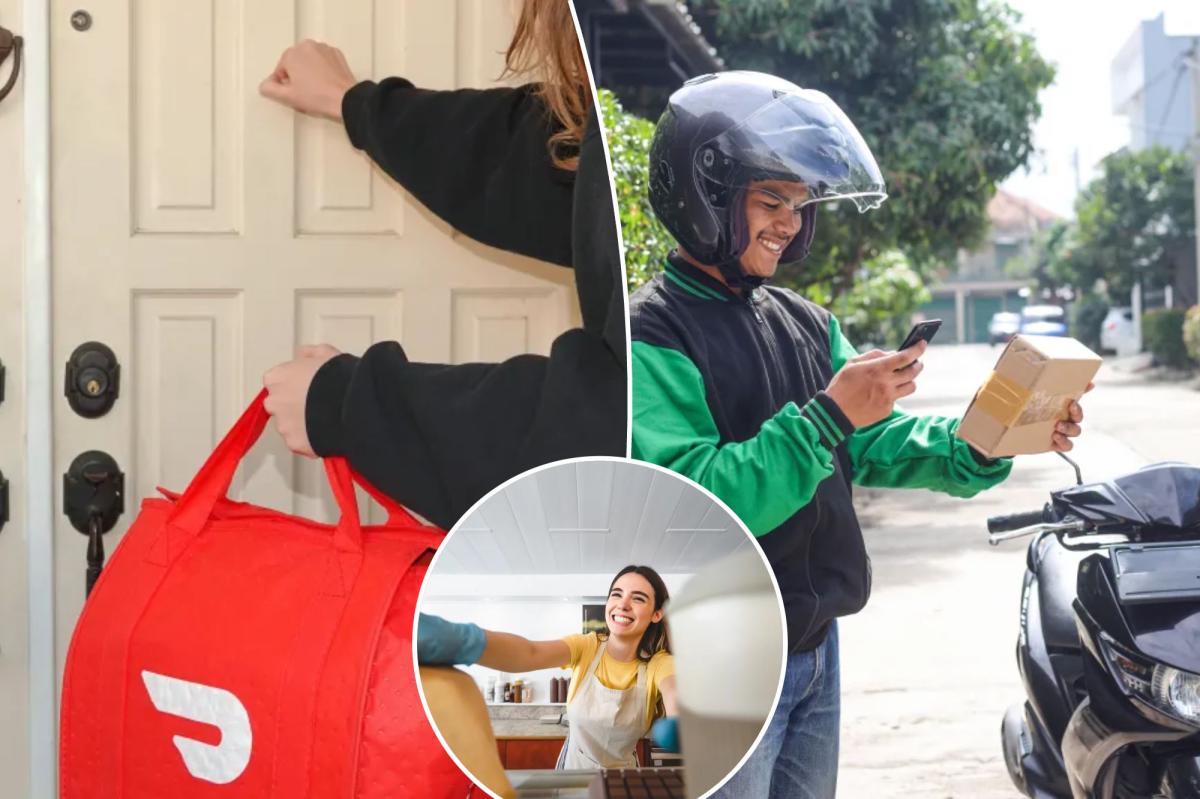
Think Gen Z is still spending the summer scooping ice cream and begging for shift swaps at a beach snack shack?
In reality, they’re more likely to be speed-running your DoorDash order than clocking in anywhere with a manager.
New data shows workers under 26 are the most rapidly growing group signing up for gig apps like Uber and DoorDash this summer, according to mobile analytics firm Apptopia.
Registrations among Gen Z are up 8.4% compared to last year. Translation: the “summer job” is officially a phone app now.
As school lets out and temperatures rise, more young workers are ditching traditional seasonal gigs for on-demand hustles — swapping uniforms and punch clocks for backpacks, bikes and the freedom to log off whenever they feel like it.
And the shift isn’t subtle.
Across six major apps — DoorDash, Uber, Instacart, Lyft, Shipt and Gopuff — daily active users are up 19% year-over-year so far in Q2 2026, signaling the gig economy isn’t just alive — it’s thriving.
DoorDash still runs the show, commanding 57% of all active gig workers across platforms, with Uber trailing at 28.7%.
But the real shake-up is happening in the age breakdown.
Workers ages 17 to 25 are now the “fastest-growing group” across four of the six apps Apptopia tracks — basically Zoomers showing up, signing in, and immediately reshaping the workforce.
Gopuff is seeing the wildest spike, with young users up nearly 100% year-over-year. Lyft jumped 70.3%, Uber climbed 27.4%, and Shipt rose 21.7%.
In other words: millennials and Gen X may still be driving the gig economy, but Gen Z is very clearly downloading the app and asking, “how fast can I get paid?”
Still, most gig workers aren’t broke college kids trying to fund iced coffee habits.
The biggest user base across most platforms remains 36 to 45 — with some apps skewing even older — meaning the gig economy is still very much a mid-career survival strategy, not just a summer flex.
But Gen Z isn’t just entering the space — they’re stacking it.
A DoorDash driver has about a 1-in-5 chance of also using Uber, and a 1-in-7 chance of working Instacart.
Meanwhile, more than half of users on smaller apps like Shipt, Lyft, Instacart and Gopuff also use DoorDash, with up to 54% also active on Uber.
Ultimately, nobody is really “working for” one app anymore — they’re freelancing across all of them at once.
And for many raised on smartphones, the chaos comes naturally — turning what used to be a summer job into a rotating lineup of gigs, shifts and on-demand side hustles.
But the hustle isn’t the only thing being redefined.
As work-life expectations continue to shift, so too are the ways young people are reacting to burnout — sometimes by logging on more… and sometimes by logging off completely.
That tension is playing out in another growing trend.
As previously reported by The Post, some burned-out young adults are ditching the traditional career path altogether in favor of so-called “mini-retirements” — extended breaks from work once reserved for gap-year students, now being rebranded as escape hatches from corporate burnout.
The idea is simple: step away from the 9-to-5 before it breaks you.
In addition, aross New York City, some centennial workers are officially clocking out — without leaving the building.
Fitting rooms, movie theaters and “nap pods” have become makeshift escape hatches for those looking to nap, decompress or quietly lose it mid-workday.
The traditional lunch break is increasingly becoming a nap break. One TikTok user confessed that he was heading to a movie theater to sleep during his hour off, while others are turning to “Nap York,” a network of rentable sleep pods in NYC built for power naps, overnight stays or just a hard reset from city life.
Overall, for some Gen Zers, summer isn’t about flipping patties at a beachside fast-food joint — it’s about deciding whether to deliver them… or sleep through the shift instead.
Read the full article here


