



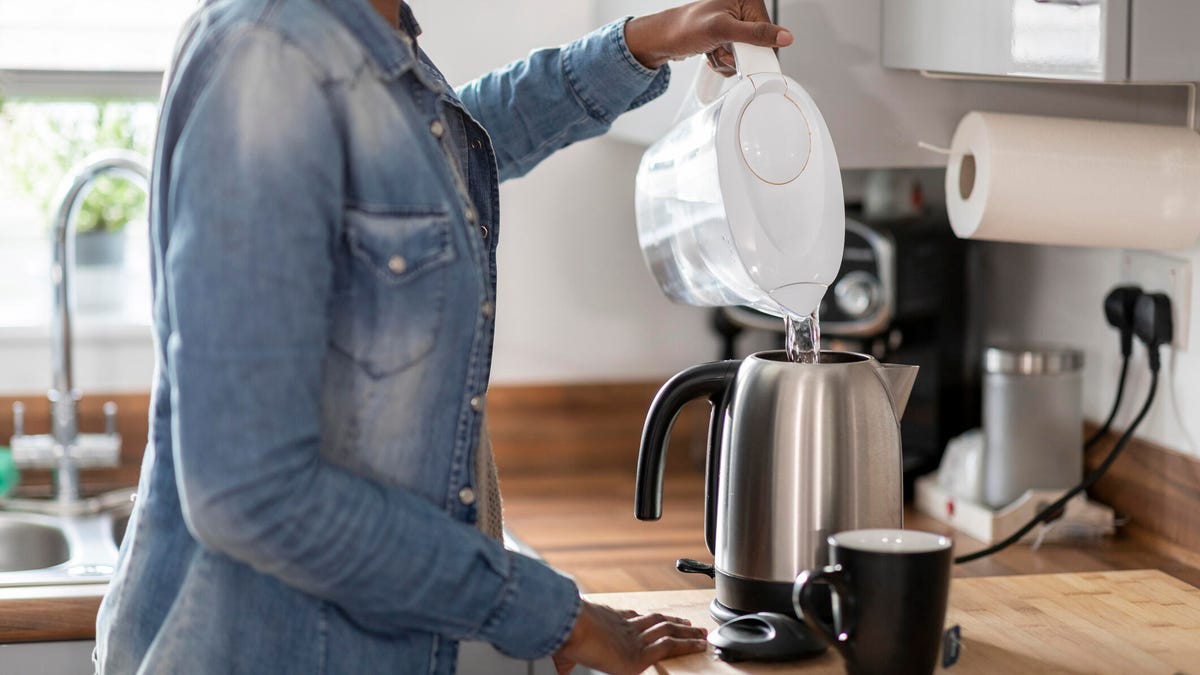
There is no shortage of tweaks you can make, even without extensive barista training, to nudge your coffee toward professional-level quality. As the thing that happens at the start of the day for most of us, and perhaps several times a day more (depending on caffeine addiction), why wouldn’t you want your coffee to be absolutely on point? It’s about tone-setting, in addition to basic, mandatory caffeination.
If you’re doing everything else you can: buying freshly roasted and locally sourced beans, grinding accordingly, minding your brewing ratios and using the best method for brewing, and your coffee still isn’t passing the vibe check, what more could possibly be done?
Well, you might have to go back to the other major source in your coffee game: the water. I spoke with Jose Lepe, Director of Sourcing and Quality Control for Sightglass Coffee, about how what goes into the reservoir or kettle affects your coffee outcome as much as, if not more than, what goes into the grinder.
How water affects coffee flavor
Most aromas, metals and naturally occurring flavorants aren’t removed from water simply by boiling.
Whatever you smell or taste in your tap water isn’t boiled out during coffee brewing, and your dark roast isn’t necessarily robust enough to compensate for off-tasting water. “There are different things in municipal water supplies that have some aroma,” says Lepe. “So you should filter your water mainly to get rid of off-flavors and smells.” A metallic tang, mustiness or hints of chlorine or other chemical flavors, even if slight, could be a sign that it’s time to try filtered water for your coffee.
Not everyone necessarily has to do this, though, if your tap water tastes neutral or clean. “A lot of the best coffee cities in the U.S. — Portland, Seattle, San Francisco, New York — all of those places have amazing water,” says Lepe, “so if you make coffee with it, it’s gonna taste pretty good.”
If you live somewhere with great tap water and you still aren’t satisfied with your coffee, you might have to go back to the drawing board on beans/grind/process/ratio/temperature. But if this is resonating with you so far and you live somewhere with less-than-ideal tap water, read on.
Equipment considerations with water
Another consideration that doesn’t necessarily impact flavor is how your water might actually affect your coffee-making equipment.
For those who make pour-over, “when you use a kettle to boil water constantly, you’ll notice some scale buildup in the bottom,” Lepe explains. “The white stuff is usually calcium or other mineral deposits.”
Scale buildup is greatly mitigated when you switch to filtered water.
Descaler tablets can easily be used to fix your kettle, but you might also want to try using them in your automatic drip or espresso machine.
Depending on the water quality where you live, mineral buildup can be so severe that it makes your equipment stop functioning altogether. A serious consideration, especially if you’ve invested in top-tier equipment. “If our reverse osmosis system in our cafe in Los Angeles breaks for whatever reason, and we turn on the water bypass for more than a day or two, there’s a noticeable amount of scale that builds up in our machines,” Lepe says. “Our baristas notice it immediately.” Miniscule water conduits in equipment, such as those in steam wands, can stop functioning altogether if buildup becomes excessive. (First-hand testimony here from a kitchen in London.)
Unless you’re a vigilant descaler, filtered water can add significant time to your coffee maker’s life.
Don’t fall into this water trap
If your reaction to all of this is to overcorrect and just use distilled water, actually, don’t. “Filtering is better than nothing, but don’t use distilled water because your coffee is actually going to taste worse,” according to Lepe.
The balance here is that you don’t want “pure” water that’s entirely free from minerals. “Water hardness is part of what is going to make your coffee taste right, so you need some of that minerality in coffee to help pull out the actual flavors,” he says.
Fixing your water if it’s not working for you
Pod-style brewers without a built-in filter also benefit from filtered water.
So, how do you find the middle ground between water that’s stripped of its minerals and water that isn’t off-putting to the coffee?
You could, of course, buy water with which to make coffee, though that’s obviously not ideal. “I’m not advocating people use bottled water, but there are specific brands that are considered better-tasting than others, based on mineral content,” Lepe says. “You don’t want super strong mineral content, because it flattens the flavor; you want something kind of right in the middle,” he says, with Crystal Geyser being a brand cited as one that’s preferred by coffee pros. Before you invest in other water solutions, it’s worth a taste test with a barista-recommended bottled water brand to see if you can notice a difference.
If you want to go full barista mode, though, some pros actually build a water profile from the ground up, using a reverse-osmosis filter or distilled water, then adding minerals back in. “There’s one book that I think changed how everybody thinks about water,” says Lepe, called Water for Coffee. “Now there are entire online communities who are making custom water recipes that basically mimic specific cities,” he says, “so, if you buy a coffee that’s roasted in Tokyo and you want to brew the coffee to match it, you can figure out what the water is like there, and they’ll give you recommendations on how to recreate it.”
This may seem extreme, but “essentially it’s just Epsom salts and baking soda that people are adding to water,” says Lepe. Brands such as Third Wave Water and Lotus also offer quick, easy mineral packets for adding to distilled or reverse-osmosis-filtered water.
If you’re not that committed, but still looking for a shift, a Brita water pitcher or a simple filter that’s built into your tap system “is a better starting point,” according to Lepa.
Read the full article here


