



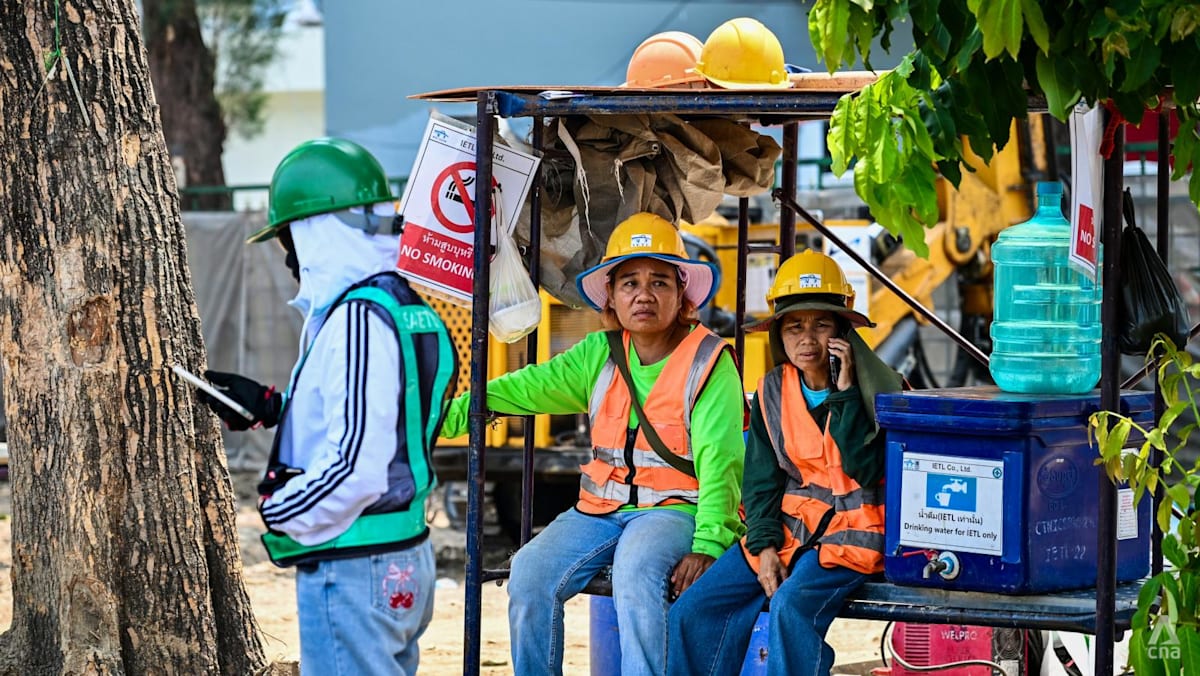
Over the long term too, major cities across the region face extreme heat becoming normal.
“The impact of rapid urbanisation and climate change is creating very unbearable heat,” said Irma Ramadan, a senior officer at ACE and a contributing author to the report.
Bangkok sits at the top end of exposure, both in temperature and intensity.
By 2050, it is facing up to 120 extreme heat days – where the temperature rises above 35°C – annually. That is nearly triple the current levels of around 45 days.
Daily maximum surface temperatures could reach 38.1°C by mid century, the report found, compared to 33.3°C in 2000.
Other major cities could face a similar fate, with Jakarta, Manila, Ho Chi Minh City and Kuala Lumpur all looking at a temperature increase of at least 4.5°C compared to 2000.
Singapore’s average maximum is projected to be 36.1°C by mid century and its number of days above 35°C could more than triple from 25 currently to 85 each year.
Heatwaves across the region are already increasing from two to three events per year at the beginning of the century, to eight to 12 events a year recently, lasting up to three to four weeks at a time, the report found.
By 2050, a significant increase in extreme heat days could trigger public health emergencies, place mounting pressure on critical infrastructure such as energy and water systems, and disrupt economic productivity, particularly for at-risk populations, Peeranan said.
“It is an escalating disaster risk with far-reaching implications,” he said. “Extreme heat will reshape how people live, work and move through the city.”
Because the ACE analysis focuses on temperature alone, it may also understate the true risk in cities like Bangkok, where humidity can push conditions into dangerous territory for human health.
Read the full article here


